AI in Rehabilitation Robotics: What Parents Should Know Now
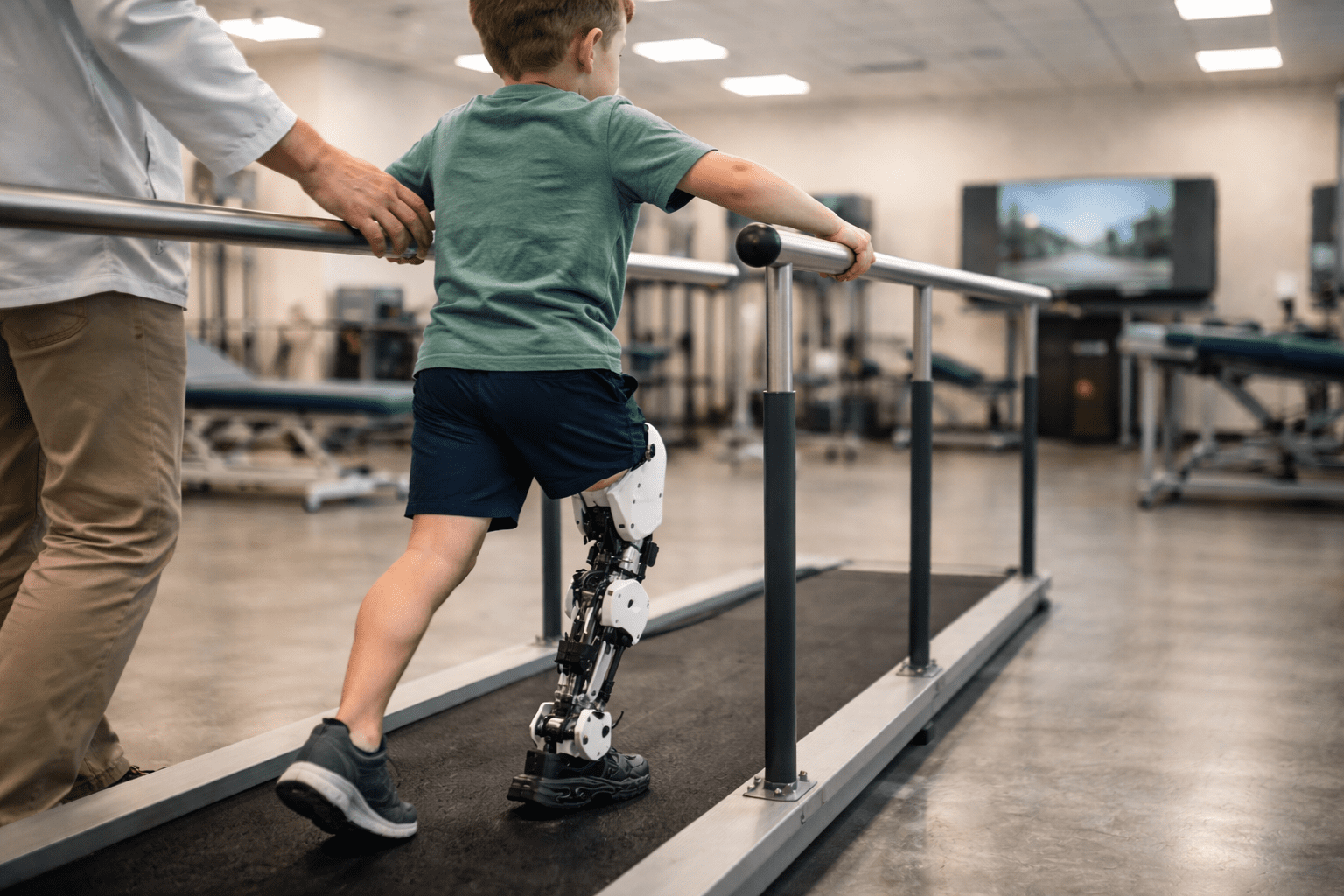
Parents hear “robotics” and “AI” and may picture something futuristic and far away from everyday care. But AI in rehabilitation robotics is already showing up in pediatric therapy clinics, hospitals, and even some school-linked programs. These tools can help children practice movements more safely, more consistently, and sometimes with more motivation than standard exercises alone.
If your child has cerebral palsy, a stroke or brain injury, spinal cord injury, muscular weakness, or other conditions that affect movement, you may be asked about robotic-assisted therapy. You may also see videos online and wonder whether it is real, whether it is safe, and whether it is worth the time and cost. The goal of this guide is to help you understand what AI in rehabilitation robotics is, when it may help, and how to advocate for the right supports.
AI in rehabilitation robotics is not a cure. It is a tool that can extend what skilled therapists already do best: set goals, adjust difficulty, and measure progress. Your job as a parent is to make sure the tool fits your child’s needs, not the other way around.
Understanding AI in Rehabilitation Robotics
AI in rehabilitation robotics refers to robotic devices used in therapy that also use artificial intelligence to adapt, personalize, or analyze treatment. In plain terms, the robot helps your child practice movements, while AI helps the system “learn” what level of help, challenge, and feedback is best.
Common examples include:
- Robotic gait trainers that support body weight while a child practices stepping
- Exoskeletons that assist arm or leg movement during targeted exercises
- End-effector devices that guide the hand or foot along a path for repeated practice
- Therapy robots paired with games that turn practice into interactive tasks
Where AI comes in:
- Adaptive assistance: The device gives more help when your child struggles and backs off as they improve
- Personalized dosing: The system adjusts speed, resistance, or range based on performance
- Progress tracking: Sensors measure movement quality, fatigue, and consistency
- Pattern detection: AI can flag trends a human might miss, like a gradual change in symmetry or endurance
Policy and safety context matters. Many rehabilitation robots are regulated medical devices in the United States. Depending on the device and intended use, it may fall under FDA oversight. Coverage is separate: even when a device is cleared for use, insurance may still limit how often therapy is covered or require documentation of “medical necessity.” In schools, decisions about services and equipment typically connect to disability law, including IDEA for special education services and Section 504 for access supports. In most cases, schools focus on educational access and functional participation, not medical treatment.
Recognizing the Signs or When to Be Concerned
Robotic-assisted therapy is usually considered when a child needs high-repetition practice, consistent feedback, or safer support than hands-on therapy alone can provide. It may also come up when progress has stalled or when a child needs a new way to stay engaged.
Signs AI-supported robotics may be worth discussing:
- Your child tires quickly during standard exercises
- Movement is limited by poor balance or weakness, not pain
- Repetition is needed but hard to deliver safely (for example, stepping practice)
- Your child benefits from game-like feedback and measurable goals
- You keep hearing, “We need more practice at home,” but you lack clear guidance
Red flags to take seriously:
- Claims that a device will “rewire the brain” quickly or replace therapy
- A program that won’t share goals, safety steps, or outcome measures
- Pain, skin breakdown, joint swelling, or increased spasticity after sessions
- A plan that ignores your child’s sensory needs, anxiety, or fatigue
Age and developmental considerations (general guide):
- Ages 2–5: Focus is usually on play-based movement, tolerance for equipment, and short bursts of practice. Robotics may be used selectively and briefly, often with lots of therapist support.
- Ages 6–12: Many children can follow structured tasks and benefit from goal tracking. This is often when AI in rehabilitation robotics is easiest to integrate with strength, balance, and coordination goals.
- Ages 13–18: Therapy often shifts toward independence, endurance, community mobility, and self-advocacy. Robotics may support higher-intensity training and clearer data on progress.
Clear examples of good-fit goals:
- Practicing stepping patterns after orthopedic surgery
- Building arm control after brain injury
- Increasing endurance for transfers or walking short distances
- Improving symmetry or timing when one side is weaker
The Research or Science Behind It
Rehabilitation works best when practice is frequent, purposeful, and matched to the child’s ability. A key idea is “neuroplasticity,” the brain and nervous system’s ability to adapt through experience. Repetition helps, but quality matters too. If a child practices a poor movement pattern thousands of times, that may not lead to better function.
This is where AI in rehabilitation robotics can help. Sensors and software can:
- Provide consistent practice without therapist fatigue
- Offer precise support so a child can practice a correct pattern more often
- Increase feedback in real time, like pace, range, or symmetry
- Support high-dosage training, which is hard to deliver manually
Brain development and timing: Children’s brains are still developing, and motor learning is tied to attention, motivation, and sleep. Many kids do best with therapy that is challenging but not overwhelming. AI can adjust difficulty quickly, which may help keep practice in the “sweet spot” where learning happens.
What the research generally suggests:
- Robotic-assisted therapy can improve specific motor skills, especially when combined with conventional therapy
- Outcomes are often stronger when treatment is intensive, goal-based, and measured
- Robotics is usually not superior as a standalone approach, but can be valuable as part of a larger plan
Long-term outcomes depend on the right match. The biggest benefits tend to happen when:
- Goals are functional (walking to class, using utensils, dressing)
- Progress is tracked over time with clear metrics
- The program includes carryover into daily life and home routines
AI in rehabilitation robotics is evolving fast, but families should still expect a careful, individualized plan. If the clinic cannot explain how the device supports your child’s specific goals, the technology may be driving the decision rather than clinical need.
How to Access Support or Take Action
If you’re considering AI in rehabilitation robotics, treat it like any other therapy decision: start with goals, then choose tools.
Step-by-step guidance for parents:
- Ask for a functional assessment. Request baseline measures: walking speed, endurance, range of motion, balance tests, grasp strength, or daily living skills.
- Define 2–3 practical goals. Examples: “Walk from the car to the classroom with fewer breaks” or “Use the affected hand to stabilize paper.”
- Ask what role robotics will play. Is it replacing time with a therapist, or adding structured practice within a supervised session?
- Request the safety plan. Ask about fitting, skin checks, fall prevention, pain monitoring, and how fatigue is handled.
- Ask how AI is used. Will it adapt assistance? What data does it collect? Who reviews it and how often?
- Clarify frequency and timeline expectations. Many programs run for 4–12 weeks, but it varies. Ask how progress will be judged and when the plan will change.
- Talk coverage early. Ask for billing codes, documentation needed, and whether a letter of medical necessity will be provided.
- Plan for carryover. Ask what you can do at home between sessions that matches the same movement goals.
Parent rights and what to request at school:
- If your child has an IEP, you can request an evaluation related to mobility, access, and assistive technology when it affects learning.
- If your child has a 504 plan, you can request supports for access and participation, like extra time between classes, elevator access, or adapted PE.
- Schools may not provide medical therapy robots, but they can support functional needs tied to education and may coordinate with outside providers when appropriate.
A helpful script for meetings:
“I’m not asking the school to provide medical treatment. I’m asking for an evaluation of how my child’s mobility and fatigue affect access to learning and what supports are needed.”
What Happens Next or Transition Planning
If your child starts robotic-assisted therapy, expect a ramp-up period. The first few sessions often focus on fit, comfort, and learning the device. Progress may look uneven early on, especially if your child is building endurance or adjusting to new movement patterns.
What parents can expect:
- Regular check-ins: The therapist should review goals and data every few weeks
- Adjustments: AI settings may change as your child improves or if fatigue increases
- A blended plan: Most children still need hands-on therapy for flexibility, strength, balance, and daily skills
If your child has an IEP or 504 plan, transitions matter:
- Preschool to elementary: Ask how mobility affects classroom routines, playground access, and bathroom needs
- Elementary to middle school: Hallway distance, stairs, and class changes can change the support plan
- Middle to high school: Focus often shifts to independence, self-advocacy, transportation, and community mobility
Long-term perspective: Even when AI in rehabilitation robotics helps, the “next step” is often building skills into real life. Improvements in the clinic matter most when they show up at home, at school, and in the community.
Frequently Asked Questions (FAQ)
Is AI in rehabilitation robotics safe for children?
It can be safe when supervised by trained clinicians using the right-sized equipment and clear safety checks. Ask about skin checks, pain monitoring, and how the team handles fatigue and spasticity.
How do I know if my child is a good candidate for robotic-assisted therapy?
A good candidate usually has clear movement goals and can tolerate repeated practice with support. A therapist should assess strength, range, balance, behavior needs, and endurance before starting.
Will insurance pay for AI in rehabilitation robotics?
Coverage varies widely. Some plans cover therapy sessions that include robotics, while others limit visits or require prior authorization. Ask for billing codes and a letter of medical necessity early.
Does robotic therapy replace physical or occupational therapy?
Usually no. AI in rehabilitation robotics is most effective when it is part of a larger plan that includes hands-on therapy, home practice, and functional skill training.
How long does it take to see results?
Some families notice changes in endurance or confidence within a few weeks, but functional gains often take longer. Ask for a specific review point, such as 6 or 8 weeks, with measurable outcomes.
Can schools provide robotics-based rehab services?
Schools generally focus on educational access, not medical treatment. However, schools can evaluate mobility-related needs, provide accommodations, and include related services when they support learning.
What should I ask a clinic that offers AI in rehabilitation robotics?
Ask how goals are set, how progress is measured, what the safety plan is, how AI adjusts the program, and what home carryover looks like. If they cannot answer clearly, consider a second opinion.
References
Centers for Disease Control and Prevention: Data and Resources on Cerebral Palsy
National Institutes of Health: Neuroplasticity and the Brain
U.S. Food and Drug Administration: Medical Device Overview and Device Regulation Basics
U.S. Department of Education: A Guide to the Individualized Education Program
Parent Center Hub: Overview of IDEA and Parent Rights
National Library of Medicine: PubMed Database for Peer-Reviewed Rehabilitation Robotics Research