Autism And YouTube And Gaming Fixation: Limits Without Meltdowns
Understanding Autism And YouTube And Gaming Fixation
Many autistic kids and teens develop intense interests. Sometimes that interest centers on YouTube videos, gaming, livestreams, or specific creators and game worlds. When families describe an “all-day pull” toward screens, they are often describing a mix of brain-based differences in attention, reward, predictability and stress regulation.
Autism and YouTube and gaming fixation is not simply “bad behavior” or a parenting failure. For many autistic children, screens provide clear rules, fast feedback, familiar patterns and a break from confusing social demands. YouTube can also act like a comfort routine: the same voices, the same music, the same clips, on repeat. Gaming can offer control and mastery when the offline world feels unpredictable.
It can still become a problem when screen time crowds out sleep, school, movement, relationships, hygiene and other skills. The goal is not to “win” against screens. It is to build a plan that respects your child’s needs while protecting health and daily functioning.
Schools and clinicians may use terms like “restricted interests,” “perseveration,” or “problematic media use.” There is no single legal definition, but if screen-related behavior interferes with learning, behavior, or access to education, you can raise it with your child’s school team. Supports may fit within an IEP under IDEA or a 504 plan, especially if screen fixation is tied to attention, emotional regulation, sensory needs, or anxiety that affects school performance.
Recognizing the Signs or When to Be Concerned
A strong interest is not automatically harmful. The key question is impact: Is your child still able to meet basic expectations and flex when needed?
Common signs autism and YouTube and gaming fixation may be crossing a line include:
- Meltdowns, aggression, or self-injury when asked to stop
- Sneaking devices, waking at night to watch or play
- Losing interest in food, sleep, hygiene, friends, family time
- Increased anxiety or irritability when not on screens
- Constant scripting, talking about or replaying videos or games
- Falling grades, missed assignments, frequent school refusal
- “One more” loops that stretch into hours
- Withdrawal symptoms: pacing, crying, panic, or shutdown
Age-related patterns can look different.
Preschool and early elementary
- Rewatching the same clips for long periods
- Tantrums that escalate quickly when screens end
- Trouble shifting to meals, bedtime, dressing
- Language that is mostly quotes from videos
Upper elementary and middle school
- Strong attachment to specific games, servers, creators, or fandoms
- Conflict around homework, chores, transitions
- Sleep disruption from “just one more round”
- Increased rigidity, arguing, bargaining, panic when limits appear
High school
- Escaping stress into gaming or YouTube as a primary coping tool
- Isolation, missed responsibilities, disrupted sleep-wake cycle
- More intense conflict, lying, money spending in games
- Mood changes that worsen with late-night use
Red flags that deserve extra support
- Self-harm threats or behavior linked to screen removal
- Serious aggression toward others
- Ongoing sleep deprivation
- School attendance problems
- Signs of depression, severe anxiety, or trauma
- Unsafe online behavior, grooming risks, or compulsive spending
If these are present, you do not have to handle it alone. Autism and YouTube and gaming fixation can be part of a broader regulation or mental health picture that benefits from professional guidance.
The Research or Science Behind It
Autism is linked to differences in how the brain processes reward, attention, sensory input and flexibility. Many autistic kids also have ADHD, anxiety, sleep challenges, or sensory processing differences. Screens can feel like an “instant organizer” for a nervous system that runs hot.
A few science-informed pieces parents often find helpful:
- Reward loops and predictability: Games and short-form videos deliver rapid feedback and clear structure. That can feel safer than messy real-world interactions.
- Executive function and shifting: Many autistic children struggle with transition skills and cognitive flexibility. Stopping a preferred activity can create a true overload response, not a simple refusal.
- Emotional regulation: Some kids use YouTube or gaming to downshift from stress. When you remove the tool without replacing the regulation strategy, meltdowns can spike.
- Sleep and arousal: Blue light, stimulation, and “always available” content can disrupt sleep timing. Less sleep often means more meltdowns the next day.
- Co-occurring anxiety: If school or social situations feel overwhelming, screens can become avoidance. Avoidance works short-term but can strengthen anxiety long-term.
Long-term outcomes depend on pattern, not one tough week. When kids lack sleep, movement, and offline coping skills, you may see worsening attention, irritability, and family conflict. When families set predictable limits and teach replacement skills, many children can keep gaming and YouTube as enjoyable hobbies without it dominating life.
Timing matters because once a screen routine is entrenched, abrupt changes can trigger bigger stress responses. Slow, structured changes usually work better than sudden bans, especially for autism and YouTube and gaming fixation.
How to Access Support or Take Action
You can reduce meltdowns while setting limits, but it helps to treat this as a skills plan, not a punishment plan.
Step 1: Map the pattern before you change it
For one week, track:
- When does screen use start and end?
- What happens right before the “need it now” moments?
- What triggers meltdowns at shut-off: surprise, hunger, fatigue, losing a game, boredom?
- What does your child gain from screens: calm, control, social connection, stimulation?
This tells you what you must replace.
Step 2: Set a predictable schedule, not constant negotiation
Autistic kids often do best with routines they can see.
- Create a simple daily plan: “After school snack, 30 minutes YouTube, homework, 30 minutes gaming.”
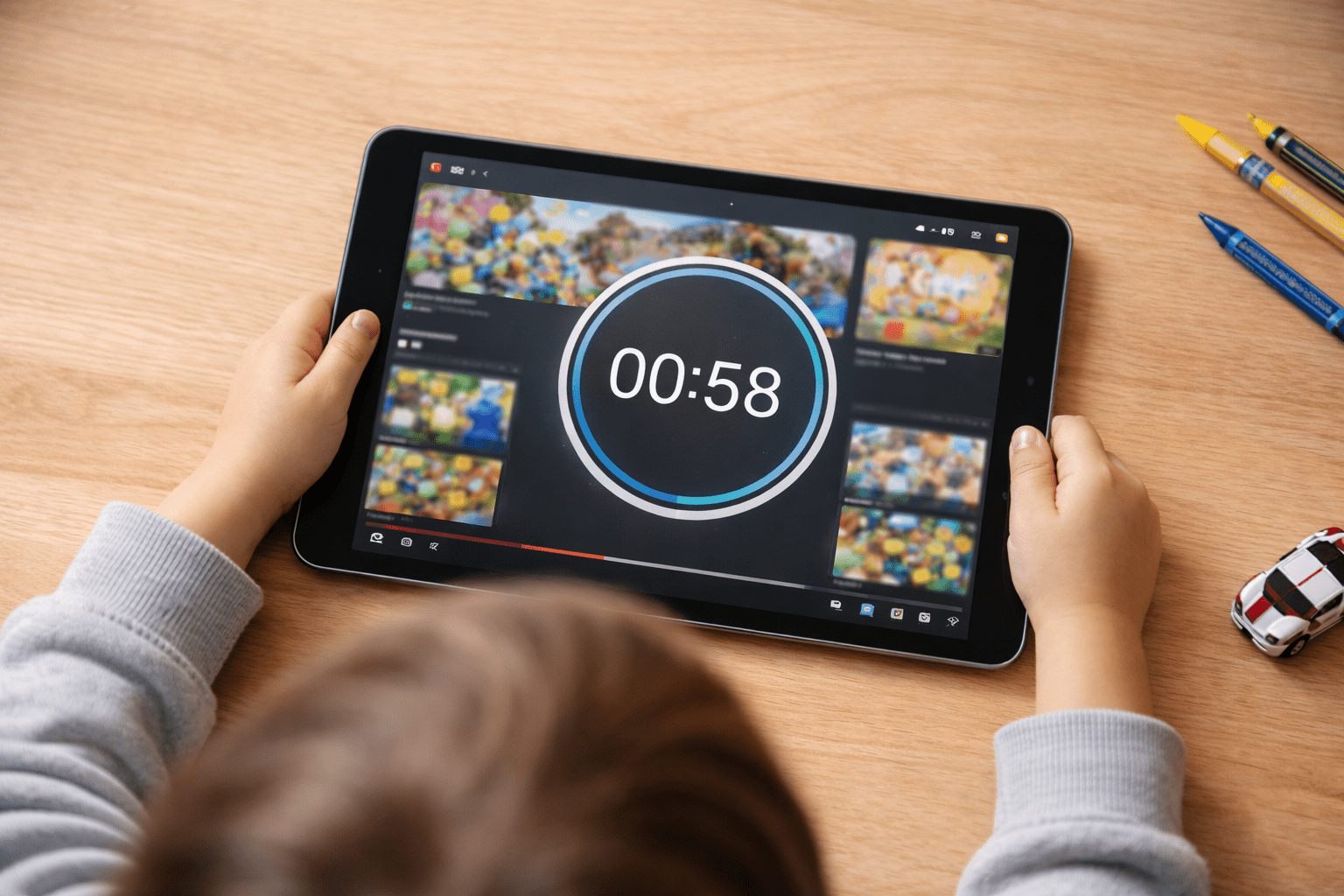
- Use timers plus a visual countdown: 10 minutes, 5 minutes, 2 minutes.
- Build in “when-then” language: “When homework is done, then gaming.”
Avoid changing the rule in the moment. If your child can argue you into a different outcome, you will get more arguing tomorrow.
Step 3: Use transition supports that lower the nervous system load
Meltdowns often happen at the switch, not because of “defiance.” Try:
- A consistent shut-down routine: save game, screenshot progress, write “next steps” on a sticky note
- A bridge activity: favorite song, trampoline jumps, weighted blanket, snack
- Choice within the limit: “Do you want your last five minutes on YouTube or in the game?”
- A calm script you repeat every time: “It’s time to stop. I will help you. You are safe.”
Step 4: Replace the function, not just the device
If YouTube is how your child decompresses, replace it with another decompression tool.
Options many autistic kids tolerate:
- Audiobooks, podcasts, music playlists
- Sensory bins, kinetic sand, chew tools
- Movement: short walk, swings, yoga, resistance bands
- “Special interest time” offline: drawing characters, Lego builds, mapping game worlds on paper
- Social connection that feels safe: co-op board games, guided online play with boundaries
Step 5: Make limits realistic and enforceable
Pick limits you can stick to even on hard days.
- Start with one protected block: meals and the last hour before bed screen-free
- Keep devices out of bedrooms at night, use a family charging station
- Use parental controls to support you, not replace you
- If short-form video is the main driver, consider reducing it first and replacing with longer content you preselect
For autism and YouTube and gaming fixation, consistency matters more than strictness.
Step 6: Plan for meltdowns without giving in
A meltdown is not a teachable moment. Your job is safety and recovery.
- Reduce language, lower your voice, remove demands
- Offer a regulation option you have practiced: “Weighted blanket or quiet corner?”
- If your child becomes unsafe, follow your family safety plan
- After everyone is calm, do a brief review: “Stopping was hard. Next time we will use the 10-minute warning and a snack.”
If you reverse the limit during a meltdown, your child’s brain learns that escalation works. If you hold the boundary while staying calm and supportive, the intensity often decreases over time.
Step 7: Involve school or providers when it affects functioning
If screen fixation is disrupting school, ask for support.
- Request an IEP or 504 meeting if your child has one, or ask for an evaluation in writing
- Share data: sleep, homework completion, behavior spikes after late-night use
- Ask for goals and supports: transition strategies, coping skills, visual schedules, executive function coaching
- Consider OT for sensory regulation, CBT adapted for autism for anxiety, or parent coaching programs
Timeline expectations vary by district and state, but written requests help start the process and create documentation.
What Happens Next or Transition Planning
Expect progress to be uneven. Families often see a “rule change spike” where meltdowns intensify for a short period because the routine shifted. If your plan is consistent and your child has replacement regulation tools, that spike usually fades.
Over time, many parents move from strict external control to shared control:
- Child learns to check the schedule
- Child practices stopping with support, then with less support
- Child earns more autonomy through demonstrated skills, not through age alone
If your child has an IEP or 504 plan, you can build screen-related regulation into transition planning:
- Middle school to high school often increases homework and stress, which can increase avoidance behaviors
- Ask the team to support executive functioning, homework routines, sleep hygiene and coping strategies
- If your teen is nearing adulthood, include goals for independent time management, safe online behavior, budgeting for in-game purchases, and balancing interests with work or college demands
The long-term perspective: the aim is not to eliminate a special interest. It is to help your child enjoy it in a way that supports health, learning and relationships.
Frequently Asked Questions (FAQ)
How much screen time is OK for autism and YouTube and gaming fixation?
There is no single number that fits every child. Focus on whether your child is sleeping enough, attending school, moving their body and maintaining basic routines. If screens consistently crowd out those needs, the plan should change.
Why does my child melt down when YouTube or gaming ends?
For many autistic kids, stopping a preferred activity triggers a transition and regulation challenge. The nervous system may experience the stop as a loss of control or sudden change, not a simple disappointment. Predictable warnings and calming transition routines can reduce this.
Should I quit cold turkey to fix autism and YouTube and gaming fixation?
Cold turkey works for some families but often backfires when screens are a primary regulation tool. Gradual change with clear structure and replacement coping skills tends to create fewer meltdowns. Safety and sleep protection are usually the best first steps.
Are parental controls enough?
Parental controls help enforce limits and reduce late-night access but they do not teach regulation skills. Pair controls with routines, transition supports, and practice stopping calmly. Think of controls as guardrails, not the whole plan.
What if my child only socializes through gaming?
Online gaming can be a real social outlet, especially for autistic teens. Keep it but add boundaries: scheduled play times, known friends, monitored chat settings, and breaks for sleep and school. You can also build offline connections around the same interest.
When should I ask a doctor or therapist for help?
Seek help if you see self-harm, aggression, severe sleep loss, school refusal, depression, or anxiety that is getting worse. Also ask for support if autism and YouTube and gaming fixation is causing daily conflict you cannot resolve with routine changes. A clinician can assess co-occurring issues and teach coping and transition skills.
References
Centers for Disease Control and Prevention: Autism Spectrum Disorder (ASD)
National Institute of Mental Health: Autism Spectrum Disorder
American Academy of Pediatrics: Media and Children Communication Toolkit
U.S. Department of Education: Protecting Students With Disabilities
Parent Center Hub: IEPs, 504 Plans and School Supports for Children With Disabilities
National Institutes of Health: MedlinePlus, Autism Spectrum Disorder