How AI and Accessibility Innovation Are Transforming Education
AI and accessibility innovation are reshaping special education, assistive tech and learning support for students with disabilities.
Parents today are hearing more about artificial intelligence in schools than ever before. But beyond headlines and tech buzzwords, AI and accessibility innovation are quietly changing how children with disabilities learn, communicate and succeed in classrooms across the country.
For families navigating IEP meetings, assistive technology evaluations or early intervention services, this shift matters. AI-powered tools are not replacing teachers or therapists. Instead, they are enhancing accessibility, personalizing instruction and expanding independence for students who need additional support.
Understanding how AI and accessibility innovation works — and how it may affect your child — can help you make informed decisions and advocate with confidence.
Understanding AI and Accessibility Innovation
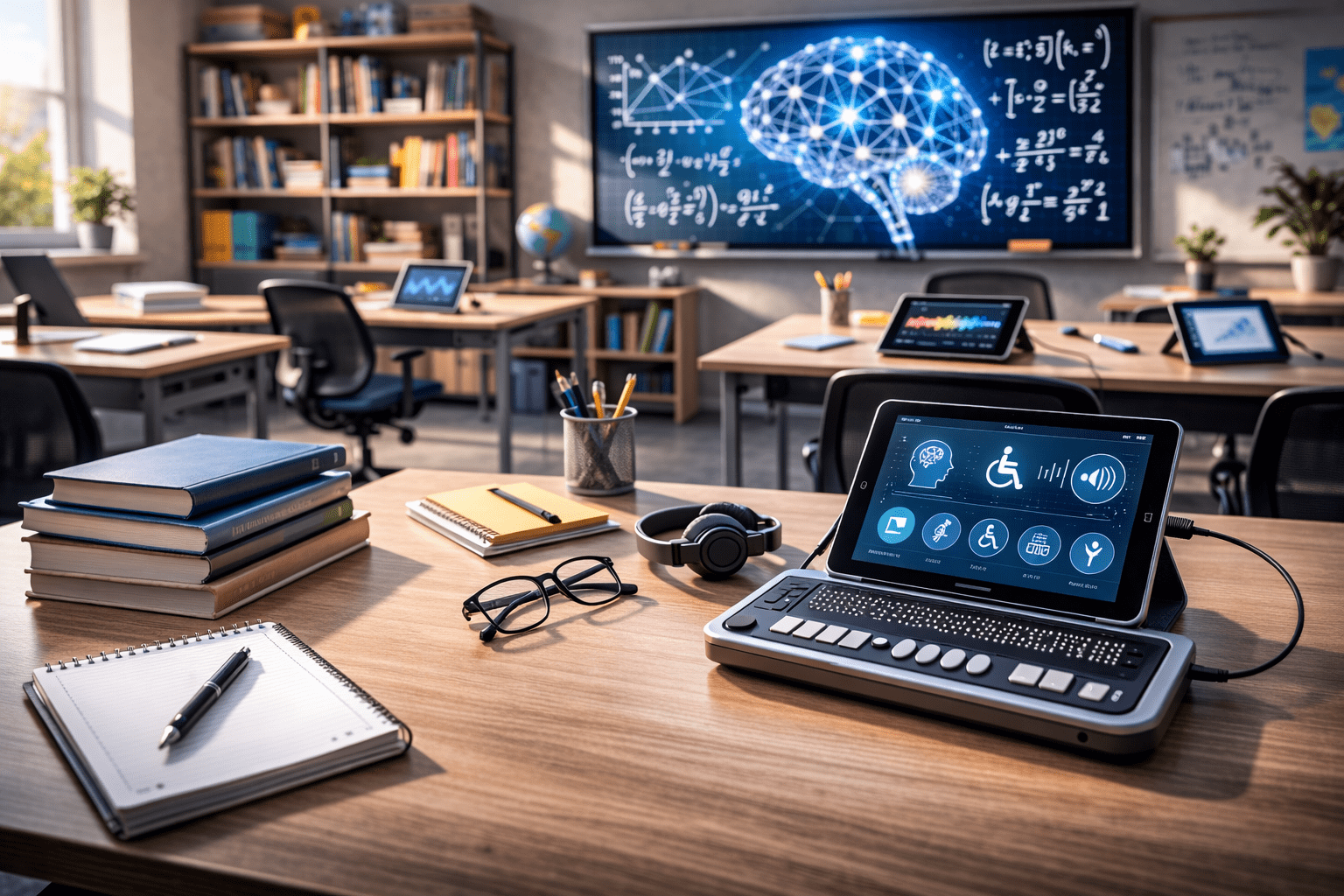
AI and accessibility innovation refer to the use of artificial intelligence to improve access to education for students with disabilities. These technologies help remove barriers to learning by adapting content, communication or classroom experiences to meet individual needs.
In education settings, AI tools may include:
- Speech-to-text and text-to-speech programs
- Real-time captioning systems
- Predictive text for students with writing challenges
- Visual recognition tools for students with visual impairments
- Personalized learning platforms that adjust in real time
Federal laws such as the Individuals with Disabilities Education Act (IDEA) and Section 504 of the Rehabilitation Act require schools to provide a Free Appropriate Public Education. That includes assistive technology when it is necessary for a student to access learning.
AI-powered assistive technology falls under this requirement if a student’s IEP team determines it is needed. Schools cannot deny appropriate tools simply because they are new or technology-based.
AI and accessibility innovation are not separate from special education. They are becoming part of how schools deliver accommodations, modifications and individualized support.
Recognizing the Signs or When to Be Concerned
Not every child needs AI-based tools. But some students may benefit significantly from accessibility innovations, especially if traditional supports are not enough.
Parents may want to ask about AI-powered supports if their child:
- Struggles with reading despite intervention
- Has difficulty writing due to dyslexia or motor challenges
- Experiences speech or communication delays
- Has vision or hearing impairments
- Becomes overwhelmed by large amounts of text
- Needs constant adult prompting to stay engaged
Age breakdown examples:
Early Childhood (Ages 3–5):
- Speech-generating devices for nonverbal children
- Visual supports powered by adaptive software
- Interactive language modeling programs
Elementary School (Ages 6–10):
- Text-to-speech tools for emerging readers
- AI reading tutors that adjust pacing
- Writing supports with predictive spelling
Middle and High School:
- Real-time lecture transcription
- Smart note-taking tools
- Personalized study platforms that adapt to comprehension
Red flags that additional support may be needed:
- Your child’s progress stalls despite current accommodations
- IEP goals are repeatedly unmet
- Your child expresses frustration with reading or writing tasks
- Teachers report attention or comprehension concerns
If you find yourself asking, “How to qualify for assistive technology?” or “When should I request an evaluation?” it may be time to start the conversation.
The Research or Science Behind It
The science behind AI and accessibility innovation is grounded in brain development and learning theory.
Children learn best when instruction matches their cognitive processing strengths. Students with dyslexia, ADHD, autism or language disorders often process information differently. AI systems can detect patterns in performance and adjust difficulty, pacing or presentation style almost instantly.
For example:
- AI reading programs can slow down text complexity while maintaining age-appropriate content
- Speech recognition software reduces the motor load required for writing
- Adaptive platforms provide immediate corrective feedback
Research in neuroplasticity shows that the brain changes with targeted practice. Early intervention matters because younger brains are especially responsive to structured support. When accessibility tools are introduced early, students often build independence faster.
Long-term outcomes associated with effective assistive technology include:
- Improved reading fluency
- Increased written output
- Higher academic confidence
- Greater classroom participation
Timing matters. Waiting until a child falls significantly behind can make remediation harder. Early access to AI-based supports may prevent academic gaps from widening.
Importantly, AI does not replace specialized instruction. It works best when combined with evidence-based teaching methods and human guidance.
How to Access Support or Take Action
If you believe your child could benefit from AI and accessibility innovation, here is how to take action:
Step 1: Request an Evaluation
Submit a written request for an assistive technology evaluation. Schools are required under IDEA to consider assistive technology at every IEP meeting.
Step 2: Ask Specific Questions
During meetings, ask:
- What AI-based tools are available in our district?
- Has my child been evaluated for assistive technology?
- Can we trial different tools before making a decision?
Step 3: Request Data
Ask the school to collect performance data during any trial period. Improvements in reading rate, writing length or task completion should be documented.
Step 4: Ensure It Is Written in the IEP
If a tool is approved, it must be clearly listed in the IEP, including when and how it will be used.
Step 5: Understand Cost and Access
Parents often ask, “Is it free?” If the school determines the tool is necessary for educational access, the district must provide it at no cost.
Timeline expectations:
- Schools typically have 60 days to complete evaluations after consent
- Trial periods may last several weeks
- Revisions can occur at any IEP meeting
You also have the right to request an independent educational evaluation if you disagree with the school’s assessment.
What Happens Next or Transition Planning
Once AI-based supports are implemented, parents should expect an adjustment period. Teachers and students may need training to use new tools effectively.
Progress monitoring should include:
- Data on academic improvement
- Student feedback
- Observations from teachers
- Review of IEP goals
As students transition between grade levels or schools, accessibility supports should transition with them. For example:
- Preschool to kindergarten transitions should include assistive technology planning
- Middle school transitions may require updated devices
- High school students may need tools that prepare them for college or workforce settings
In college, students must self-advocate under disability services. Teaching teens how to use AI-based accessibility tools independently can strengthen long-term success.
The long-term goal is not dependence on technology. It is independence through access.
Frequently Asked Questions (FAQ)
What is AI and accessibility innovation in schools?
AI and accessibility innovation refer to artificial intelligence tools that improve access to learning for students with disabilities. These tools may include speech-to-text software, adaptive reading programs or real-time captioning systems.
How do I know if my child qualifies for AI-based assistive technology?
Your child may qualify if the IEP team determines that assistive technology is necessary for educational access. A formal evaluation is typically required to assess needs and document eligibility.
Is AI assistive technology free through the school?
If the tool is written into the IEP or 504 plan as necessary, the school must provide it at no cost to families under federal law.
Can AI replace special education services?
No. AI and accessibility innovation support instruction but do not replace teachers, therapists or evidence-based interventions. They are tools, not substitutes.
When should I request an assistive technology evaluation?
You should request one if your child struggles despite accommodations, shows limited progress or needs constant adult support to complete academic tasks.
What happens if the school says no to AI tools?
You can request written documentation explaining the decision, ask for additional data collection or pursue an independent educational evaluation if you disagree.
References
Centers for Disease Control and Prevention: Assistive Technology and Children With Disabilities
U.S. Department of Education: A Guide to the Individualized Education Program
Individuals with Disabilities Education Act: Sec. 300.105 Assistive Technology
National Institutes of Health: Neuroplasticity and Learning Development
Center on Technology and Disability: Assistive Technology in Education