
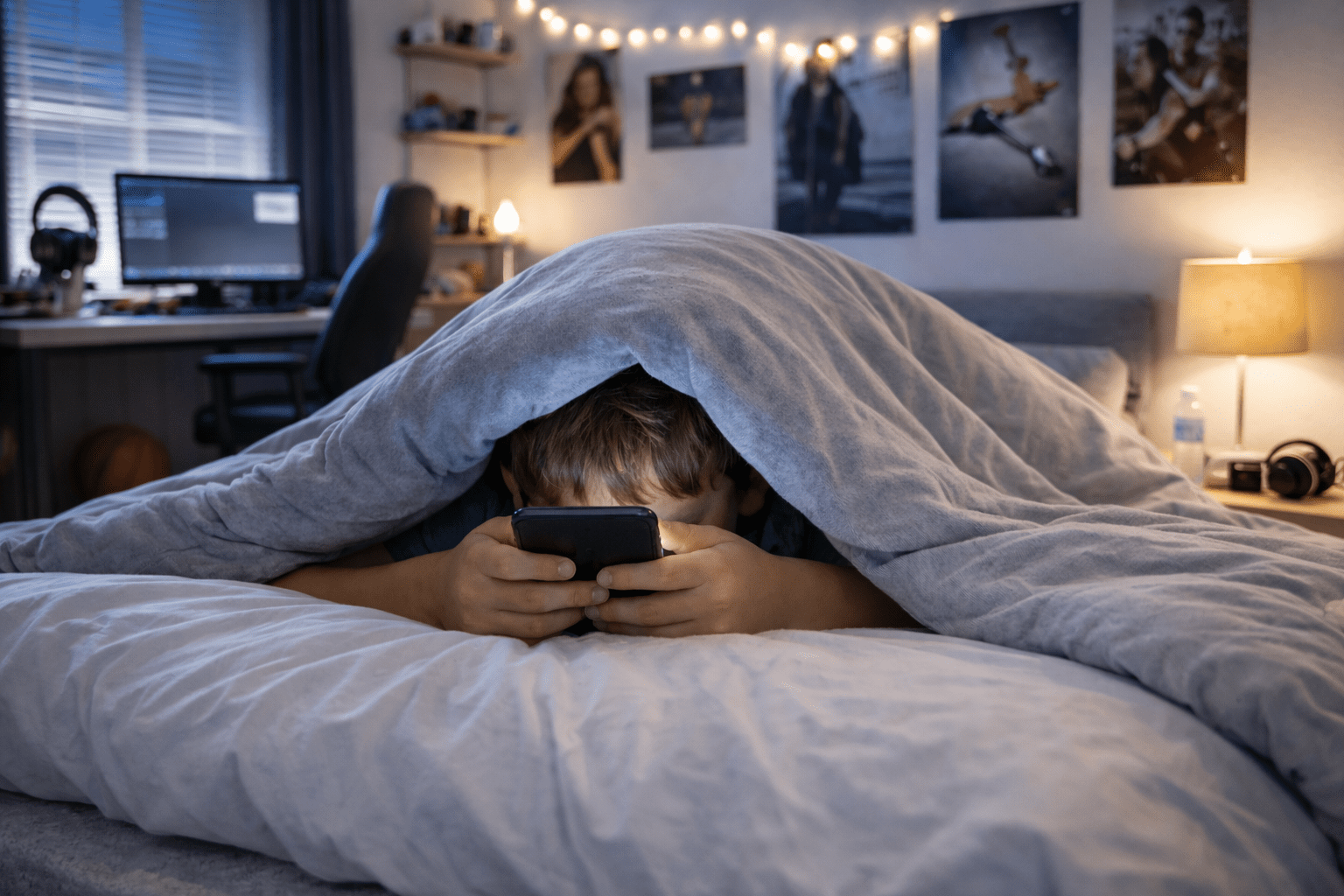
Phone in Bedroom: Should Kids Sleep With Their Phone?
Parents ask this question because it shows up in real life, every night: Should my child sleep with their phone? For many kids, the phone is an alarm clock, a comfort object, a homework tool and a social lifeline. For many parents, it is also a sleep thief, a distraction and a doorway to late-night stress.
If you are weighing a phone in bedroom rule, you are not alone. The goal is not to punish or shame your child. It is to protect sleep, support healthy brain development and reduce risks that tend to spike after lights-out, like impulsive texting, unsafe content or cyberbullying. The good news: small, consistent changes often make a noticeable difference within days.
Understanding Phone in Bedroom
A “phone in bedroom” setup usually means a child keeps a smartphone or internet-connected device within reach overnight, often on the bed, under the pillow or on a nightstand. Even if the phone is “off,” many kids keep it close because they worry about missing messages, want entertainment or use it as an alarm.
From a health standpoint, the concern is less about the device itself and more about what it changes: sleep timing, sleep quality and emotional regulation. Notifications, bright screens, engaging content and social pressure can push bedtime later and make it harder to fall asleep. Interrupted sleep can add up quickly, especially for school-age kids and teens who already face early school start times.
There is also a safety and supervision angle. Nighttime is when parents are least likely to notice new apps, group chats, risky dares, explicit content or harassment. Many families treat the bedroom as a private space, but phones make it a connected space. Setting limits is a form of digital safety, not just discipline.
Recognizing the Signs or When to Be Concerned
Some kids can keep a phone in bedroom without major problems. Many cannot, especially during stressful school weeks or social conflict. Look for patterns that suggest the phone is interfering with sleep or well-being.
Common signs the phone is hurting sleep
- Trouble falling asleep, especially taking more than 30 minutes most nights
- Waking up tired even after “enough” hours in bed
- Middle-of-the-night awakenings to check messages or scroll
- Falling asleep in class, napping late afternoon or needing caffeine
- Weekend “catch-up sleep” that shifts bedtime even later
Signs it may be affecting mood, behavior or school
- Irritability, short temper, more conflict at home
- Increased anxiety, especially about friendships or group chats
- Drop in grades, missed assignments, poor focus
- Withdrawing from family routines, like dinner or bedtime
Age-related patterns to watch
- Elementary school (ages 6–10): Trouble waking up, morning meltdowns, sneaky screen use, nightmares after scary videos
- Middle school (ages 11–13): Late-night texting, social drama, sleepiness, hiding the phone, “just one more” scrolling
- High school (ages 14–18): Chronic late bedtime, early alarms, driving while tired, pressure to respond instantly, doomscrolling, more exposure to mature content
Red flags that call for stronger limits
- Phone use after bedtime most nights, even with agreed rules
- Your child seems unable to stop, even when consequences are clear
- Sudden mood changes tied to online interactions
- Sexual content, threats, self-harm content or harassment
- Sleep dropping below recommended hours for age, week after week
If you see red flags, it is reasonable to move quickly to a no phone in bedroom expectation, at least on school nights.
The Research or Science Behind It
Sleep is not just rest. For kids and teens, it is active brain work. During sleep, the brain consolidates learning, regulates emotions and supports growth. When sleep is cut short or interrupted, kids are more likely to struggle with attention, impulse control and mood.
Why screens can disrupt sleep
- Light and timing: Bright light in the evening can delay the body’s natural sleep cycle. Even without extreme brightness, screen use often pushes bedtime later because content is stimulating.
- Arousal and stress: Social media, gaming and group chats can raise stress or excitement, making it harder to wind down.
- Fragmented sleep: Notifications, vibrations and the habit of checking the phone can cause micro-awakenings. Kids may not fully remember waking, but sleep quality can still suffer.
Brain development and self-control
Teens are still developing the parts of the brain that manage planning, self-control and risk assessment. That does not mean teens are irresponsible. It means they benefit from guardrails. A phone in bedroom creates constant temptation at the exact time when the brain needs a break. Removing the device overnight reduces friction and makes it easier for kids to succeed.
Long-term outcomes
Chronic sleep loss is linked with higher risk of anxiety and depression symptoms, poorer academic performance and more risky decision-making. Timing matters because sleep patterns can slide gradually. A teen might start with “just 10 minutes,” then drift into an hour or two, especially during emotionally intense periods like friendship conflict, exams or breakups.
A practical way to think about it: if the phone costs your child 45 minutes of sleep on most school nights, that is hours of lost sleep each week. Over a semester, it adds up.
How to Access Support or Take Action
A strong plan is clear, predictable and respectful. The best rules are the ones you can enforce calmly.
Step 1: Set a household goal
Keep it about health, not morality. Try: “We’re protecting sleep and lowering stress.”
Step 2: Choose a simple rule
Most families do best with one of these:
- No phone in bedroom on school nights
- No phone in bedroom any night
- Phone docks outside bedrooms at a set time (for example, 30–60 minutes before bedtime)
If you are starting from scratch, aim for a realistic change: dock the phone 30 minutes before lights-out, then move earlier if needed.
Step 3: Create a charging station
Put chargers in a common area, like the kitchen or hallway. If possible, include the parents’ phones too. Shared rules feel fair and reduce power struggles.
Step 4: Replace the “alarm clock” excuse
Buy a basic alarm clock or use a smart speaker with limited features. This removes one of the most common reasons kids keep a phone in bedroom.
Step 5: Use device tools
Most phones have built-in features that help:
- Do Not Disturb or Focus modes for sleep hours
- Downtime limits and app limits
- Allowed contacts for emergencies
- Turning off notifications for social apps at night
These tools work best as backup, not the only plan. A phone in bedroom can still tempt a child to override settings.
Step 6: Put the agreement in writing
A short family media plan can reduce debate. Include:
- Docking time
- Exceptions, like travel
- What happens if the rule is broken
- A review date in two weeks
Step 7: Know your rights as a parent
You are allowed to set boundaries around devices you provide and pay for. You can require phones to be charged outside bedrooms, review app downloads and set limits on data plans. If your child argues privacy, respond with a balance: “You deserve privacy in your room. You do not need private access to the entire internet at midnight.”
Step 8: Watch the timeline
Many families notice improvements in 3–7 nights: easier mornings, better mood, less arguing at bedtime. If things get worse at first, that is common. Habits take time to reset.
If you suspect anxiety, depression or bullying is driving nighttime phone use, consider additional support:
- School counselor
- Pediatrician
- Licensed therapist
What Happens Next or Transition Planning
Expect a transition period. Kids often feel genuine discomfort when the phone is removed at night because the device has become part of their coping routine. Your job is to keep the boundary steady while offering other ways to feel safe and connected.
What parents can expect
- Pushback: “Everyone else has it.” “What if there’s an emergency?”
- Negotiation: “Just weekends.” “Just keep it on the charger in my room.”
- Testing: Sneaking an old device, using a tablet, borrowing a sibling’s phone
How to respond
- Keep your message short: “Phones charge in the kitchen.”
- Avoid long debates at bedtime.
- Offer alternatives: a book, music without a screen, journaling, a short check-in conversation before lights-out.
School supports and planning
If your child has ADHD, anxiety or sleep disorders, talk to your pediatrician. Sleep plans can be part of broader support. For students with health needs, schools may consider accommodations through a 504 plan, such as support for attention or fatigue, but the first step is usually improving sleep habits at home.
Long-term perspective
The goal is not to ban technology forever. It is to teach healthy boundaries. Many teens can earn more flexibility over time, such as keeping the phone in the bedroom only after a sustained period of good sleep and responsible use, with clear expectations.
Frequently Asked Questions (FAQ)
Should kids sleep with their phone for emergencies?
Most families can handle emergencies without a phone in bedroom. Use a landline, a parent phone nearby or allow calls from specific contacts through a device docked outside the bedroom.
What age should a phone stay out of the bedroom?
Many experts encourage keeping phones out of bedrooms for school-age kids and teens because sleep needs are high and self-control is still developing. If you allow it, consider strict limits and revisit often.
Does airplane mode solve the problem?
Airplane mode can reduce notifications, but it does not remove the temptation to scroll, watch videos or game. For many kids, the easiest solution is charging the phone outside the bedroom.
How do I enforce a phone in bedroom rule without constant fights?
Make it routine: same docking time, same location, same consequence. Keep conversations about the rule during the day, not at bedtime, and model the behavior by docking your phone too.
What if my teen says I’m invading their privacy?
You can respect privacy while still setting health boundaries. Frame it as sleep protection and safety, not spying, and offer privacy-friendly choices like no phone in bedroom but private journaling or a nightly check-in.
Will taking the phone away at night hurt my child socially?
Most social groups adapt quickly. Encourage your child to tell friends they are offline after a certain hour. True friends will adjust, and your child may feel less pressure to respond instantly.
Is it OK to keep the phone in the bedroom if my child uses it as a white-noise machine?
It can work if the phone is placed across the room, notifications are off and apps are locked, but many kids still end up using it. A standalone white-noise machine is usually simpler and more reliable.
References
American Academy of Pediatrics: Family Media Plan and Media Use Guidance
Centers for Disease Control and Prevention: Sleep and Sleep Health for Children and Teens
National Institutes of Health (NHLBI): Healthy Sleep Information and Sleep Basics
U.S. Department of Education: Student Mental Health and School-Based Supports
Common Sense Media: Research and Guidance on Teens, Screens and Sleep
Sleep Research Society: Peer-Reviewed Findings on Screen Use and Sleep Outcomes