Wearables for Autism Safety: GPS Trackers and ID Bracelets
Understanding Wearables for Autism Safety
For many families, safety planning is part of daily life when a child has autism. One of the biggest concerns is wandering, sometimes called elopement, when a child leaves a safe area without a caregiver’s knowledge. Wearables for autism safety are tools designed to lower that risk and speed up help if a child gets lost.
These devices generally fall into three categories:
- GPS trackers that help caregivers locate a child in real time or near real time
- ID wearables like bracelets or shoe tags that share essential information quickly
- Anti-wandering tools such as proximity alarms or door alerts that notify adults when a child moves away
It helps to know that most wearables are not “one-size-fits-all.” The best choice depends on your child’s age, sensory needs, communication skills, wandering patterns and where risk is highest, such as crowded places, transitions to and from school or unfamiliar settings.
There are also practical and policy considerations. In school, devices may intersect with privacy rules, campus safety procedures and your child’s plan under IDEA (special education law) or Section 504 (disability accommodations). Some supports may be written into an IEP or 504 plan, like extra adult supervision during transitions, a bus pick-up handoff procedure or a visual “stop” cue. A wearable can complement those supports, but it should not replace appropriate supervision.
Recognizing the Signs or When to Be Concerned
Wandering can happen in any family, but autism can add risk because of differences in communication, impulse control, sensory seeking or strong interests. Some children wander toward water, traffic, trains, playgrounds or a favorite store. Others bolt during stressful moments, like loud events or unexpected changes.
Common situations that may raise concern include:
- A child has left home, a yard or a classroom area before
- A child runs during transitions, drop-off, pick-up or community outings
- A child is drawn to water or other high-risk locations
- A child does not respond reliably to their name or safety commands
- A child cannot state their name, address or caregiver’s phone number
Age-related patterns can look different:
- Preschool (3–5): Curiosity-based wandering, difficulty with boundaries, bolting when upset
- Elementary (6–10): Strong interest-based wandering, leaving to avoid demands, hiding
- Middle school (11–13): Greater physical speed and distance, impulsive exits, more independent movement expectations
- Teens (14–18): Desire for independence, risk during community access, potential shame or refusal to wear visible IDs
Red flags that often suggest it’s time to add or upgrade safety supports:
- Increased bolting after a move, school change or new routine
- New sleep problems, anxiety or sensory overload that leads to flight behavior
- Access to doors, windows or yards without reliable barriers
- Caregivers feel they cannot manage outings safely without extra safeguards
Examples of wearables for autism safety that may fit different needs:
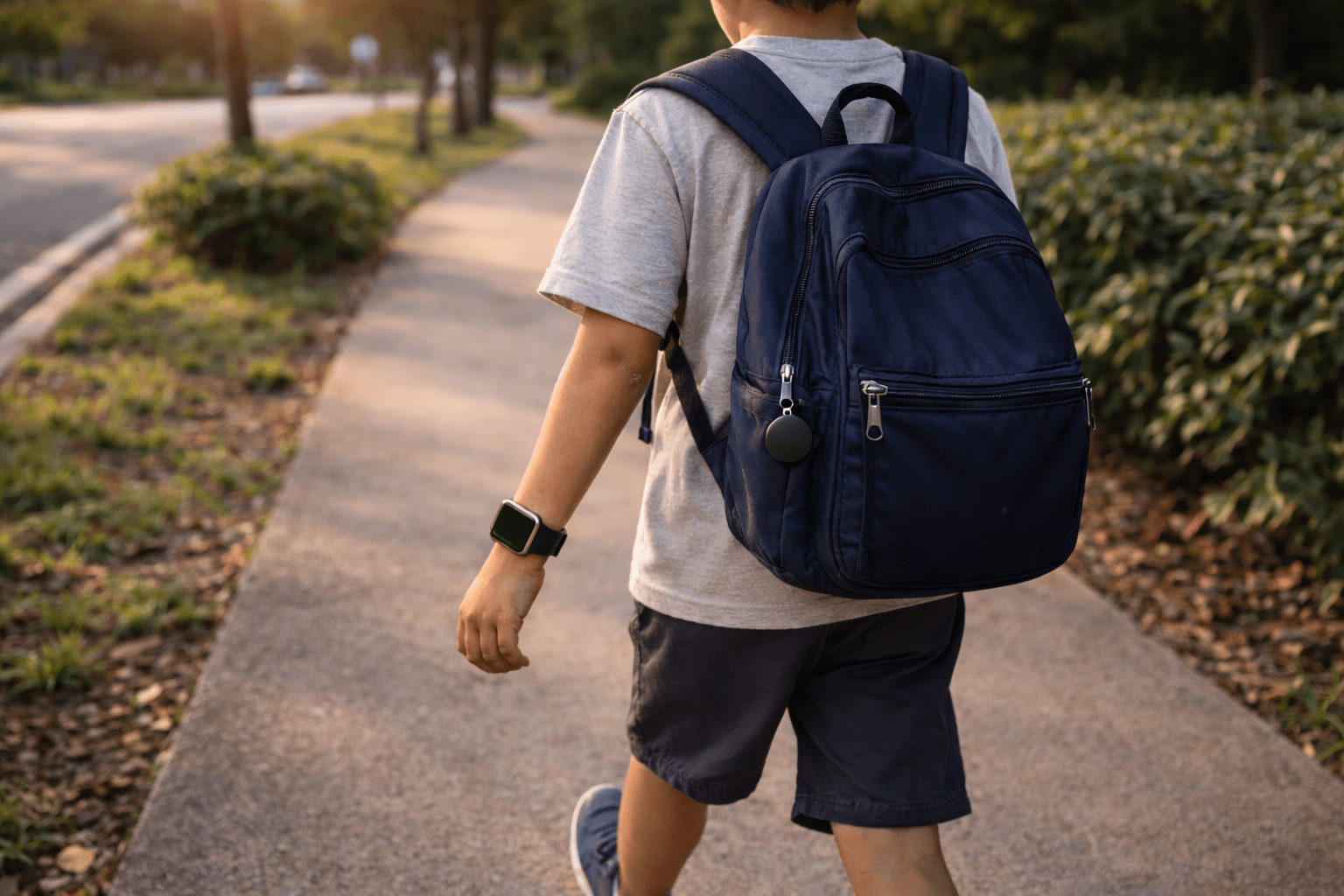
- GPS tracker watch: Useful for kids who tolerate wrist wear and can keep it on
- Clip-on tracker or tag: Better for kids who dislike wristbands, but it must attach securely
- Medical ID bracelet or shoe tag: Helpful when a child may not speak or may be overwhelmed
- Proximity alarm: Alerts you when a child moves beyond a set distance, best for crowded settings
- Door and window alerts: Not wearable, but often a key part of an anti-wandering plan at home
The Research or Science Behind It
Wandering in autism is widely recognized as a serious safety issue. From a developmental standpoint, several factors can raise risk:
- Executive function and impulse control: Some children act quickly before processing danger, especially during stress.
- Communication differences: A child who cannot reliably answer questions may struggle to ask for help or share identifying information.
- Sensory processing: Noise, crowds or bright lights can trigger a fight-or-flight response.
- Perseveration and intense interests: A child may head toward a preferred place or object without understanding boundaries.
Wearables for autism safety work best when they fit into a broader prevention plan. A GPS tracker can reduce the time it takes to locate a child, which matters because risk increases as time passes and distance grows. An ID bracelet can help a community member or first responder quickly contact you, especially when a child is nonverbal, uses AAC or is too distressed to speak.
Timing matters, too. Families often wait until after a frightening incident to add supports. If your child has shown early bolting behavior, planning ahead may prevent a crisis. The goal is not to restrict your child’s life. It is to make everyday activities safer while building skills over time, like stopping at curbs, responding to a safety word or practicing supervised independence.
It’s also important to be realistic about what devices can and cannot do. GPS accuracy varies by environment. Batteries die. Some devices require cell service. Others lag behind real-time location. That is why experts typically recommend layers: supervision, environmental safeguards, teaching, school planning and technology.
How to Access Support or Take Action
If you are considering GPS trackers, autism ID bracelets or other anti-wandering tools, a step-by-step approach can make the decision clearer and improve follow-through.
- Document the safety concern
- Write down incidents, triggers, locations and times of day.
- Note how quickly your child can move and whether they are drawn to water or traffic.
- This record helps medical providers and schools take the concern seriously.
- Choose the right category of tool
- Start with identification: Many families begin with a medical ID bracelet or shoe tag because it is low cost and useful anywhere.
- Add tracking if risk is higher: If your child has left supervised spaces, a GPS tracker for autism safety can be a practical next layer.
- Use alerts at home: Door chimes, smart locks and window alarms can prevent exits during busy moments or at night.
- Plan for sensory and routine acceptance
- Introduce wearables gradually during calm times.
- Practice at home with short wear periods and praise.
- Consider comfort: soft bands, tag placement, seamless designs or hidden IDs if your child refuses visible items.
- Address privacy and settings
- Decide who has access to location data and when it is used.
- Review app settings, sharing permissions and emergency contacts.
- For older kids and teens, explain the purpose in respectful, concrete language: “This helps us find you fast in an emergency.”
- Ask the school for a safety meeting
If wandering risk affects access to education or safe participation, bring it to your child’s IEP or 504 team. Useful requests include:
- Supervision coverage during transitions, recess and arrival/dismissal
- A written handoff procedure for bus and car line
- Door monitoring protocols and staff training on your child’s plan
- A communication plan if your child is missing, including who calls 911 and when
- Elopement prevention goals or supports if appropriate
Parent rights matter here. Under IDEA and Section 504, schools must provide reasonable supports for safety and access, though rules vary by district and situation. A wearable may be allowed as part of a plan, but schools may have policies about student devices, data access and who can manage charging or monitoring. If a school cannot support a specific device, you can still push for effective alternatives, like staffing coverage, visual supports or environmental adjustments.
- Explore funding options
Costs can be a barrier. Options may include:
- Health savings accounts or flexible spending accounts for certain items (rules vary)
- Medicaid waivers or state disability programs in some areas
- Local nonprofit grants or community resources
- Insurance coverage is inconsistent, but a physician letter describing medical necessity may help in some cases
Timeline expectations: Small steps can happen quickly, like ordering an ID bracelet and installing door alarms. School plan changes may take longer because they require team meetings and documentation, often weeks rather than days.
What Happens Next or Transition Planning
Once you choose wearables for autism safety, the next phase is building a routine and updating safety plans as your child grows.
What to expect in the first month:
- Trial and error with comfort and fit
- Learning battery habits, charging schedules and app settings
- Figuring out the best wearing times, such as outings, travel days or crowded events
- Adjusting family roles so more than one adult understands how the device works
For school transitions:
- Preschool to kindergarten: Ask early about campus safety procedures, arrival/dismissal supervision and playground exits. Consider adding identification wearables if your child cannot reliably state personal information.
- Elementary to middle school: Transitions increase, campuses get larger and independence expectations rise. Update your child’s IEP/504 safety plan before the first day.
- Middle to high school: If your teen is working on community-based instruction or job training, revisit the balance between safety and autonomy. Some families shift from constant tracking to “on during outings” use, paired with teaching safety scripts and phone skills when appropriate.
IEP/504 planning can include prevention supports and skill building, not just crisis response. That may look like:
- Practicing safe walking routines with reinforcement
- Teaching a safety phrase or showing an ID card on request
- Using visual supports for “stop,” “wait” and “check in”
- Building supervised independence in small, planned steps
Long term, the goal is a layered plan that evolves. A tracker may be essential at age 6 but less needed at 16 if your teen can communicate, follow safety rules and use a phone. Or it may remain important for a young adult who is vulnerable in the community. The “right” plan is the one that keeps your child safe while respecting their dignity.
Frequently Asked Questions (FAQ)
What are the best wearables for autism safety for wandering?
The best option depends on your child’s risk level and sensory needs. Many families use a combination, such as an autism ID bracelet for identification and a GPS tracker for higher-risk outings.
How accurate is a GPS tracker for autism safety?
Accuracy varies by device, location and cell coverage. GPS trackers can be very helpful, but they are not perfect, so they work best alongside supervision and other anti-wandering tools.
Will a school allow my child to wear a GPS tracker or ID bracelet?
Many schools allow medical ID wearables, and some will accommodate GPS devices, but policies differ. Bring the concern to the IEP or 504 team and request a written safety plan for transitions and supervision.
What should an autism ID bracelet say?
Keep it simple: your child’s name, “autism” if you choose to include it, “may wander,” communication notes like “nonverbal,” and one or two caregiver phone numbers. You can also add allergies or a critical medical condition.
Are anti-wandering devices enough to prevent elopement?
No single tool is enough. Wearables for autism safety work best as part of a layered plan that includes home safeguards, school supports and teaching safety skills over time.
Can insurance or Medicaid help pay for GPS trackers or safety devices?
Coverage varies widely. Some families get support through Medicaid waivers, disability programs or local grants, and a physician letter of medical necessity may help with certain funding requests.
References
Centers for Disease Control and Prevention: Autism Spectrum Disorder (ASD)
National Institutes of Health: Autism Spectrum Disorder Information Page
U.S. Department of Education: Protecting Students With Disabilities
IDEA: Individuals with Disabilities Education Act Overview
Parent Center Hub: IEPs and 504 Plans for Students With Disabilities
American Academy of Pediatrics: Autism Spectrum Disorder Guidance for Families