What Is FAPE? Your Child’s Rights Under IDEA
When your child struggles in school due to a disability, it can feel overwhelming. You may wonder what support is available, who pays for services and what your rights are as a parent. The good news is that federal law protects your child’s access to a Free Appropriate Public Education, often called FAPE.
Under the Individuals with Disabilities Education Act, or IDEA, every eligible child with a disability has the right to FAPE. This legal guarantee ensures special education services are provided at no cost to families and tailored to a child’s unique needs. Understanding how Free Appropriate Public Education works is the first step in advocating effectively for your child.
Understanding Free Appropriate Public Education (FAPE)
Free Appropriate Public Education is a legal right under IDEA. It means that public schools must provide special education and related services to eligible students with disabilities at no cost to parents.
Let’s break it down:
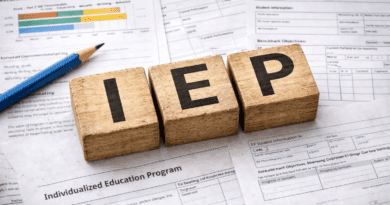
- Free means families cannot be charged for special education services, evaluations, therapies or supports outlined in a child’s Individualized Education Program, or IEP.
- Appropriate means services must be tailored to meet the child’s individual needs and allow meaningful progress.
- Public Education means services must be provided under public supervision and direction, typically through the local school district.
FAPE applies to children ages 3 through 21 who qualify under one of IDEA’s 13 disability categories, including autism, specific learning disability, speech or language impairment, ADHD under Other Health Impairment and emotional disturbance.
In 2017, the U.S. Supreme Court clarified the standard for FAPE in the case Endrew F. v. Douglas County School District. The Court ruled that schools must offer an education “reasonably calculated to enable a child to make progress appropriate in light of the child’s circumstances.” This raised expectations nationwide, reinforcing that minimal progress is not enough.
If your child qualifies for special education, the school must develop an IEP that outlines:
- Present levels of academic and functional performance
- Measurable annual goals
- Special education services
- Related services such as speech or occupational therapy
- Accommodations and modifications
- Placement in the least restrictive environment
FAPE under IDEA is not a one-size-fits-all program. It is individualized and legally enforceable.
Recognizing the Signs or When to Be Concerned
Many parents ask, “When should I request an evaluation?” If you suspect your child is not making adequate progress, it is important to act early.
Signs your child may not be receiving a Free Appropriate Public Education include:
- Consistent academic struggles despite interventions
- Frequent disciplinary removals related to behavior
- Regression in skills
- Failure to meet IEP goals
- Lack of progress reports
- Services listed in the IEP not being provided
Age-specific concerns may include:
Preschool (Ages 3–5):
- Limited speech development
- Difficulty with basic motor skills
- Trouble following simple instructions
Elementary School:
- Significant reading delays
- Ongoing math struggles
- Social challenges beyond typical development
Middle and High School:
- Failing grades despite accommodations
- Avoidance of school
- Emotional distress linked to academics
Red flags also include schools discouraging evaluation, delaying meetings or suggesting that a child must fail before qualifying. Under IDEA, you do not have to wait for your child to fall far behind to request help.
If you believe your child is not receiving FAPE, you have the right to request an IEP meeting at any time.
The Research or Science Behind It
The foundation of Free Appropriate Public Education is rooted in decades of research showing that early and individualized intervention improves long-term outcomes for children with disabilities.
Brain development research shows that early childhood is a critical window for language, executive functioning and social-emotional growth. When services such as speech therapy, behavioral support or reading intervention are delivered early, neural pathways strengthen more effectively.
Studies consistently demonstrate that:
- Early intervention improves academic achievement.
- Individualized instruction increases skill retention.
- Inclusive settings benefit both students with and without disabilities.
- Delayed support leads to widening achievement gaps.
Timing matters. The earlier a child receives appropriate services, the greater the likelihood of improved independence, graduation rates and employment outcomes in adulthood.
The Endrew F. decision reinforced that children deserve meaningful progress, not just access to a classroom. Schools must design IEPs that are ambitious and responsive to the child’s potential.
How to Access Support or Take Action
If you believe your child may qualify for special education or is not receiving appropriate services, here are the steps to take:
1. Submit a Written Request for Evaluation
Send a dated letter or email to your school’s special education director requesting a comprehensive evaluation. Keep a copy for your records.
2. Understand the Timeline
Under federal law, schools must complete an evaluation within 60 days of receiving parental consent, though some states have shorter timelines.
3. Review the Evaluation Results
If your child qualifies under IDEA, the school must develop an IEP within 30 days. If your child does not qualify and you disagree, you can request an Independent Educational Evaluation at public expense.
4. Participate Actively in the IEP Meeting
You are an equal member of the IEP team. You can:
- Bring outside reports
- Request specific services
- Ask how progress will be measured
- Request data supporting proposed goals
5. Monitor Progress
Schools must provide regular progress reports. If goals are not being met, you can request an IEP revision.
Parents also have dispute resolution rights under IDEA, including:
- Mediation
- State complaints
- Due process hearings
Free Appropriate Public Education is enforceable. If a school fails to provide services listed in the IEP, that may constitute a denial of FAPE.
What Happens Next or Transition Planning
Once your child has an IEP in place, services should begin immediately. Progress should be monitored and discussed at least annually, though meetings can be requested at any time.
As children grow, FAPE evolves with them.
Preschool to Kindergarten:
Transition meetings ensure services continue smoothly when moving into elementary school.
Elementary to Middle School:
Academic demands increase, and IEP goals may shift toward organization, executive function and independence.
High School Transition Planning:
By age 16, IDEA requires transition planning focused on postsecondary education, employment and independent living. The IEP must include measurable transition goals and services to support them.
When a student turns 18, educational decision-making rights typically transfer to the student unless guardianship or supported decision-making arrangements are in place.
FAPE continues until the student graduates with a regular diploma or ages out, typically at 21.
A long-term perspective matters. The goal of Free Appropriate Public Education is not just academic survival but preparation for adult life.
Frequently Asked Questions (FAQ)
What is Free Appropriate Public Education under IDEA?
Free Appropriate Public Education, or FAPE, is a legal right ensuring eligible students with disabilities receive individualized special education services at no cost to parents.
How do I know if my child qualifies for FAPE?
Your child must have one of IDEA’s recognized disabilities and need specialized instruction. A formal evaluation by the school determines eligibility.
Is FAPE the same as an IEP?
No. FAPE is the legal right. An IEP is the written plan that outlines how the school will provide that Free Appropriate Public Education.
What happens if the school does not provide services listed in the IEP?
Failure to implement IEP services may be considered a denial of FAPE. Parents can request a meeting, file a state complaint or pursue mediation.
Is Free Appropriate Public Education really free?
Yes. Schools cannot charge families for special education services, related therapies or evaluations required under IDEA.
Can private school students receive FAPE?
Students placed in private schools by public districts retain FAPE rights. Parentally placed private school students have limited rights but may access some services through their district.
References
U.S. Department of Education: Individuals with Disabilities Education Act
U.S. Supreme Court: Endrew F. v. Douglas County School District
Centers for Disease Control and Prevention: Developmental Disabilities and Early Intervention
National Institutes of Health: Early Brain Development and Learning
Parent Center Hub: Understanding FAPE Under IDEA