
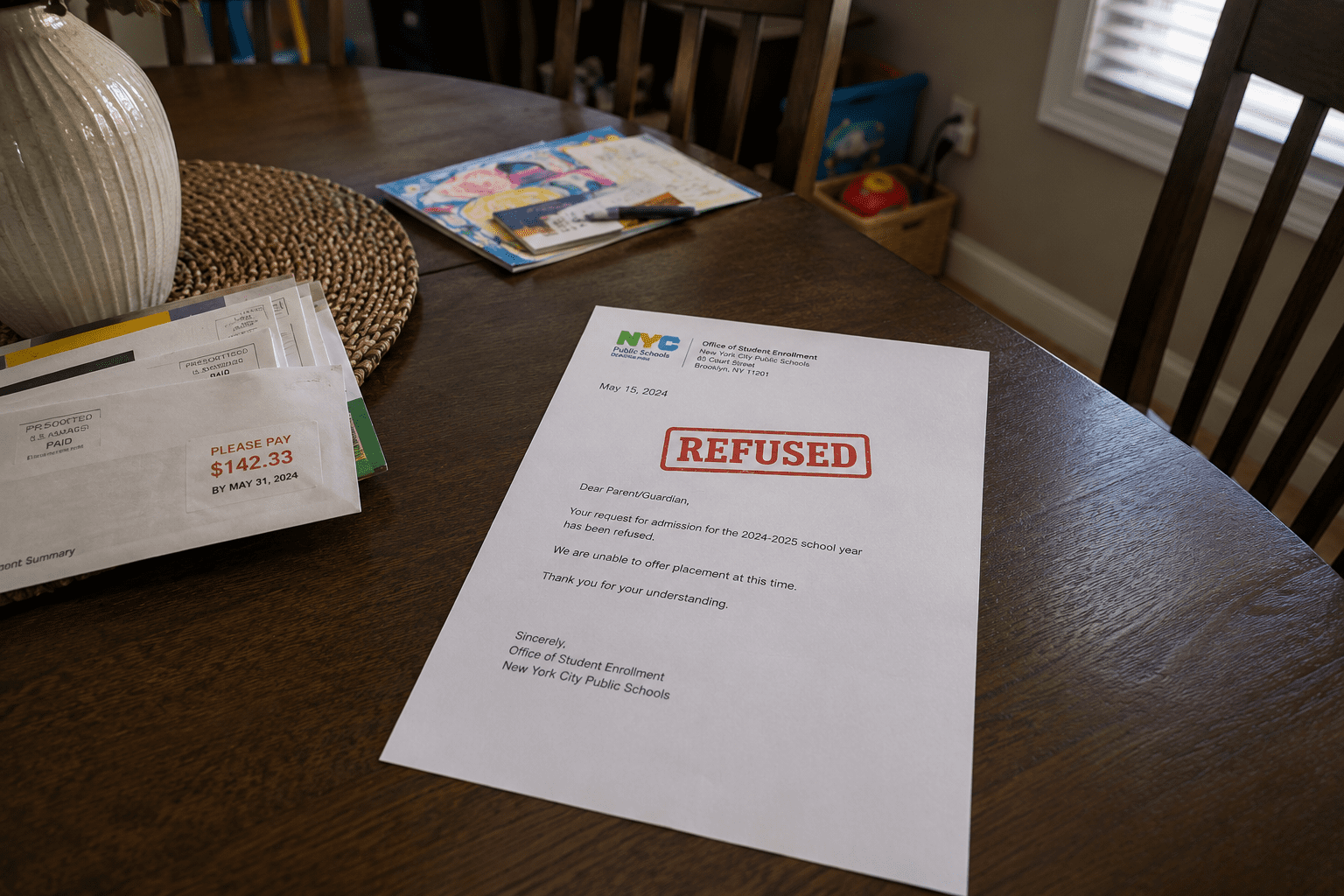
School Refusal in Children: A Practical Guide for NYC Parents
School refusal is one of the most challenging and misunderstood situations a parent can face. Your child is crying, screaming, or physically sick every morning before school. You are late for work, fielding calls from the principal, and watching your child’s attendance fall — all while having no idea why this is happening or what to do about it.
School refusal is more common than most parents realize, and it is not the same as truancy or defiance. It is a pattern of distress that needs to be understood and addressed — not punished.
What Is School Refusal?
School refusal describes a child’s inability or refusal to attend school due to emotional distress. Unlike truancy, children who refuse school are typically at home with their parents’ knowledge. They often want to go to school — they just cannot seem to get there without experiencing significant anxiety, physical symptoms, or emotional overwhelm.
According to research, school refusal affects between 1 and 5 percent of school-age children, with peaks occurring at ages 5 to 6, when school begins, and again at 10 to 13, when children transition to middle school.
Common Causes
School refusal rarely has a single cause. For NYC families, common triggers include anxiety disorders, depression, bullying, social difficulties, academic struggles, learning disabilities that have not been identified, and transitions like changing schools or returning from a long absence.
For some children, separation anxiety is the root cause — they find it difficult to leave a parent or caregiver. For others, the school environment itself is the source of distress: a difficult teacher, a conflict with peers, or a classroom setting that does not meet their learning needs.
In some cases, school refusal is linked to an undiagnosed neurodevelopmental condition such as ADHD, autism spectrum disorder, or a learning disability. The stress of managing an unaddressed challenge can eventually reach a breaking point.
Warning Signs to Watch For
School refusal rarely appears overnight. It typically builds over time with warning signs that are easy to miss. Watch for increasing complaints about headaches, stomachaches, or nausea on school mornings that disappear on weekends. Notice patterns of tearfulness or irritability before school. Pay attention to requests to visit the school nurse frequently, or calls home requesting early dismissal.
Other warning signs include a sharp drop in grades, increased social withdrawal, and avoidance of conversations about school.
What NYC Parents Should Do First
The first step is to take your child’s distress seriously. Even if you cannot see an obvious cause, what your child is feeling is real. Dismissing it or forcing a return to school without addressing the underlying issue often makes things worse.
Talk to your child in a calm, non-judgmental way. Ask open questions: What does school feel like right now? Is there anything that feels hard or scary? What would make it easier? Listen without immediately trying to fix.
Contact your child’s teacher and school counselor to share what you are observing. Ask whether they have noticed changes in behavior or performance. Request a meeting with the school counselor or psychologist if one is available.
If your child’s school refuses or is unable to provide support, contact the NYC DOE’s Division of School Counseling, Leadership, and Intervention Services.
When to Seek Professional Help
If school refusal has lasted more than two weeks, or if your child is experiencing significant anxiety or physical symptoms, it is time to consult a mental health professional. A therapist who specializes in child anxiety can conduct an assessment and recommend a treatment plan.
Cognitive Behavioral Therapy (CBT) is the most evidence-based treatment for school refusal. It helps children identify and challenge anxious thoughts and gradually build tolerance for the situations they are avoiding. Family therapy can also be helpful when parental anxiety or family dynamics are contributing factors.
In NYC, school-based mental health clinics are available in many public schools and are free to students. You can also access services through the NYC Well program or ask your pediatrician for a referral to a child psychologist.
Creating a Return-to-School Plan
Returning to school after an extended absence should be gradual and supported. Work with your child’s school to create a formal plan. This might include a shortened school day to start, a designated safe adult your child can check in with, modifications to the school environment, or accommodations under a 504 plan or IEP if appropriate.
The plan should be written down, agreed upon by all parties — parent, child, school, and therapist — and reviewed regularly. Consistency between home and school is essential.
Attendance Rules and Your Rights in NYC
New York State requires children ages 6 to 16 to attend school, but NYC schools have policies for medical and mental health absences. If your child’s school refusal is medically or psychologically documented, absences may be excused. Ask the school’s attendance coordinator about the process for submitting documentation.
If your child’s absences result in an Education Neglect petition from the Administration for Children’s Services (ACS), contact an attorney immediately. Advocates for Children of New York can provide referrals to families facing this situation.
School refusal is treatable. The earlier it is addressed, the better the outcome. The most important thing you can do is refuse to accept “try harder” as an answer — for yourself or your child.
Frequently Asked Questions
Is school refusal the same as school phobia? The terms are sometimes used interchangeably, but “school refusal” is the preferred clinical term because it is more descriptive and less stigmatizing. School phobia implies a specific phobia of school, whereas school refusal can stem from many different causes.
What if the school pressures me to send my child despite their distress? Schools have an obligation to support student wellbeing. If you feel pressured without adequate support being offered, request a formal meeting with the principal and school psychologist. Document all communications.
Can an IEP or 504 plan help with school refusal? Yes. If your child’s school refusal is related to an anxiety disorder, ADHD, or another condition, accommodations through a 504 plan or specialized services through an IEP can make a significant difference.



obviously like your web site but you have to check the spelling on several of your posts. Many of them are rife with spelling issues and I find it very bothersome to tell the truth nevertheless I will definitely come back again.
Terrific paintings! This is the kind of info that should be shared across the web. Shame on Google for now not positioning this submit higher! Come on over and visit my site . Thank you =)
Loving the information on this internet site, you have done great job on the content.
I also think hence, perfectly written post! .
Berharga info. Untungnya saya menemukan website Anda secara tidak sengaja, dan saya kaget mengapa kecelakaan ini tidak pernah terjadi lebih awal! Saya menandainya.
Awsome website! I am loving it!! Will come back again. I am bookmarking your feeds also.
Simply want to say your article is as astounding. The clearness in your submit is simply excellent and i can suppose you are an expert on this subject. Fine together with your permission let me to take hold of your feed to keep up to date with impending post. Thanks a million and please continue the enjoyable work.
Ya menyimpan ini bukanlah penentuan yang berisiko tinggi posting yang luar biasa! .
Very interesting information!Perfect just what I was looking for!
Terima kasih atas kritik yang masuk akal. Saya & tetangga saya baru saja bersiap untuk melakukan sedikit riset tentang ini. Kami sempat mengambil buku dari perpustakaan lokal kami, tapi saya rasa saya belajar lebih jelas dari postingan ini. Saya benar-benar senang melihat informasi hebat dibagikan secara bebas.
Usually I don’t read article on blogs, but I would like to say that this write-up very pressured me to check out and do it! Your writing taste has been amazed me. Thank you, very nice article.
Anda telah melakukan pekerjaan yang luar biasa dan seluruh komunitas kami akan bersyukur kepada Anda.
It’s hard to find knowledgeable people on this topic, but you sound like you know what you’re talking about! Thanks
I used to be suggested this blog by way of my cousin. I am no longer positive whether or not this publish is written by means of him as nobody else realize such detailed about my difficulty. You’re amazing! Thank you!
Saya selalu peduli dengan topik ini dan masih demikian, sangat dihargai telah memposting.
Wohh persis apa yang saya telusuri, terima kasih atas unggahan.
Saya selalu peduli dengan topik ini dan tetap masih demikian, sangat dihargai telah mengunggah.
Saya menemukan blog Anda di Google dan memeriksa beberapa posting awal Anda. Teruskan pekerjaan yang sangat baik ini. Saya baru saja menambahkan RSS feed Anda ke pembaca berita MSN saya. Menantikan untuk membaca lebih banyak dari Anda nanti!
Terima kasih untuk blog informatif lainnya. Di mana lagi saya bisa mendapatkan informasi seperti itu yang ditulis dengan gaya yang ideal? Saya punya sebuah usaha yang saya sedang jalankan, dan saya sudah mengamati informasi seperti ini.
Wow! Ini bisa jadi salah satu blog paling membantu yang pernah kami temui tentang topik ini. Sebenarnya Mengagumkan. Saya juga seorang ahli dalam topik ini oleh karena itu saya dapat memahami kerja keras Anda.
Bagian yang kuat, saya baru saja memberikannya kepada seorang rekan yang sedang melakukan sedikit sekali evaluasi tentang ini. Dan dia sebenarnya membeli saya sarapan karena saya menemukannya untuknya.. senyum. Jadi biar saya ulangi: Terima kasih untuk traktiran! Namun ya terima kasih telah meluangkan waktu untuk membahas ini, saya sangat merasa kuat tentang hal ini dan suka mempelajari tambahan tentang topik ini. Jika memungkinkan, seiring Anda berkembang menjadi lebih berpengalaman, apakah Anda keberatan memperbarui weblog Anda dengan tambahan rincian? Ini sangat berguna bagi saya. Jempol besar untuk posting blog ini!
Postingan yang luar biasa. Saya benar-benar menikmati cara Anda menyampaikan ide-ide ini. Teruskan pekerjaan yang luar biasa!
Benar-benar indah info dapat ditemukan di web site.
I’ve been browsing on-line more than three hours as of late, yet I by no means found any fascinating article like yours. It’s lovely value enough for me. In my opinion, if all website owners and bloggers made good content as you probably did, the web will probably be a lot more helpful than ever before.
Bagian yang kuat, saya sekadar memberikannya kepada seorang rekan yang sedang melakukan agak evaluasi tentang ini. Dan dia pada kenyataannya membeli saya sarapan sebagai hasil dari saya menemukannya untuknya.. senyum. Jadi biar saya ulangi: Terima kasih untuk jamuan! Akan tetapi ya terima kasih telah meluangkan waktu untuk membahas ini, saya sangat merasa kuat tentang hal ini dan suka mempelajari tambahan tentang topik ini. Jika bisa dilakukan, seiring Anda menjadi lebih berpengalaman, apakah Anda berkenan memperbarui weblog Anda dengan lebih banyak detail? Ini sangat berguna bagi saya. Jempol besar untuk kiriman blog ini!
As soon as I found this internet site I went on reddit to share some of the love with them.
Saya perlu mengatakan, ini adalah salah satu artikel terbaik yang yang pernah saya baca belakangan ini. Konten yang sangat membantu. Terima kasih telah berbagi.
Hei semua, kamu sudah melakukan kerja yang luar biasa. Saya pasti akan menyimpan ini dan kembali untuk melihat konten lainnya. Terima kasih!
Seseorang pada dasarnya membantu membuat artikel yang sangat baik, saya akan katakan. Ini adalah pertama kalinya saya mengunjungi halaman web Anda dan sejauh ini? Saya terkejut dengan riset yang Anda lakukan untuk membuat publikasi khusus ini luar biasa. Kerja yang mengagumkan!
Saya umumnya tidak meninggalkan komentar, tetapi yang ini benar-benar pantas. Isi yang luar biasa dan sangat membantu. Terima kasih banyak telah meluangkan waktu untuk menulis ini.
Saya biasanya tidak meninggalkan komentar, tetapi yang ini benar-benar pantas. Isi yang hebat dan berguna. Terima kasih telah meluangkan waktu untuk menulis ini.
Postingan yang sangat baik! Saya sangat menghargai cara Anda menguraikan semuanya dengan sangat jelas. Teruskan pekerjaan yang hebat!
F*ckin’ amazing things here. I’m very glad to see your post. Thanks a lot and i’m looking forward to contact you. Will you kindly drop me a e-mail?
Tulis lebih banyak, hanya itu yang ingin saya katakan. Secara harfiah, sepertinya Anda mengandalkan video untuk menyampaikan poin Anda. Anda tentu tahu apa yang Anda bicarakan, mengapa menyia-nyiakan kecerdasan Anda hanya dengan memposting video ke blog ketika Anda bisa memberi kami sesuatu yang informatif untuk dibaca?
An fascinating dialogue is price comment. I think that it is best to write extra on this matter, it won’t be a taboo subject but typically individuals are not sufficient to speak on such topics. To the next. Cheers
I like what you guys are up too. Such clever work and reporting! Carry on the superb works guys I’ve incorporated you guys to my blogroll. I think it’ll improve the value of my web site 🙂
Sangat hebat info dapat ditemukan di situs.
I have been checking out a few of your stories and i can claim clever stuff. I will definitely bookmark your site.
Wow! Ini bisa jadi salah satu blog paling bermanfaat yang pernah kami temui tentang topik ini. Sebenarnya Sangat baik. Saya juga seorang spesialis dalam topik ini oleh karena itu saya dapat memahami usaha Anda.
Anda bisa jelas melihat keterampilan Anda dalam karya yang Anda tulis. Sektor berharap ada lebih banyak lagi penulis penuh semangat seperti Anda yang tidak takut menyatakan apa yang mereka yakini. Senantiasa kejar hati Anda.
Saya setuju dengan semua ide yang Anda sajikan dalam posting Anda. Itu benar-benar meyakinkan dan pasti akan berhasil. Namun, postingnya terlalu singkat untuk pendatang baru. Bisakah Anda memperpanjangnya sedikit lagi mulai waktu berikutnya? Terima kasih atas postingnya.
Halo semua, hanya ingin mengatakan bahwa saya sangat menikmati membaca menelusuri postingan Anda. Saya tidak yakin mengapa tetapi saya merasa banyak informasi yang sangat berguna. Terima kasih!
Seiring dengan hampir semuanya yang mana tampak sedang dibangun dalam topik khusus ini, sebagian besar pandangan Anda umumnya agak menyegarkan. Kendati demikian, saya minta maaf, karena saya tidak setuju sepenuhnya pada keseluruhan saran Anda, meskipun menstimulasi. Tampaknya bagi saya bahwa pendapat Anda tidak benar-benar rasional dan pada kenyataannya Anda sendiri tidak benar-benar sepenuhnya percaya diri terhadap pernyataan tersebut. Dalam hal apa pun saya menghargai membaca.
I intended to compose you this very little word to finally give many thanks over again on your magnificent opinions you have discussed in this case. It has been so unbelievably generous of people like you to offer unreservedly precisely what most of us would have offered for an e-book to get some profit on their own, even more so considering that you might have done it in case you considered necessary. These inspiring ideas additionally worked to be a great way to recognize that someone else have a similar keenness similar to mine to know the truth a great deal more around this problem. I’m certain there are some more enjoyable times up front for individuals that find out your site.
Saya tidak sungguh unggul dalam bahasa Inggris tetapi saya memperoleh ini amat santai untuk diterjemahkan.
Menikmati membaca keseluruhan ini, sangat bagus, terima kasih.
Saya sangat menghargai usaha yang Anda luangkan untuk menyusun posting ini. Informasi yang bernilai. Terima kasih banyak!
Aw, this was a really nice post. In thought I would like to put in writing like this additionally – taking time and actual effort to make an excellent article… but what can I say… I procrastinate alot and on no account appear to get one thing done.
It is perfect time to make some plans for the future and it is time to be happy. I have read this post and if I could I want to suggest you few interesting things or suggestions. Perhaps you can write next articles referring to this article. I want to read more things about it!
Menikmati mempelajari ini, sangat bagus, salam.
Saya terkesan dengan situs internet ini, sangat saya adalah penggemar.
You can certainly see your expertise in the work you write. The world hopes for even more passionate writers like you who are not afraid to say how they believe. Always go after your heart.
What i do not understood is actually how you’re now not really a lot more well-appreciated than you may be right now. You are so intelligent. You already know therefore significantly in terms of this matter, produced me individually imagine it from so many various angles. Its like women and men don’t seem to be involved unless it is one thing to do with Girl gaga! Your personal stuffs outstanding. Always maintain it up!
Hello, i read your blog from time to time and i own a similar one and i was just curious if you get a lot of spam feedback? If so how do you protect against it, any plugin or anything you can recommend? I get so much lately it’s driving me insane so any assistance is very much appreciated.
Saya menghargai waktu yang Anda curahkan untuk membuat artikel ini. Informasi yang bernilai. Terima kasih!
Have you ever considered publishing an ebook or guest authoring on other sites? I have a blog based upon on the same information you discuss and would really like to have you share some stories/information. I know my audience would enjoy your work. If you are even remotely interested, feel free to shoot me an e mail.
Thank you for any other informative website. Where else may I am getting that kind of info written in such an ideal manner? I’ve a mission that I’m just now working on, and I have been on the look out for such info.
After study a few of the blog posts on your website now, and I truly like your way of blogging. I bookmarked it to my bookmark website list and will be checking back soon. Pls check out my web site as well and let me know what you think.
Great post and straight to the point. I am not sure if this is in fact the best place to ask but do you guys have any thoughts on where to get some professional writers? Thanks in advance 🙂
Thank you, I have recently been looking for information about this topic for ages and yours is the greatest I have discovered till now. But, what about the conclusion? Are you sure about the source?
I just like the helpful info you provide in your articles. I’ll bookmark your blog and test again here regularly. I’m rather certain I’ll be told many new stuff proper here! Good luck for the following!
Saved as a favorite, I really like your blog!
You have noted very interesting points! ps nice web site.
Glad to be one of the visitors on this awing site : D.
Perfectly indited articles, regards for information .
Hiya! I know this is kinda off topic but I’d figured I’d ask. Would you be interested in trading links or maybe guest writing a blog article or vice-versa? My site covers a lot of the same subjects as yours and I feel we could greatly benefit from each other. If you might be interested feel free to shoot me an e-mail. I look forward to hearing from you! Wonderful blog by the way!
Berharga informasi. Beruntung saya menemukan situs Anda secara tidak sengaja, dan saya terkejut mengapa kecelakaan ini tidak pernah terjadi lebih awal! Saya menandainya.
I like this blog very much so much fantastic info .
Thank you for the sensible critique. Me and my neighbor were just preparing to do a little research about this. We got a grab a book from our area library but I think I learned more clear from this post. I’m very glad to see such fantastic info being shared freely out there.
Hari ini, saat saya sedang bekerja, saudara perempuan saya mengambil iphone saya dan mengujinya apakah bisa bertahan dari jatuh setinggi 40 kaki, hanya agar dia bisa menjadi sensasi youtube. iPad saya sekarang hancur dan dia memiliki 83 penayangan. Saya tahu ini sangat di luar topik tetapi saya harus membagikannya kepada seseorang!
Thank you for sharing excellent informations. Your website is very cool. I’m impressed by the details that you’ve on this website. It reveals how nicely you perceive this subject. Bookmarked this website page, will come back for extra articles. You, my friend, ROCK! I found just the info I already searched everywhere and just could not come across. What a perfect web-site.
Terima kasih, saya baru saja mencari informasi tentang topik ini cukup lama dan milik Anda adalah yang terbaik yang saya jumpai sejauh ini. Tapi, bagaimana dengan kesimpulan? Apakah Anda positif tentang sumber tersebut?
Terima kasih atas posting yang sangat baik. Saya sungguh menyukai membaca ini dan menemukan banyak informasi yang bermanfaat. Teruskan pekerjaan yang bagus!
Hmm apakah ada orang lain yang mengalami masalah dengan foto di blog ini yang tidak mau dimuat? Saya mencoba menentukan apakah ini masalah di sisi saya atau blognya. Saran apa pun akan sangat dihargai.
Konten yang bermanfaat dan ditulis dengan sangat baik. Saya pasti akan membagikan ini kepada orang lain. Terima kasih banyak telah berbagi.
Itu memang milik Anda! . Kita setidaknya perlu membuat orang-orang yang mengambil gambar ini mulai nge-blog! Mereka mungkin hanya melakukan pencarian gambar dan mengambilnya. Tapi tampilannya menarik!
Saya benar-benar ingin menulis pesan singkat untuk mengucapkan terima kasih Anda atas semua saran luar biasa yang Anda bagikan di website ini.
Kami akan memiliki hyperlink pertukaran kontrak di antara kita!
Artikel ini sangat informatif. Saya menghargai waktu yang Anda luangkan untuk menulisnya. Terima kasih!
Hei, saya sekadar ingin mengatakan bahwa saya sangat menyukai membaca postingan blog Anda. Ini adalah tepat tipe informasi yang saya cari. Saya pasti akan merekomendasikan ini kepada rekan-rekan. Terima kasih telah berbagi.
Artikel yang sangat membantu. Saya baru menelusuri informasi seperti ini dan saya senang menemukannya di sini. Terima kasih telah berbagi.
Ini adalah topik yang sangat dekat di hati saya, cheers, tapi di manakah informasi kontak Anda?
Saya setuju dengan semua ide yang Anda sajikan dalam posting Anda. Mereka benar-benar meyakinkan dan pasti akan berhasil. Namun, postingnya terlalu singkat untuk pemula. Bisakah Anda memperpanjangnya sedikit mulai waktu berikutnya? Terima kasih atas postingnya.
Terima kasih atas posting yang hebat. Saya benar-benar menyukai membaca ini dan menemukan banyak sekali wawasan yang berguna. Teruskan pekerjaan yang bagus!
Sesudah saya pertama kali berkomentar saya mencentang kotak -Beri tahu saya ketika komentar baru ditambahkan- dan sekarang setiap kali sebuah komentar ditambahkan saya menerima empat email dengan komentar yang sama. Apakah ada sarana Anda dapat menghapus saya dari layanan itu? Terima kasih!
Konten yang berguna. Saya baru menelusuri informasi seperti ini dan saya gembira menemukannya di sini. Terima kasih telah berbagi!
Kami akan memiliki hyperlink alternatif kontrak antara kita!
There is noticeably a bunch to identify about this. I feel you made various nice points in features also.
Anda sudah melakukan pekerjaan yang mengesankan dan seluruh komunitas akan bersyukur kepada Anda.
Ini adalah blog yang benar untuk siapa saja yang ingin mengetahui tentang topik ini. Anda menyadari begitu banyak hal sehingga nyaris sulit untuk membantah dengan Anda (bukan berarti saya benar-benar ingin…HaHa). Anda benar-benar membawa pendekatan baru pada topik yang telah ditulis selama bertahun-tahun. Hebat, benar-benar luar biasa!
Seseorang secara esensial memberikan bantuan untuk membuat secara signifikan posting saya akan katakan. Itu adalah pertama kalinya saya mengunjungi halaman situs web Anda dan sejauh ini? Saya terkagum dengan riset yang Anda lakukan untuk menyusun publikasi menakjubkan ini. Pekerjaan yang luar biasa!
Hi there! This post couldn’t be written any better! Reading through this post reminds me of my previous room mate! He always kept talking about this. I will forward this article to him. Pretty sure he will have a good read. Thank you for sharing!
Anda bisa pasti melihat keahlian Anda di dalam pekerjaan yang Anda tulis. Dunia berharap ada lebih banyak penulis penuh semangat seperti Anda yang tidak takut mengatakan apa yang mereka yakini. Selalu kejar hati Anda.
Dengan semua hal yang tampak sedang dibangun dalam topik khusus ini, semua pandangan Anda umumnya relatif menstimulasi. Walaupun begitu, saya maaf, karena saya tidak dapat setuju sepenuhnya pada keseluruhan strategi Anda, meskipun menstimulasi. Tampaknya bagi semua orang bahwa komentar Anda tidak benar-benar dapat dibenarkan dan pada kenyataannya Anda sendiri tidak sepenuhnya percaya diri terhadap argumen tersebut. Dalam hal apa pun saya menghargai membacanya.
Terima kasih atas kritik yang masuk akal. Saya & tetangga saya baru saja bersiap untuk melakukan sedikit riset tentang ini. Kami sempat mengambil buku dari perpustakaan lokal kami, tapi saya rasa saya belajar lebih banyak dari postingan ini. Saya sangat senang melihat informasi hebat dibagikan secara bebas.
Artikel yang hebat! Saya sangat menghargai gaya Anda menjelaskan segala sesuatu dengan mudah dipahami. Teruskan kerja yang bagus!
Saya secara terus mencari online untuk tips yang dapat menolong saya. Thx!
I’ll immediately clutch your rss feed as I can’t to find your email subscription link or e-newsletter service. Do you’ve any? Kindly let me realize in order that I may just subscribe. Thanks.
Postingan yang bagus. Ini jelas ditulis dengan baik dan mudah dimengerti. Terima kasih telah berbagi pengetahuan ini.
Dengan segala sesuatu yang mana tampak sedang berkembang dalam topik spesifik ini, semua pandangan Anda ternyata relatif radikal. Kendati demikian, saya memohon maaf, karena saya tidak memberikan kepercayaan pada seluruh teori Anda, meskipun menggairahkan. Sepertinya bagi saya bahwa pendapat Anda tidak benar-benar rasional dan pada faktanya Anda diri Anda tidak benar-benar sepenuhnya percaya diri terhadap pernyataan tersebut. Dalam hal apa pun saya menikmati membacanya.
Saya tidak amat hebat dalam bahasa Inggris tetapi saya menganggap ini amat santai untuk ditafsirkan.
Wow! Ini bisa jadi salah satu blog paling berguna yang pernah kami temui tentang topik ini. Sebenarnya Mengagumkan. Saya juga seorang spesialis dalam topik ini jadi saya dapat memahami kerja keras Anda.
Hai, saya hanya ingin mengatakan bahwa saya sangat menikmati membaca postingan blog Anda. Ini adalah persis jenis informasi yang saya cari. Saya akan merekomendasikan ini kepada rekan-rekan. Terima kasih banyak telah berbagi.
Artikel yang sangat membantu. Saya baru menelusuri informasi seperti ini dan saya gembira menemukannya di sini. Terima kasih telah berbagi.
Howdy! I’m at work surfing around your blog from my new apple iphone! Just wanted to say I love reading your blog and look forward to all your posts! Carry on the excellent work!
Saya harus mengatakan, ini adalah salah satu artikel terbaik yang pernah saya baca belakangan ini. Informasi yang sangat membantu. Terima kasih telah berbagi.
Saya menghargai waktu yang Anda luangkan untuk menyusun artikel ini. Informasi yang bernilai. Terima kasih banyak!
A formidable share, I simply given this onto a colleague who was doing just a little analysis on this. And he in actual fact purchased me breakfast as a result of I discovered it for him.. smile. So let me reword that: Thnx for the deal with! However yeah Thnkx for spending the time to debate this, I feel strongly about it and love studying more on this topic. If doable, as you turn into expertise, would you mind updating your blog with more details? It is extremely helpful for me. Big thumb up for this blog submit!
Wohh baru saja apa yang saya cari, terimakasih atas posting.
Hi my family member! I wish to say that this article is amazing, nice written and include almost all important infos. I would like to see more posts like this.
Artikel yang luar biasa! Saya menghargai cara Anda menjelaskan segala sesuatu dengan mudah dipahami. Teruskan kerja yang hebat!
I together with my guys were actually examining the nice recommendations found on your web page then the sudden I had an awful suspicion I never thanked the blog owner for them. All of the guys became for this reason passionate to learn them and have now absolutely been using them. Thanks for really being considerably thoughtful and also for making a choice on some wonderful themes millions of individuals are really eager to be informed on. My personal honest apologies for not saying thanks to sooner.
Saya tidak sungguh luar biasa dalam bahasa Inggris tetapi saya menyadari ini sungguh ringan untuk diterjemahkan.
Informasi yang bermanfaat. Saya baru menelusuri informasi seperti ini dan saya senang menemukannya di sini. Terima kasih banyak telah berbagi!
Saya senang menjadi salah satu dari beberapa pengunjung di situs internet luar biasa ini (:, terima kasih telah mengunggah.
fantastic points altogether, you just gained a new reader. What would you suggest about your post that you made some days ago? Any positive?
Terima kasih atas kritik yang masuk akal. Saya dan tetangga saya baru saja bersiap untuk melakukan beberapa riset tentang ini. Kami sempat mengambil buku dari perpustakaan lokal kami, tapi saya rasa saya belajar lebih banyak dari postingan ini. Saya benar-benar senang melihat informasi fantastis dibagikan secara bebas.
Regards for helping out, great info. “A man will fight harder for his interests than for his rights.” by Napoleon Bonaparte.
Saya secara tidak sengaja menemukan situs Anda dan saya perlu mengatakan bahwa saya sangat terkesan. Teruskan kerja yang bagus.
Perfect piece of work you have done, this web site is really cool with fantastic info .
Aku sungguh ingin menulis komentar singkat untuk menghargai Anda atas semua saran luar biasa yang Anda bagikan di situs ini.
Terima kasih untuk artikel hebat tambahan. Di tempat mana lagi siapa pun dapat mendapatkan jenis info seperti itu dengan cara penulisan yang ideal? Saya punya presentasi minggu berikutnya, dan saya berada dalam pencarian informasi seperti ini.
Hi, saya rasa situs Anda mungkin memiliki masalah kompatibilitas browser. Saat saya melihatnya di Safari terlihat baik-baik saja, tetapi di Internet Explorer tampilannya saling tumpang tindih. Saya hanya ingin memberi tahu Anda! Selain itu, blog yang fantastis!
Kemarin, saat saya sedang bekerja, saudara perempuan saya mengambil iphone saya dan mengujinya apakah bisa bertahan dari jatuh setinggi dua puluh lima kaki, hanya agar dia bisa menjadi sensasi youtube. apple ipad saya sekarang rusak dan dia memiliki 83 penayangan. Saya tahu ini sangat di luar topik tetapi saya harus membagikannya kepada seseorang!
Terima kasih atas kritik yang masuk akal. Saya & tetangga saya baru saja bersiap untuk melakukan beberapa riset tentang ini. Kami sempat mengambil buku dari perpustakaan daerah kami, tapi saya rasa saya belajar lebih banyak dari postingan ini. Saya sangat senang melihat informasi hebat dibagikan secara bebas.
I was recommended this website by my cousin. I am not sure whether this post is written by him as no one else know such detailed about my problem. You are incredible! Thanks!
Saya amat puas menemukan situs web ini di Bing, persis seperti yang saya telusuri : D pula sudah saya simpan ke fav.
Sangat menarik informasi!Sempurna persis seperti yang saya cari! “Jika Anda gagal membesarkan anak-anak Anda, saya rasa apa pun yang Anda lakukan selain itu tidaklah penting.” oleh Jacqueline Lee Bouvier Kennedy Onassis.
Perfectly written subject matter, Really enjoyed studying.
Bagaimanapun, terima kasih untuk poin yang fantastis ini dan meskipun saya tidak benar-benar sepakat sepenuhnya, saya menghargai perspektif.
Beberapa hari lalu, saat saya sedang bekerja, sepupu saya mengambil apple ipad saya dan mengujinya apakah bisa bertahan dari jatuh setinggi tiga puluh kaki, hanya agar dia bisa menjadi sensasi youtube. apple ipad saya sekarang rusak dan dia memiliki 83 penayangan. Saya tahu ini sangat di luar topik tetapi saya harus membagikannya kepada seseorang!
Appreciate it for this post, I am a big fan of this web site would like to continue updated.
Artikel yang sangat bagus. Ini memberi saya gambaran yang lebih jelas tentang subjek ini. Teruskan kerja yang hebat!
Hei semua, sekadar ingin mengatakan bahwa saya sangat menyukai membaca melalui postingan Anda. Saya tidak yakin mengapa tetapi saya merasakan cukup banyak wawasan yang sangat berguna. Terima kasih!
Konten yang luar biasa! Saya akan kembali untuk membaca lebih banyak. Terima kasih atas informasi ini.
Amat bersih website, terimakasih untuk pos ini.
Ini adalah blog yang benar untuk siapa saja yang ingin mencari tahu tentang topik ini. Anda memahami begitu banyak hal sehingga hampir sulit untuk membantah dengan Anda (bukan berarti saya benar-benar ingin…HaHa). Anda benar-benar membawa pendekatan baru pada topik yang telah ditulis selama bertahun-tahun. Hebat, benar-benar hebat!
Hello my loved one! I wish to say that this post is awesome, great written and include almost all important infos. I’d like to look extra posts like this .
Anda sudah melakukan pekerjaan yang luar biasa dan seluruh komunitas akan bersyukur kepada Anda.
Saya sangat menghargai waktu yang Anda luangkan untuk menyusun artikel ini. Informasi yang sangat berharga. Terima kasih banyak!
Saya setuju dengan semua ide yang Anda sajikan dalam posting Anda. Mereka sangat meyakinkan dan pasti akan berhasil. Namun, postingnya sangat singkat untuk pemula. Bisakah Anda memperpanjangnya sedikit mulai waktu berikutnya? Terima kasih atas postingnya.
Saya umumnya tidak menulis komentar, tetapi yang satu ini benar-benar layak. Konten yang sangat baik dan berguna. Terima kasih telah meluangkan waktu untuk menulis ini.
Sangat bagus situs yang Anda miliki, tapi saya bertanya-tanya apakah Anda tahu forum komunitas yang membahas topik yang sama seperti yang dibicarakan di sini? Saya sangat ingin sekali menjadi bagian dari kelompok di mana saya bisa mendapatkan tanggapan dari orang-orang yang berpengetahuan dengan minat yang sama. Jika Anda punya rekomendasi, mohon beri tahu saya. Banyak terima kasih!
Secara umum saya tidak membaca posting di blog, tetapi saya ingin mengatakan bahwa tulisan ini benar-benar memaksa saya untuk melakukannya! Gaya penulisan Anda membuat saya terkesan. Terima kasih, sangat artikel yang bagus.
Terima kasih atas kritik yang masuk akal. Saya dan tetangga saya baru saja bersiap untuk melakukan sedikit riset tentang ini. Kami sempat mengambil buku dari perpustakaan daerah kami, tapi saya rasa saya belajar lebih jelas dari postingan ini. Saya sangat senang melihat informasi fantastis dibagikan secara bebas.
Saya senang menjadi pengunjung dari web blog lengkap ini!, terima kasih atas info langka ini!
Kemarin, saat saya sedang bekerja, saudara perempuan saya mengambil iphone saya dan mengujinya apakah bisa bertahan dari jatuh setinggi dua puluh lima kaki, hanya agar dia bisa menjadi sensasi youtube. apple ipad saya sekarang rusak dan dia memiliki 83 penayangan. Saya tahu ini sepenuhnya di luar topik tetapi saya harus membagikannya kepada seseorang!
Seseorang pada dasarnya membantu untuk membuat secara signifikan posting saya akan katakan. Ini adalah pertama kali saya mengunjungi halaman situs web Anda dan hingga kini? Saya terkejut dengan analisis yang Anda lakukan untuk membuat kiriman luar biasa ini. Kerja yang luar biasa!
Sangat menarik poin yang Anda amati, terima kasih telah memposting.
Artikel yang sangat baik. Ini benar-benar disusun dengan baik dan mudah dimengerti. Terima kasih telah berbagi informasi ini.
Thank you for every other magnificent post. The place else may anyone get that type of info in such a perfect means of writing? I’ve a presentation subsequent week, and I am at the search for such information.
It’s actually a nice and helpful piece of information. I’m satisfied that you just shared this useful information with us. Please keep us informed like this. Thank you for sharing.
Umumnya saya tidak membaca posting di blog, tetapi saya ingin mengatakan bahwa tulisan ini benar-benar memaksa saya untuk melakukannya! Gaya penulisan Anda mengejutkan saya. Terima kasih, sangat posting yang bagus.
Hebat blog yang Anda miliki, tapi saya penasaran apakah Anda tahu forum diskusi pengguna yang membahas topik yang sama seperti yang dibahas di sini? Saya sangat ingin sekali menjadi bagian dari komunitas di mana saya bisa mendapatkan masukan dari individu yang berpengetahuan dengan minat yang sama. Jika Anda punya rekomendasi, mohon beri tahu saya. Terima kasih!
Bernilai informasi. Beruntung saya menemukan website Anda secara tidak sengaja, dan aku terkejut mengapa kecelakaan ini tidak pernah terjadi lebih awal! Saya mem-bookmark.
Tetap saja, terima kasih untuk artikel yang fantastis ini dan walaupun saya tidak benar-benar setuju sepenuhnya, saya menilai perspektif.
Whats Happening i am new to this, I stumbled upon this I have discovered It positively useful and it has helped me out loads. I am hoping to contribute & help different users like its aided me. Good job.
Luar biasa situs yang Anda miliki, tapi saya ingin tahu apakah Anda tahu forum komunitas yang membahas topik yang sama seperti yang dibahas di artikel ini? Saya sangat ingin menjadi bagian dari komunitas di mana saya bisa mendapatkan umpan balik dari individu yang berpengetahuan dengan minat yang sama. Jika Anda punya saran, mohon beri tahu saya. Terima kasih!
I have not checked in here for a while because I thought it was getting boring, but the last few posts are good quality so I guess I’ll add you back to my everyday bloglist. You deserve it my friend 🙂
Saya secara tidak sengaja menemukan website Anda dan saya perlu mengatakan bahwa saya sangat terkesan. Teruskan pekerjaan yang hebat.
Wow, menakjubkan weblog tata letak! Sudah berapa lama Anda ngeblog? Anda membuat blogging terlihat mudah. Seluruh tampilan situs Anda hebat, belum lagi materinya!
Wohh persis apa yang saya telusuri, terima kasih atas posting.
Seseorang pada dasarnya membantu untuk membuat secara kritis artikel saya mungkin katakan. Itu adalah pertama kali saya mengunjungi halaman web Anda dan hingga sekarang? Saya terkagum dengan riset yang Anda lakukan untuk menyusun posting istimewa ini. Pekerjaan yang luar biasa!
Berharga info. Beruntung saya menemukan website Anda secara tidak sengaja, dan saya kaget mengapa kecelakaan ini tidak terjadi lebih awal! Saya menandainya.
Ini adalah saran yang sangat bagus, terutama bagi mereka yang masih baru di dunia blog, informasi yang ringkas dan akurat… Terima kasih telah berbagi ini. Artikel yang wajib dibaca.
Menikmati membaca keseluruhan ini, sangat bagus, salam.
I was wondering if you ever thought of changing the structure of your blog? Its very well written; I love what youve got to say. But maybe you could a little more in the way of content so people could connect with it better. Youve got an awful lot of text for only having one or 2 images. Maybe you could space it out better?
Saya sering blogging dan saya sangat menghargai konten Anda. Artikel ini benar-benar menarik perhatian saya. Saya akan mem-bookmark situs Anda dan terus memeriksa informasi baru.
Real clear web site, appreciate it for this post.
Konten yang berguna dan ditulis dengan baik. Saya pasti akan membagikan ini kepada rekan-rekan. Terima kasih telah berbagi.
Terima kasih, saya baru saja menelusuri informasi sekitar topik ini sudah lama dan milik Anda adalah yang terbaik yang saya temukan sejauh ini. Tapi, bagaimana dengan inti permasalahan? Apakah Anda positif tentang asal tersebut?
Berharga informasi. Untungnya saya menemukan website Anda secara tidak sengaja, dan aku kaget mengapa kecelakaan ini tidak pernah terjadi lebih awal! Saya menandainya.
Saya tidak sering berkomentar tetapi saya harus mengakui hargai untuk posting yang hebat ini : D.
Wow! Ini bisa jadi salah satu blog paling bermanfaat yang pernah kami temui tentang topik ini. Pada dasarnya Hebat. Saya juga seorang ahli dalam topik ini oleh karena itu saya dapat memahami kerja keras Anda.
Saya sungguh senang menemukan situs internet ini di Bing, persis seperti yang saya telusuri : D pula sudah saya simpan ke favorit.
Seseorang pada dasarnya membantu membuat posting yang sangat baik, saya akan katakan. Ini adalah pertama kalinya saya mengunjungi halaman web Anda dan sejauh ini? Saya terkagum dengan riset yang Anda lakukan untuk membuat publikasi khusus ini menakjubkan. Kerja yang luar biasa!
Seseorang pada dasarnya memberikan bantuan untuk membuat secara kritis artikel saya akan katakan. Ini adalah pertama kali saya mengunjungi halaman web Anda dan sejauh ini? Saya terkagum dengan riset yang Anda lakukan untuk membuat posting istimewa ini. Kerja yang mengagumkan!
Saya sering blogging dan saya sangat menghargai konten Anda. Artikel ini benar-benar menarik perhatian saya. Saya akan mem-bookmark situs Anda dan terus memeriksa informasi baru.
Wohh baru saja apa yang saya cari, hargai atas posting.
Hi, saya rasa situs Anda mungkin memiliki masalah kompatibilitas browser. Saat saya melihatnya di Safari terlihat baik-baik saja, tetapi di Internet Explorer tampilannya saling tumpang tindih. Saya hanya ingin memberi tahu Anda! Selain itu, blog yang fantastis!
Hmm apakah ada orang lain yang menghadapi masalah dengan gambar di blog ini yang tidak mau dimuat? Saya mencoba menentukan apakah ini masalah di sisi saya atau blognya. Saran apa pun akan sangat dihargai.
Situs web ini benar-benar merupakan panduan lengkap untuk semua informasi yang Anda inginkan tentang hal ini dan tidak tahu kepada siapa harus bertanya. Lihat sekilas di sini, dan Anda pasti akan menyadarinya.
Sangat menarik poin yang Anda amati, salam telah mengunggah. “Peluang jarang diberi label.” oleh John H. Shield.
Artikel yang hebat! Saya sangat menghargai gaya Anda menjelaskan segala sesuatu dengan jelas. Teruskan pekerjaan yang hebat!
Ketika saya awalnya berkomentar saya mencentang kotak -Beri tahu saya ketika komentar baru ditambahkan- dan sekarang tiap kali sebuah komentar ditambahkan saya menerima 4 email dengan komentar yang sama. Apakah ada pendekatan Anda bisa mengeluarkan saya dari layanan itu? Terima kasih!
Saya tidak sungguh hebat dalam bahasa Inggris tetapi saya menemukan ini benar-benar mudah untuk dibaca .
Berharga info. Untungnya saya menemukan situs Anda secara tidak sengaja, dan saya kaget mengapa kecelakaan ini tidak pernah terjadi lebih awal! Saya mem-bookmark.
Umumnya saya tidak membaca posting di blog, tetapi saya ingin sekali mengatakan bahwa tulisan ini benar-benar memaksa saya untuk melakukannya! Gaya penulisan Anda mengejutkan saya. Terima kasih, sangat posting yang bagus.
Kemarin, saat saya sedang bekerja, sepupu saya mengambil apple ipad saya dan mengujinya apakah bisa bertahan dari jatuh setinggi 25 kaki, hanya agar dia bisa menjadi sensasi youtube. iPad saya sekarang hancur dan dia memiliki 83 penayangan. Saya tahu ini sepenuhnya di luar topik tetapi saya harus membagikannya kepada seseorang!
Menikmati menelusuri ini, sangat bagus, salam.
Saya selalu peduli dengan subjek ini dan tetap masih demikian, salam telah mengunggah.
Wah! Blog ini terlihat tepat seperti blog lama saya! Topiknya benar-benar berbeda tetapi memiliki tata letak dan desain yang hampir sama. Pilihan yang unggul!
Saya senang menjadi salah satu dari beberapa pengunjung di situs hebat ini (:, salam telah mengunggah.
Saya sering blogging dan saya sangat menghargai konten Anda. Artikel ini benar-benar menarik perhatian saya. Saya akan mem-bookmark situs Anda dan terus memeriksa informasi baru.
Saya gembira bahwa saya menyadari situs ini, tepat informasi yang saya telusuri!
Saya perlu mengatakan, ini adalah salah satu artikel terbaik yang yang pernah saya baca dalam waktu yang lama. Informasi yang sangat membantu. Terima kasih telah berbagi.
Postingan yang sangat baik! Saya menghargai gaya Anda menjelaskan semuanya dengan mudah dipahami. Teruskan kerja yang bagus!
Ini benar-benar menyelesaikan masalah saya, terima kasih!
Artikel ini sangat informatif. Saya sangat menghargai usaha yang Anda luangkan untuk menulisnya. Terima kasih!
Saya gembira bahwa saya menemukan situs ini, persis informasi yang saya cari!
Itu memang milik Anda! . Kita setidaknya perlu membuat orang-orang yang mencuri gambar ini mulai nge-blog! Mereka mungkin hanya melakukan pencarian gambar dan mengambilnya. Tapi tampilannya bagus!
Isi yang bermanfaat dan ditulis dengan baik. Saya tentu akan membagikan ini kepada orang lain. Terima kasih banyak telah berbagi.
Halo, saya hanya ingin mengatakan bahwa saya benar-benar menyukai membaca postingan blog Anda. Ini adalah persis jenis informasi yang sedang saya cari. Saya pasti akan merekomendasikan ini kepada teman-teman. Terima kasih banyak telah berbagi.
Seseorang pada dasarnya membantu membuat posting yang sangat baik, saya akan katakan. Ini adalah pertama kali saya mengunjungi halaman situs web Anda dan sejauh ini? Saya terkejut dengan riset yang Anda lakukan untuk membuat publikasi khusus ini menakjubkan. Pekerjaan yang sangat baik!
Sesudah saya pertama kali berkomentar saya mencentang kotak -Beri tahu saya ketika komentar baru ditambahkan- dan sekarang setiap kali sebuah tanggapan ditambahkan saya menerima 4 email dengan pesan yang sama. Apakah ada sarana Anda bisa mengeluarkan saya dari layanan itu? Terima kasih!
Ya menyimpan ini bukanlah penentuan yang berisiko tinggi pos yang hebat! .
Artikel yang hebat. Ini memberikan saya gambaran yang lebih baik tentang topik ini. Teruskan kerja yang hebat!
Meski begitu, terima kasih untuk artikel yang fantastis ini dan walaupun saya tidak setuju sepenuhnya, saya menghormati pandangan.
Postingan yang hebat. Ini memberi saya gambaran yang lebih baik tentang topik ini. Teruskan pekerjaan yang hebat!
Sangat indah info dapat ditemukan di weblog.
Saya kebetulan menemukan situs Anda dan saya perlu mengatakan bahwa saya sangat kagum. Teruskan kerja yang hebat.
Saya senang menjadi salah satu pengunjung di situs hebat ini (:, sangat dihargai telah mengunggah.
Konten yang berguna dan ditulis dengan baik. Saya tentu akan merekomendasikan ini kepada rekan-rekan. Terima kasih banyak telah berbagi.
Hey very cool web site!! Man .. Beautiful .. Amazing .. I’ll bookmark your web site and take the feeds also…I am happy to find numerous useful information here in the post, we need work out more techniques in this regard, thanks for sharing. . . . . .
Everything is very open and very clear explanation of issues. was truly information. Your website is very useful. Thanks for sharing.
Hai di sana, hanya ingin mengatakan bahwa saya sangat menyukai membaca melalui postingan Anda. Saya tidak tahu pasti mengapa tetapi saya merasakan banyak wawasan yang bermanfaat. Terima kasih!
Magnificent site. Lots of useful information here. I am sending it to some friends ans also sharing in delicious. And naturally, thanks for your sweat!
It is perfect time to make some plans for the future and it’s time to be happy. I’ve read this post and if I could I wish to suggest you few interesting things or suggestions. Perhaps you can write next articles referring to this article. I desire to read more things about it!
Greetings from Colorado! I’m bored to death at work so I decided to browse your blog on my iphone during lunch break. I really like the info you provide here and can’t wait to take a look when I get home. I’m shocked at how fast your blog loaded on my cell phone .. I’m not even using WIFI, just 3G .. Anyhow, fantastic blog!
That is really attention-grabbing, You are a very professional blogger. I’ve joined your rss feed and look forward to in the hunt for extra of your excellent post. Additionally, I’ve shared your web site in my social networks!
Saya senang menjadi salah satu dari beberapa pengunjung di situs internet hebat ini (:, terimakasih telah mengunggah.
Situs web ini benar-benar merupakan panduan lengkap untuk semua informasi yang Anda inginkan tentang hal ini dan tidak tahu kepada siapa harus bertanya. Lihat sekilas di sini, dan Anda pasti akan menyadarinya.
I’ve recently started a web site, the info you offer on this site has helped me tremendously. Thank you for all of your time & work.
Itu memang milik Anda! . Kita setidaknya perlu membuat orang-orang yang mengambil gambar ini mulai nge-blog! Mereka mungkin hanya melakukan pencarian gambar dan mengambilnya. Tapi tampilannya menarik!
Great awesome issues here. I’m very satisfied to peer your article. Thank you so much and i am looking forward to touch you. Will you kindly drop me a mail?
Artikel ini penuh informasi. Saya menghargai waktu yang Anda luangkan untuk menulisnya. Terima kasih!
Outstanding post, you have pointed out some excellent points, I likewise think this s a very excellent website.
Ini adalah tips yang sangat bagus, terutama bagi mereka yang baru di dunia blog, informasi yang singkat dan tepat… Terima kasih telah berbagi ini. Artikel yang harus dibaca.
I like what you guys are up also. Such clever work and reporting! Keep up the superb works guys I have incorporated you guys to my blogroll. I think it’ll improve the value of my site :).
Its like you read my thoughts! You seem to understand a lot about this, like you wrote the book in it or something. I believe that you just could do with a few to pressure the message house a bit, however instead of that, that is excellent blog. A fantastic read. I will definitely be back.
Wah! Blog ini terlihat tepat seperti blog lama saya! Topiknya sangat berbeda tetapi memiliki tata letak dan desain yang hampir sama. Pilihan warna yang sangat bagus!
Yeah bookmaking this wasn’t a speculative determination great post! .
Ya menyimpan ini bukanlah kesimpulan yang buruk posting yang luar biasa! .
Youre so cool! I dont suppose Ive read anything like this before. So good to find somebody with some original ideas on this subject. realy thanks for beginning this up. this website is one thing that’s needed on the web, somebody with a little originality. useful job for bringing something new to the web!
Saya selalu peduli dengan topik ini dan tetap masih demikian, terima kasih telah memposting.
I beloved as much as you’ll obtain carried out proper here. The sketch is tasteful, your authored material stylish. nonetheless, you command get bought an shakiness over that you want be delivering the following. unwell certainly come more formerly again as exactly the same just about a lot steadily inside case you protect this increase.
Tulis lebih banyak, hanya itu yang ingin saya katakan. Secara harfiah, sepertinya Anda mengandalkan video untuk menyampaikan poin Anda. Anda pasti tahu apa yang Anda bicarakan, mengapa menyia-nyiakan kecerdasan Anda hanya dengan memposting video ke blog ketika Anda bisa memberi kami sesuatu yang informatif untuk dibaca?
I loved as much as you will receive carried out right here. The sketch is attractive, your authored subject matter stylish. nonetheless, you command get got an impatience over that you wish be delivering the following. unwell unquestionably come more formerly again since exactly the same nearly a lot often inside case you shield this hike.
Aku sungguh ingin mengirim pesan singkat untuk mengucapkan terima kasih Anda atas semua informasi luar biasa yang Anda tuliskan di situs ini.
Anda sudah melakukan pekerjaan yang mengesankan dan seluruh komunitas akan bersyukur kepada Anda.
Postingan yang hebat. Ini memberi saya gambaran yang lebih jelas tentang topik ini. Teruskan kerja yang luar biasa!
Saya menghargainya, karena saya menemukan persis apa yang saya cari. Anda mengakhiri pencarian saya selama empat hari! Tuhan memberkati Anda. Semoga hari menyenangkan. Bye
Seseorang pada dasarnya membantu membuat artikel yang sangat baik, saya akan katakan. Ini adalah pertama kalinya saya mengunjungi halaman web Anda dan sejauh ini? Saya terkejut dengan riset yang Anda lakukan untuk membuat publikasi khusus ini menakjubkan. Kerja yang sangat baik!
Situs web ini benar-benar merupakan penjelasan menyeluruh untuk semua informasi yang Anda inginkan tentang hal ini dan tidak tahu kepada siapa harus bertanya. Lihat sekilas di sini, dan Anda pasti akan menyadarinya.
Thank you for the sensible critique. Me and my neighbor were just preparing to do some research on this. We got a grab a book from our area library but I think I learned more clear from this post. I am very glad to see such fantastic info being shared freely out there.
Wow! Blog ini terlihat tepat seperti blog lama saya! Topiknya benar-benar berbeda tetapi memiliki tata letak dan desain yang hampir sama. Pilihan warna yang unggul!
Terima kasih, saya baru-baru ini menelusuri informasi sekitar subjek ini sudah lama dan milik Anda adalah yang paling hebat yang saya jumpai hingga sekarang. Tapi, bagaimana dengan kesimpulan? Apakah Anda pasti tentang asal tersebut?
Wah! Blog ini terlihat persis seperti blog lama saya! Topiknya sangat berbeda tetapi memiliki layout halaman dan desain yang hampir sama. Pilihan yang hebat!
Anda dapat jelas melihat antusiasme Anda dalam pekerjaan yang Anda tulis. Dunia berharap ada lebih banyak lagi penulis penuh semangat seperti Anda yang tidak takut menyatakan apa yang mereka yakini. Senantiasa ikuti hati Anda.
Ya menyimpan ini bukanlah kesimpulan yang berisiko tinggi pos yang luar biasa! .
Wow! Ini mungkin salah satu blog paling membantu yang pernah kami temui tentang topik ini. Sebenarnya Fantastis. Saya juga seorang ahli dalam topik ini jadi saya dapat memahami usaha Anda.
Secara umum saya tidak membaca posting di blog, tetapi saya ingin sekali mengatakan bahwa tulisan ini benar-benar memaksa saya untuk melakukannya! Gaya penulisan Anda membuat saya terkesan. Terima kasih, cukup posting yang bagus.
Nyata baik informasi dapat ditemukan di situs.
Saya selalu tertarik dengan subjek ini dan tetap masih demikian, terima kasih telah mengunggah.
Sesudah saya awalnya berkomentar saya mencentang kotak -Beri tahu saya ketika umpan balik baru ditambahkan- dan sekarang setiap kali sebuah komentar ditambahkan saya menerima empat email dengan komentar yang sama. Apakah ada cara Anda akan bisa mengeluarkan saya dari layanan itu? Terima kasih!
I want to express some thanks to this writer for bailing me out of this challenge. Just after looking out throughout the the web and seeing proposals that were not pleasant, I thought my life was gone. Being alive without the presence of approaches to the issues you have resolved by means of the blog post is a serious case, and the kind that could have negatively damaged my entire career if I had not encountered your blog post. Your competence and kindness in dealing with every aspect was precious. I’m not sure what I would have done if I hadn’t come upon such a step like this. I can at this time look forward to my future. Thanks a lot very much for the impressive and amazing help. I won’t be reluctant to suggest the sites to anyone who would need guidance on this problem.
Wow! Terima kasih! Saya selalu ingin menulis di website saya sesuatu seperti itu. Bolehkah saya menyertakan sebagian dari posting Anda ke situs saya?
Hmm apakah ada orang lain yang mengalami masalah dengan foto di blog ini yang tidak mau dimuat? Saya mencoba menentukan apakah ini masalah di sisi saya atau blognya. Tanggapan apa pun akan sangat dihargai.
I like what you guys are up too. Such intelligent work and reporting! Keep up the excellent works guys I have incorporated you guys to my blogroll. I think it will improve the value of my website 🙂
Saya tidak biasanya berkomentar tetapi saya harus menyatakan hargai untuk posting yang spesial ini : D.
of course like your web site however you need to take a look at the spelling on quite a few of your posts. Many of them are rife with spelling problems and I find it very bothersome to tell the truth then again I’ll surely come again again.
When I originally commented I clicked the -Notify me when new comments are added- checkbox and now each time a comment is added I get four emails with the same comment. Is there any way you can remove me from that service? Thanks!
I was reading through some of your posts on this website and I think this site is really informative! Keep putting up.
Wow! Terima kasih! Saya terus-menerus ingin menulis di blog saya sesuatu seperti itu. Bolehkah saya menyertakan bagian dari posting Anda ke blog saya?
I am always thought about this, thankyou for putting up.
Hello! I could have sworn I’ve been to this blog before but after browsing through some of the post I realized it’s new to me. Anyways, I’m definitely happy I found it and I’ll be book-marking and checking back frequently!
Informasi yang bermanfaat. Saya baru mencari hal-hal seperti ini dan saya senang menemukannya di sini. Terima kasih telah berbagi!
I am continually looking online for posts that can facilitate me. Thx!
It’s appropriate time to make some plans for the future and it’s time to be happy. I’ve read this publish and if I may I want to recommend you some interesting things or suggestions. Maybe you could write next articles relating to this article. I want to read even more issues approximately it!
Halo semua, saya menjumpai situs Anda melalui Google saat mencari topik yang sebanding, website Anda muncul di bagian atas. Saya harus mengakui bahwa saya terkejut betapa bagus pengaturannya. Saya benar-benar menikmati menelusuri ini dan saya akan kembali untuk melihat lebih banyak. Terima kasih!
Wow! Blog ini terlihat persis seperti blog lama saya! Topiknya sepenuhnya berbeda tetapi memiliki layout halaman dan desain yang hampir sama. Pilihan warna desain yang luar biasa!
Saya tidak sungguh fantastis dalam bahasa Inggris tetapi saya menemukan ini sungguh ringan untuk diterjemahkan.
Ini benar-benar menyelesaikan masalah saya, terima kasih!
Great site! I am loving it!! Will be back later to read some more. I am taking your feeds also.
Wow! Ini mungkin salah satu blog paling bermanfaat yang pernah kami temui tentang topik ini. Sebenarnya Hebat. Saya juga seorang ahli dalam topik ini jadi saya dapat memahami usaha Anda.
Menakjubkan! Blog ini terlihat tepat seperti blog lama saya! Topiknya benar-benar berbeda tetapi memiliki layout halaman dan desain yang hampir sama. Pilihan yang sangat bagus!
Ini adalah blog yang tepat untuk siapa saja yang ingin mengetahui tentang topik ini. Anda memahami begitu banyak hal sehingga nyaris sulit untuk berdebat dengan Anda (bukan berarti saya benar-benar ingin…HaHa). Anda benar-benar membawa sudut pandang baru pada topik yang telah ditulis selama bertahun-tahun. Luar biasa, benar-benar hebat!
Kami akan memiliki hyperlink pertukaran perjanjian antara kita!
Sangat menarik poin yang Anda sebutkan, salam telah memposting. “Adalah tugas jiwa untuk setia pada keinginannya sendiri. Ia harus menyerahkan dirinya pada hasrat utamanya.” oleh Rebecca West.
Bagian yang kuat, saya baru saja memberikannya kepada seorang rekan yang sedang melakukan sedikit sekali evaluasi tentang ini. Dan dia sebenarnya membeli saya sarapan sebagai hasil dari saya menemukannya untuknya.. senyum. Jadi biar saya ulangi: Terima kasih untuk traktiran! Namun ya terima kasih telah meluangkan waktu untuk mendiskusikan ini, saya sangat merasa kuat tentang hal ini dan suka mempelajari lebih banyak tentang topik ini. Jika dapat dicapai, seiring Anda menjadi lebih berpengalaman, apakah Anda berkenan memperbarui weblog Anda dengan tambahan detail? Ini sangat berguna bagi saya. Jempol sangat besar untuk posting blog ini!
I dugg some of you post as I thought they were very beneficial extremely helpful
Itu memang milik Anda! . Kita setidaknya perlu membuat orang-orang yang mengambil gambar ini mulai nge-blog! Mereka mungkin hanya melakukan pencarian gambar dan mengambilnya. Tapi tampilannya menarik!
Hai di sana, hanya ingin mengatakan bahwa saya benar-benar menikmati membaca melalui postingan Anda. Saya tidak tahu pasti mengapa tetapi saya merasa cukup banyak wawasan yang bermanfaat. Terima kasih!
Saya setuju dengan semua ide yang Anda telah sajikan dalam posting Anda. Itu sangat meyakinkan dan pasti akan berhasil. Namun, postingnya sangat singkat untuk pemula. Bisakah Anda memperpanjangnya sedikit lagi mulai waktu berikutnya? Terima kasih atas postingnya.
Absolutely indited content material, Really enjoyed reading through.
I loved as much as you’ll receive carried out right here. The sketch is tasteful, your authored subject matter stylish. nonetheless, you command get bought an shakiness over that you wish be delivering the following. unwell unquestionably come more formerly again since exactly the same nearly very often inside case you shield this increase.
Mengagumi usaha yang Anda curahkan ke blog Anda dan informasi terperinci yang Anda berikan. Sangat bagus menemukan blog sesekali yang tidak berisi informasi lama yang diulang-ulang. Bacaan yang luar biasa! Saya sudah menyimpan situs Anda dan menambahkan feed RSS Anda ke akun Google saya.
Does your website have a contact page? I’m having a tough time locating it but, I’d like to shoot you an e-mail. I’ve got some recommendations for your blog you might be interested in hearing. Either way, great site and I look forward to seeing it develop over time.
Very interesting info !Perfect just what I was looking for!
Its like you learn my mind! You appear to understand so much approximately this, like you wrote the book in it or something. I believe that you just could do with some percent to power the message house a bit, but other than that, this is magnificent blog. An excellent read. I’ll definitely be back.
Wow! Terima kasih! Saya selalu membutuhkan menulis di situs saya sesuatu seperti itu. Bolehkah saya mengambil bagian dari posting Anda ke website saya?
great points altogether, you just gained a emblem new reader. What could you recommend about your submit that you simply made a few days ago? Any sure?
I see something genuinely interesting about your web site so I saved to favorites.
Hei semua, kamu sudah melakukan pekerjaan yang hebat. Saya pasti akan mem-bookmark ini dan kembali untuk melihat lebih banyak. Terima kasih banyak!
Saya tidak bisa menahan diri untuk berkomentar
Hi, Neat post. There’s a problem with your website in internet explorer, would check this… IE still is the market leader and a large portion of people will miss your fantastic writing due to this problem.
Amazing blog! Is your theme custom made or did you download it from somewhere? A design like yours with a few simple tweeks would really make my blog jump out. Please let me know where you got your design. With thanks
Saya tidak sering berkomentar tetapi saya harus mengatakan terima kasih untuk posting yang satu ini : D.
That is really interesting, You’re an overly skilled blogger. I have joined your rss feed and stay up for in the hunt for more of your excellent post. Additionally, I’ve shared your web site in my social networks!
Bagian yang luar biasa, saya sekadar memberikannya kepada seorang rekan yang sedang melakukan sedikit evaluasi tentang ini. Dan dia pada kenyataannya membeli saya sarapan karena saya menemukannya untuknya.. senyum. Jadi biar saya ulangi: Terima kasih untuk traktiran! Akan tetapi ya terima kasih telah meluangkan waktu untuk membahas ini, saya sangat merasa kuat tentang hal ini dan suka mempelajari lebih banyak tentang topik ini. Jika bisa dilakukan, seiring Anda menjadi lebih ahli, apakah Anda keberatan memperbarui weblog Anda dengan lebih banyak rincian? Ini sangat berguna bagi saya. Jempol luar biasa untuk kiriman blog ini!
Ya menyimpan ini bukanlah kesimpulan yang spekulatif posting yang luar biasa! .
Ini adalah blog yang tepat untuk siapa saja yang ingin mengetahui tentang topik ini. Anda menyadari begitu banyak hal sehingga hampir sulit untuk berdebat dengan Anda (bukan berarti saya benar-benar ingin…HaHa). Anda benar-benar memberikan pendekatan baru pada topik yang telah ditulis selama bertahun-tahun. Hebat, benar-benar luar biasa!
Thank you for the auspicious writeup. It in fact was a amusement account it. Look advanced to far added agreeable from you! However, how could we communicate?
Terima kasih atas kritik yang masuk akal. Saya & tetangga saya baru saja bersiap untuk melakukan beberapa riset tentang ini. Kami sempat mengambil buku dari perpustakaan lokal kami, tapi saya rasa saya belajar lebih banyak dari postingan ini. Saya benar-benar senang melihat informasi luar biasa dibagikan secara bebas.
Greetings from Idaho! I’m bored at work so I decided to check out your website on my iphone during lunch break. I really like the knowledge you provide here and can’t wait to take a look when I get home. I’m surprised at how fast your blog loaded on my phone .. I’m not even using WIFI, just 3G .. Anyhow, excellent blog!
There are some attention-grabbing time limits in this article but I don’t know if I see all of them middle to heart. There’s some validity but I’ll take hold opinion until I look into it further. Good article , thanks and we want more! Added to FeedBurner as well
Saya tidak sungguh hebat dalam bahasa Inggris tetapi saya memperoleh ini sangat mudah untuk dibaca .
This blog is definitely rather handy since I’m at the moment creating an internet floral website – although I am only starting out therefore it’s really fairly small, nothing like this site. Can link to a few of the posts here as they are quite. Thanks much. Zoey Olsen
Howdy would you mind letting me know which web host you’re working with? I’ve loaded your blog in 3 different internet browsers and I must say this blog loads a lot faster then most. Can you suggest a good internet hosting provider at a reasonable price? Thanks a lot, I appreciate it!
Artikel yang luar biasa. Ini benar-benar ditulis dengan baik dan mudah dipahami. Terima kasih telah berbagi pengetahuan ini.
Ini adalah topik yang sangat dekat di hati saya, cheers, tapi di manakah informasi kontak Anda?
I’m impressed, I have to say. Really not often do I encounter a blog that’s each educative and entertaining, and let me tell you, you’ve got hit the nail on the head. Your thought is outstanding; the difficulty is one thing that not sufficient individuals are talking intelligently about. I’m very completely satisfied that I stumbled across this in my search for something regarding this.
Saya secara tidak sengaja menemukan situs Anda dan saya perlu mengatakan bahwa saya sangat kagum. Teruskan pekerjaan yang bagus.
When I originally commented I clicked the -Notify me when new comments are added- checkbox and now each time a comment is added I get four emails with the same comment. Is there any way you can remove me from that service? Thanks!
Saya tidak bisa menahan diri untuk berkomentar
obviously like your web-site however you need to take a look at the spelling on quite a few of your posts. Many of them are rife with spelling problems and I in finding it very bothersome to tell the reality nevertheless I will definitely come again again.
Tulis lebih banyak, hanya itu yang ingin saya katakan. Secara harfiah, sepertinya Anda mengandalkan video untuk menyampaikan poin Anda. Anda pasti tahu apa yang Anda bicarakan, mengapa menyia-nyiakan kecerdasan Anda hanya dengan memposting video ke weblog ketika Anda bisa memberi kami sesuatu yang mencerahkan untuk dibaca?
Sangat menarik informasi!Sempurna persis seperti yang saya telusuri! “Bukan memiliki, tetapi mendapatkannya.” oleh Elizabeth Taylor.
Situs ini benar-benar merupakan penjelasan menyeluruh untuk semua informasi yang Anda inginkan tentang hal ini dan tidak tahu kepada siapa harus bertanya. Lihat sekilas di sini, dan Anda pasti akan menyadarinya.
I wanted to thank you for this great read!! I definitely enjoying every little bit of it I have you bookmarked to check out new stuff you post…
Very interesting information!Perfect just what I was searching for! “The only gift is a portion of thyself.” by Ralph Waldo Emerson.
Please let me know if you’re looking for a author for your blog. You have some really good posts and I think I would be a good asset. If you ever want to take some of the load off, I’d love to write some material for your blog in exchange for a link back to mine. Please blast me an email if interested. Many thanks!
Hey there this is kind of of off topic but I was wanting to know if blogs use WYSIWYG editors or if you have to manually code with HTML. I’m starting a blog soon but have no coding know-how so I wanted to get advice from someone with experience. Any help would be greatly appreciated!
I have been absent for some time, but now I remember why I used to love this site. Thanks, I will try and check back more often. How frequently you update your site?
Kemarin, saat saya sedang bekerja, sepupu saya mengambil iPad saya dan mengujinya apakah bisa bertahan dari jatuh setinggi dua puluh lima kaki, hanya agar dia bisa menjadi sensasi youtube. iPad saya sekarang hancur dan dia memiliki 83 penayangan. Saya tahu ini sepenuhnya di luar topik tetapi saya harus membagikannya kepada seseorang!
Hai semua, saya menemukan website Anda lewat Google saat menelusuri subjek yang sebanding, blog Anda tampil di posisi atas. Saya harus mengakui bahwa saya terkejut seberapa bagus pengaturannya. Saya benar-benar menyukai menelusuri ini dan saya pasti akan kembali untuk melihat konten lainnya. Terima kasih banyak!
Very excellent visual appeal on this site, I’d value it 10 10.
Thank you a bunch for sharing this with all folks you actually recognise what you’re talking about! Bookmarked. Kindly additionally discuss with my site =). We can have a link trade contract between us!
Bagian yang luar biasa, saya sekadar memberikannya kepada seorang rekan yang sedang melakukan agak evaluasi tentang ini. Dan dia sesungguhnya membeli saya sarapan karena saya menemukannya untuknya.. senyum. Jadi biar saya ulangi: Terima kasih untuk jamuan! Akan tetapi ya terima kasih telah meluangkan waktu untuk mendiskusikan ini, saya sangat merasa kuat tentang hal ini dan suka mempelajari lebih banyak tentang topik ini. Jika potensial, seiring Anda berkembang menjadi lebih ahli, apakah Anda keberatan memperbarui blog Anda dengan lebih banyak rincian? Ini sangat membantu bagi saya. Jempol besar untuk kiriman blog ini!
Only wanna remark on few general things, The website design and style is perfect, the articles is rattling great : D.
This design is steller! You most certainly know how to keep a reader entertained. Between your wit and your videos, I was almost moved to start my own blog (well, almost…HaHa!) Excellent job. I really enjoyed what you had to say, and more than that, how you presented it. Too cool!
Artikel yang luar biasa. Ini memberi saya gambaran yang lebih baik tentang topik ini. Teruskan kerja yang luar biasa!
Today, I went to the beach with my kids. I found a sea shell and gave it to my 4 year old daughter and said “You can hear the ocean if you put this to your ear.” She put the shell to her ear and screamed. There was a hermit crab inside and it pinched her ear. She never wants to go back! LoL I know this is completely off topic but I had to tell someone!
Saya tidak biasanya berkomentar tetapi saya harus menyatakan terima kasih untuk posting yang hebat ini : D.
Great write-up, I am normal visitor of one’s blog, maintain up the nice operate, and It’s going to be a regular visitor for a lengthy time.
Seseorang pada dasarnya memberikan bantuan untuk membuat sangat artikel saya mungkin katakan. Itu adalah pertama kali saya mengunjungi halaman web Anda dan hingga sekarang? Saya terkagum dengan riset yang Anda lakukan untuk menyusun publikasi menakjubkan ini. Pekerjaan yang luar biasa!
Saya terkesan dengan website ini, amat saya adalah penggemar berat.
Saya harus mengatakan, ini adalah salah satu artikel paling bagus yang pernah saya baca belakangan ini. Konten yang sangat membantu. Terima kasih telah berbagi.
Anda sudah melakukan pekerjaan yang tangguh dan seluruh komunitas kami akan berterima kasih kepada Anda.
Terima kasih atas kritik yang masuk akal. Saya & tetangga saya baru saja bersiap untuk melakukan sedikit riset tentang ini. Kami sempat mengambil buku dari perpustakaan lokal kami, tapi saya rasa saya belajar lebih banyak dari postingan ini. Saya benar-benar senang melihat informasi luar biasa dibagikan secara bebas.
Bagian yang mengesankan, saya baru saja memberikannya kepada seorang rekan yang sedang melakukan sedikit sekali evaluasi tentang ini. Dan dia sesungguhnya membelikan saya sarapan karena saya menemukannya untuknya.. senyum. Jadi biar saya ulangi: Terima kasih untuk jamuan! Namun ya terima kasih telah meluangkan waktu untuk mendiskusikan ini, saya benar-benar merasa kuat tentang hal ini dan suka mempelajari tambahan tentang topik ini. Jika dapat dicapai, seiring Anda berkembang menjadi lebih ahli, apakah Anda keberatan memperbarui weblog Anda dengan tambahan detail? Ini sangat berguna bagi saya. Jempol besar untuk publikasi weblog ini!
Konten yang hebat! Cara penulisan Anda jelas dan mudah dimengerti. Saya tentu akan kembali untuk membaca lebih banyak.
Artikel yang hebat. Ini memberikan saya gambaran yang lebih jelas tentang subjek ini. Teruskan pekerjaan yang luar biasa!
Wow, fantastis weblog format! Sudah berapa lama Anda menjalankan blog? Anda membuat blogging terlihat mudah. Tampilan keseluruhan website Anda sangat baik, belum lagi kontennya!
Saya tidak sering berkomentar tetapi saya harus menyatakan terima kasih untuk posting yang hebat ini : D.
Setelah saya pertama kali berkomentar saya mencentang kotak -Beri tahu saya ketika komentar baru ditambahkan- dan sekarang tiap kali sebuah komentar ditambahkan saya menerima 4 email dengan pesan yang sama. Apakah ada pendekatan Anda bisa mengeluarkan saya dari layanan itu? Terima kasih!
Seseorang secara esensial membantu untuk membuat secara serius posting saya akan katakan. Itu adalah pertama kali saya mengunjungi halaman situs web Anda dan sejauh ini? Saya terkejut dengan riset yang Anda lakukan untuk menyusun publikasi luar biasa ini. Pekerjaan yang sangat baik!
Great post. I am facing a couple of these problems.
Wow! Ini bisa jadi salah satu blog paling berguna yang pernah kami temui tentang topik ini. Pada dasarnya Mengagumkan. Saya juga seorang ahli dalam topik ini jadi saya dapat memahami kerja keras Anda.
Sangat menarik poin yang Anda catat, thankyou telah mengunggah. “‘Tis an ill wind that blows no minds.” oleh Malaclypse the Younger.
Hore google adalah ratu saya yang menolong saya menemukan website yang luar biasa! .
I loved as much as you’ll receive carried out right here. The sketch is tasteful, your authored material stylish. nonetheless, you command get bought an shakiness over that you wish be delivering the following. unwell unquestionably come more formerly again since exactly the same nearly very often inside case you shield this increase.
It is really a great and helpful piece of information. I am glad that you shared this helpful info with us. Please keep us up to date like this. Thank you for sharing.
Hai, saya hanya ingin mengatakan bahwa saya sangat menyukai membaca postingan blog Anda. Ini merupakan persis tipe informasi yang sedang saya cari. Saya pasti akan merekomendasikan ini kepada rekan-rekan. Terima kasih telah berbagi.
Hi, saya rasa situs Anda mungkin memiliki masalah kompatibilitas browser. Saat saya melihatnya di Safari terlihat baik-baik saja, tetapi di Internet Explorer tampilannya saling tumpang tindih. Saya hanya ingin memberi tahu Anda! Selain itu, blog yang fantastis!
Terima kasih untuk artikel fantastis tambahan. Di tempat mana lagi siapa pun mungkin bisa mendapatkan tipe informasi seperti itu dengan cara penulisan yang sempurna? Saya memiliki presentasi minggu depan, dan saya sedang dalam pencarian informasi seperti ini.
Sesudah saya awalnya berkomentar saya mencentang kotak -Beri tahu saya ketika umpan balik baru ditambahkan- dan sekarang tiap kali sebuah tanggapan ditambahkan saya menerima empat email dengan komentar yang sama. Apakah ada cara Anda bisa mengeluarkan saya dari layanan itu? Terima kasih!
Mengagumi ketekunan yang Anda curahkan ke website Anda dan informasi terperinci yang Anda tawarkan. Sangat hebat menemukan blog sesekali yang tidak berisi informasi lama yang diulang-ulang. Bacaan yang hebat! Saya sudah menandai situs Anda dan memasukkan feed RSS Anda ke akun Google saya.
Hai semua, Anda telah melakukan pekerjaan yang luar biasa. Saya tentu akan menyimpan ini dan kembali untuk membaca lebih banyak. Terima kasih!
Saya secara terus mencari online untuk tips yang dapat mendukung saya. Terima kasih!
Hmm apakah ada orang lain yang mengalami masalah dengan foto di blog ini yang tidak mau dimuat? Saya mencoba menentukan apakah ini masalah di sisi saya atau blognya. Tanggapan apa pun akan sangat dihargai.
Hmm apakah ada orang lain yang mengalami masalah dengan foto di blog ini yang tidak mau dimuat? Saya mencoba mencari tahu apakah ini masalah di sisi saya atau blognya. Tanggapan apa pun akan sangat dihargai.
Hei semua, sekadar ingin mengatakan bahwa saya benar-benar menyukai membaca menelusuri postingan Anda. Saya tidak yakin mengapa tetapi saya merasakan cukup banyak wawasan yang sangat berguna. Terima kasih!
I adore looking at and I conceive this website got some truly utilitarian stuff on it! .
Terima kasih, saya baru saja mencari informasi tentang subjek ini dalam waktu yang panjang dan milik Anda adalah yang terbaik yang saya ketahui hingga sekarang. Tapi, bagaimana dengan kesimpulan? Apakah Anda pasti tentang asal tersebut?
Hello there, just was aware of your blog through Google, and located that it’s really informative. I am gonna be careful for brussels. I’ll be grateful in case you proceed this in future. A lot of other folks shall be benefited from your writing. Cheers!
Konten yang bermanfaat dan ditulis dengan baik. Saya tentu akan merekomendasikan ini kepada rekan-rekan. Terima kasih telah berbagi.
I genuinely enjoy reading through on this website, it has got fantastic content. “Never fight an inanimate object.” by P. J. O’Rourke.
Isi yang bermanfaat dan ditulis dengan sangat baik. Saya pasti akan merekomendasikan ini kepada teman-teman. Terima kasih banyak telah berbagi.
Saya setuju dengan semua ide yang Anda telah sajikan dalam posting Anda. Mereka sangat meyakinkan dan pasti akan berhasil. Namun, postingnya terlalu singkat untuk pendatang baru. Bisakah Anda memperpanjangnya sedikit mulai waktu berikutnya? Terima kasih atas postingnya.
I really appreciate this post. I have been looking all over for this! Thank goodness I found it on Bing. You’ve made my day! Thx again!
Sangat menarik info !Sempurna persis seperti yang saya telusuri!
Artikel yang hebat. Saya benar-benar menikmati gaya Anda menjelaskan ide-ide ini. Teruskan pekerjaan yang hebat!
Terima kasih untuk situs web informatif tambahan. Di tempat mana lagi saya memperoleh informasi seperti itu yang ditulis dengan metode yang ideal? Saya punya sebuah usaha yang saya sedang kerjakan, dan saya sudah mencari informasi seperti ini.
Hiya, I’m really glad I have found this info. Today bloggers publish only about gossips and web and this is really annoying. A good web site with exciting content, that is what I need. Thanks for keeping this website, I will be visiting it. Do you do newsletters? Can’t find it.
Biasanya saya tidak membaca artikel di blog, tetapi saya ingin sekali mengatakan bahwa tulisan ini benar-benar memaksa saya untuk melakukannya! Gaya penulisan Anda membuat saya terkesan. Terima kasih, sangat artikel yang bagus.
Some times its a pain in the ass to read what people wrote but this internet site is really user genial! .
Some truly nice stuff on this website , I enjoy it.
Saya sering blogging dan saya sangat menghargai konten Anda. Artikel ini benar-benar menarik perhatian saya. Saya akan mem-bookmark situs Anda dan terus memeriksa informasi baru.
Itu memang milik Anda! . Kita setidaknya perlu membuat orang-orang yang mengambil gambar ini mulai nge-blog! Mereka mungkin hanya melakukan pencarian gambar dan mengambilnya. Tapi tampilannya bagus!
I couldn’t resist commenting
Ini adalah saran yang sangat bagus, terutama bagi mereka yang masih baru di dunia blog, informasi yang singkat dan akurat… Terima kasih telah berbagi ini. Tulisan yang wajib dibaca.
Terima kasih, saya baru saja mencari informasi tentang subjek ini cukup lama dan milik Anda adalah yang paling hebat yang saya ketahui sejauh ini. Namun, bagaimana dengan kesimpulan? Apakah Anda pasti tentang sumber tersebut?
Anda telah melakukan pekerjaan yang tangguh dan seluruh komunitas kami akan berterima kasih kepada Anda.
Sesudah saya pertama kali berkomentar saya mencentang kotak -Beri tahu saya ketika komentar baru ditambahkan- dan sekarang tiap kali sebuah tanggapan ditambahkan saya menerima empat email dengan komentar yang sama. Apakah ada metode Anda bisa mengeluarkan saya dari layanan itu? Terima kasih!
Hebat blog yang Anda miliki, tapi saya penasaran apakah Anda tahu forum diskusi yang membahas topik yang sama seperti yang dibicarakan di sini? Saya sangat ingin sekali menjadi bagian dari kelompok di mana saya bisa mendapatkan komentar dari orang-orang yang berpengalaman dengan minat yang sama. Jika Anda punya rekomendasi, mohon beri tahu saya. Terima kasih!
Wohh baru saja apa yang saya cari, terimakasih atas unggahan.
Saya melihat banyak website tetapi saya anggap yang satu ini mengandung sesuatu yang ekstra di dalamnya
Anda sudah melakukan pekerjaan yang luar biasa dan seluruh komunitas akan berterima kasih kepada Anda.
Bagian yang luar biasa, saya baru saja memberikannya kepada seorang rekan yang sedang melakukan sedikit sekali analisis tentang ini. Dan dia sebenarnya membeli saya sarapan sebagai hasil dari saya menemukannya untuknya.. senyum. Jadi biar saya ulangi: Terima kasih untuk traktiran! Namun ya terima kasih telah meluangkan waktu untuk mendiskusikan ini, saya sangat merasa kuat tentang hal ini dan suka mempelajari lebih banyak tentang topik ini. Jika memungkinkan, seiring Anda berkembang menjadi lebih berpengalaman, apakah Anda berkenan memperbarui blog Anda dengan tambahan detail? Ini sangat membantu bagi saya. Jempol besar untuk unggahan blog ini!
Konten yang berguna. Saya baru mencari informasi seperti ini dan saya senang menemukannya di sini. Terima kasih banyak telah berbagi!
Terima kasih atas tulisan yang baik. Pada kenyataannya ini dulunya adalah sebuah materi hiburan. Terlihat kompleks menjadi jauh lebih menyenangkan dari Anda! Ngomong-ngomong, bagaimana kita dapat menjaga kontak?
It’s really a cool and useful piece of info. I am happy that you shared this useful information with us. Please keep us up to date like this. Thank you for sharing.
Hore google adalah ratu saya yang membantu saya menemukan web site yang luar biasa! .
Saya secara tidak sengaja menemukan website Anda dan saya harus mengatakan bahwa saya sangat kagum. Teruskan pekerjaan yang luar biasa.
Cool blog! Is your theme custom made or did you download it from somewhere? A design like yours with a few simple tweeks would really make my blog stand out. Please let me know where you got your design. Bless you
Thank you for some other wonderful post. The place else may just anybody get that kind of info in such a perfect way of writing? I’ve a presentation subsequent week, and I’m on the search for such information.
Along with almost everything which appears to be building within this specific subject matter, all your opinions tend to be relatively exciting. Nevertheless, I appologize, but I do not give credence to your whole idea, all be it radical none the less. It looks to everybody that your comments are actually not totally justified and in simple fact you are your self not thoroughly confident of the point. In any event I did take pleasure in reading it.
This really answered my downside, thanks!
Along with every little thing that seems to be building within this specific area, a significant percentage of viewpoints are generally somewhat radical. Having said that, I beg your pardon, but I do not subscribe to your whole theory, all be it exciting none the less. It seems to everyone that your opinions are actually not totally validated and in actuality you are generally your self not really wholly convinced of your assertion. In any event I did appreciate reading it.
I have read a few good stuff here. Definitely worth bookmarking for revisiting. I surprise how much effort you put to make such a excellent informative web site.
WONDERFUL Post.thanks for share..more wait .. …
Whats up this is kinda of off topic but I was wondering if blogs use WYSIWYG editors or if you have to manually code with HTML. I’m starting a blog soon but have no coding know-how so I wanted to get advice from someone with experience. Any help would be greatly appreciated!
The heart of your writing while appearing agreeable originally, did not really settle well with me after some time. Somewhere throughout the sentences you were able to make me a believer but just for a short while. I however have got a problem with your jumps in assumptions and one might do nicely to help fill in all those gaps. If you can accomplish that, I would certainly end up being impressed.
Sangat menarik informasi!Sempurna persis seperti yang saya telusuri! “Semua ide bagus yang pernah saya miliki datang kepada saya saat saya memerah sapi.” oleh Grant Wood.
Artikel yang sangat bagus. Ini memberi saya pemahaman yang lebih jelas tentang subjek ini. Teruskan pekerjaan yang luar biasa!
hey there and thank you to your info – I have definitely picked up something new from proper here. I did on the other hand experience a few technical points using this site, as I skilled to reload the website many occasions prior to I may get it to load properly. I had been considering if your hosting is OK? Not that I am complaining, but slow loading cases occasions will sometimes have an effect on your placement in google and can damage your quality ranking if ads and ***********|advertising|advertising|advertising and *********** with Adwords. Anyway I am adding this RSS to my email and could glance out for a lot extra of your respective intriguing content. Ensure that you update this again very soon..
Wow! Blog ini terlihat persis seperti blog lama saya! Topiknya benar-benar berbeda tetapi memiliki tata letak dan desain yang hampir sama. Pilihan yang sangat bagus!
Sangat menarik poin yang Anda catat, terima kasih telah mengunggah. “Tidak ada apa pun dalam seekor ulat yang memberi tahu Anda bahwa ia akan menjadi kupu-kupu.” oleh Richard Buckminster Fuller.
Perfect work you have done, this website is really cool with fantastic information.
Wow! Blog ini terlihat tepat seperti blog lama saya! Topiknya sangat berbeda tetapi memiliki layout halaman dan desain yang hampir sama. Pilihan warna desain yang luar biasa!
Hello, i believe that i noticed you visited my weblog so i came to “return the favor”.I am attempting to to find things to enhance my website!I suppose its ok to use a few of your ideas!!
Setelah saya awalnya berkomentar saya mencentang kotak -Beri tahu saya ketika umpan balik baru ditambahkan- dan sekarang tiap kali sebuah komentar ditambahkan saya menerima empat email dengan pesan yang sama. Apakah ada pendekatan Anda bisa menghapus saya dari layanan itu? Terima kasih!
Greetings! Very helpful advice on this article! It is the little changes that make the biggest changes. Thanks a lot for sharing!
Saya terkesan dengan situs internet ini, sungguh saya adalah penggemar.
Postingan ini penuh informasi. Saya sangat menghargai waktu yang Anda luangkan untuk menulisnya. Terima kasih!
I want to show my love for your kindness supporting persons that have the need for help on this particular subject matter. Your personal dedication to getting the solution up and down has been astonishingly insightful and have all the time made men and women like me to get to their aims. Your valuable advice denotes much to me and a whole lot more to my office colleagues. Thank you; from all of us.
Dengan segala sesuatu yang mana tampak sedang dibangun sepanjang topik khusus ini, pandangan Anda ternyata agak menarik. Di sisi lain, saya memohon maaf, karena saya tidak dapat setuju sepenuhnya pada seluruh saran Anda, meskipun menstimulasi. Tampaknya bagi semua orang bahwa komentar Anda tidak sepenuhnya benar-benar rasional dan pada kenyataannya Anda diri Anda tidak sepenuhnya pasti terhadap argumen tersebut. Dalam hal apa pun saya menghargai membaca.
I just couldn’t depart your site before suggesting that I extremely enjoyed the standard information a person provide for your visitors? Is going to be back often to check up on new posts
After all, what a great site and informative posts, I will upload inbound link – bookmark this web site? Regards, Reader.
Terima kasih untuk artikel megah lainnya. Di tempat mana lagi siapa pun bisa mendapatkan tipe info seperti itu dengan cara penulisan yang ideal? Saya punya presentasi minggu depan, dan saya sedang mencari informasi seperti ini.
My wife and i ended up being absolutely thankful when Emmanuel could finish up his preliminary research while using the ideas he was given out of your weblog. It is now and again perplexing just to always be releasing tips and hints that the others may have been selling. We fully understand we need you to thank because of that. All the illustrations you’ve made, the easy website navigation, the relationships you give support to create – it is all excellent, and it’s assisting our son in addition to our family reason why the issue is cool, and that’s pretty fundamental. Thanks for all!
Hi there, You’ve done a fantastic job. I will definitely digg it and personally suggest to my friends. I’m sure they’ll be benefited from this site.
Saya tidak sering berkomentar tetapi saya harus mengakui hargai untuk posting yang spesial ini : D.
Wow, menakjubkan blog format! Sudah berapa lama Anda menjalankan blog? Anda membuat blogging terlihat mudah. Seluruh tampilan web site Anda luar biasa, belum lagi materinya!
Mengagumi kerja keras yang Anda curahkan ke website Anda dan informasi mendalam yang Anda tawarkan. Sangat luar biasa menemukan blog sesekali yang tidak berisi informasi lama yang diulang-ulang. Artikel yang sangat baik! Saya sudah menandai situs Anda dan memasukkan feed RSS Anda ke akun Google saya.
Wow, hebat blog struktur! Sudah berapa lama Anda menjalankan blog? Anda membuat blogging terlihat mudah. Seluruh tampilan website Anda mengagumkan, belum lagi materinya!
Lovely just what I was looking for.Thanks to the author for taking his time on this one.
Hari ini, saat saya sedang bekerja, sepupu saya mengambil iphone saya dan mengujinya apakah bisa bertahan dari jatuh setinggi empat puluh kaki, hanya agar dia bisa menjadi sensasi youtube. iPad saya sekarang rusak dan dia memiliki 83 penayangan. Saya tahu ini sepenuhnya di luar topik tetapi saya harus membagikannya kepada seseorang!
Saya harus mengatakan, ini adalah salah satu artikel paling bagus yang yang pernah saya baca dalam waktu yang lama. Informasi yang sangat berguna. Terima kasih telah berbagi.
Hi, saya rasa situs Anda mungkin memiliki masalah kompatibilitas browser. Saat saya melihatnya di Safari terlihat baik-baik saja, tetapi di Internet Explorer tampilannya saling tumpang tindih. Saya hanya ingin memberi tahu Anda! Selain itu, blog yang fantastis!
Postingan yang sangat bagus. Ini memberikan saya pemahaman yang lebih jelas tentang subjek ini. Teruskan pekerjaan yang hebat!
Hi, saya rasa situs Anda mungkin memiliki masalah kompatibilitas browser. Saat saya melihatnya di Safari terlihat baik-baik saja, tetapi di Internet Explorer tampilannya saling tumpang tindih. Saya hanya ingin memberi tahu Anda! Selain itu, blog yang fantastis!
Konten yang luar biasa! Saya akan kembali untuk membaca lebih banyak. Terima kasih atas informasi ini.
Saya sangat menghargai waktu yang Anda curahkan untuk menyusun artikel ini. Konten yang berguna. Terima kasih!
Ini adalah tips yang sangat bagus, terutama bagi mereka yang baru di dunia blog, informasi yang singkat dan akurat… Terima kasih telah berbagi ini. Tulisan yang wajib dibaca.
Saya tidak sering berkomentar tetapi saya harus mengatakan hargai untuk posting yang sempurna ini : D.
Sangat menarik poin yang Anda catat, sangat menghargai telah memposting. “Kekuatan tidak datang dari kapasitas fisik. Ia datang dari kehendak yang tak tergoyahkan.” oleh Mohandas Karamchand Gandhi.
Hey would you mind letting me know which webhost you’re working with? I’ve loaded your blog in 3 completely different internet browsers and I must say this blog loads a lot quicker then most. Can you recommend a good internet hosting provider at a reasonable price? Thanks, I appreciate it!
Terima kasih untuk posting hebat yang lain. Di mana lagi siapa pun dapat mendapatkan jenis info seperti itu dengan gaya penulisan yang ideal? Saya punya presentasi minggu depan, dan saya sedang dalam pencarian informasi seperti ini.
Saya tidak biasanya berkomentar tetapi saya harus mengakui terima kasih untuk posting yang satu ini : D.
Anda bisa jelas melihat keahlian Anda dalam karya yang Anda tulis. Sektor berharap ada lebih banyak lagi penulis penuh semangat seperti Anda yang tidak takut menyatakan apa yang mereka yakini. Selalu kejar hati Anda.
Sesudah saya awalnya berkomentar saya mencentang kotak -Beri tahu saya ketika umpan balik baru ditambahkan- dan sekarang tiap kali sebuah komentar ditambahkan saya menerima 4 email dengan komentar yang sama. Apakah ada pendekatan Anda akan bisa mengeluarkan saya dari layanan itu? Terima kasih!
Saya sangat tertarik menemukan situs web ini di Bing, persis seperti yang saya telusuri : D begitu juga sudah saya bookmark.
Hore google adalah penguasa dunia saya yang membantu saya menemukan situs internet yang luar biasa! .
Postingan yang fantastis. Saya sungguh menyukai cara Anda menyampaikan ide-ide ini. Teruskan kerja yang luar biasa!
Terima kasih untuk situs informatif lainnya. Di mana lagi saya bisa mendapatkan info seperti itu yang ditulis dengan cara yang ideal? Saya memiliki sebuah proyek yang saya sedang kerjakan, dan saya telah mencari informasi seperti ini.
Artikel ini sangat informatif. Saya sangat menghargai waktu yang Anda curahkan untuk menulisnya. Terima kasih!
Sangat menarik informasi!Sempurna persis seperti yang saya telusuri!
Postingan ini sangat berguna. Saya sangat menghargai waktu yang Anda luangkan untuk menulisnya. Terima kasih!
Greetings from Colorado! I’m bored at work so I decided to browse your site on my iphone during lunch break. I love the info you present here and can’t wait to take a look when I get home. I’m surprised at how quick your blog loaded on my cell phone .. I’m not even using WIFI, just 3G .. Anyways, superb site!
I have been exploring for a little bit for any high-quality articles or blog posts in this kind of house . Exploring in Yahoo I at last stumbled upon this website. Reading this information So i’m glad to express that I have an incredibly good uncanny feeling I discovered exactly what I needed. I so much no doubt will make sure to don’t put out of your mind this website and give it a look on a constant basis.
Thank you for any other wonderful article. Where else may just anyone get that kind of information in such an ideal way of writing? I’ve a presentation subsequent week, and I’m on the look for such info.
Seseorang pada dasarnya memberikan bantuan untuk membuat secara serius posting saya mungkin katakan. Ini adalah pertama kalinya saya mengunjungi halaman situs web Anda dan sejauh ini? Saya terkejut dengan riset yang Anda lakukan untuk membuat posting istimewa ini. Proses yang sangat baik!
Your home is valueble for me. Thanks!…
Saya selalu tertarik dengan subjek ini dan tetap masih demikian, salam telah mengunggah.
Saya mendapatkan info yang bagus dari blog Anda.
Postingan yang sangat bagus. Ini memberikan saya gambaran yang lebih baik tentang subjek ini. Teruskan pekerjaan yang hebat!
Postingan ini penuh informasi. Saya sangat menghargai waktu yang Anda curahkan untuk menulisnya. Terima kasih!
Hai di sana, saya menjumpai website Anda melalui Google saat mencari subjek yang sebanding, situs Anda muncul di bagian atas. Saya harus mengatakan bahwa saya terkejut seberapa rapi pengaturannya. Saya sangat menikmati menelusuri ini dan saya akan kembali untuk melihat lebih banyak. Terima kasih!
Terima kasih atas tulisan yang bagus. Faktanya ini sebelumnya adalah sebuah materi hiburan. Terlihat kompleks menjadi lebih menyenangkan dari Anda! Ngomong-ngomong, bagaimana kita bisa tetap berhubungan?
Real excellent information can be found on site.
Saya senang menjadi salah satu dari banyak pengunjung di situs web hebat ini (:, sangat dihargai telah memposting.
Saya tidak sering berkomentar tetapi saya harus menyatakan salam untuk posting yang sempurna ini : D.
I’ll immediately grab your rss feed as I can not find your e-mail subscription link or newsletter service. Do you have any? Kindly let me know in order that I could subscribe. Thanks.
Hmm apakah ada orang lain yang mengalami masalah dengan foto di blog ini yang tidak mau dimuat? Saya mencoba menentukan apakah ini masalah di sisi saya atau blognya. Saran apa pun akan sangat dihargai.
Olxtoto adalah layanan situs toto dan slot gacor untuk permainan togel online & slot online yang sangat terkenal di kalangan pemain lotere online.
Good write-up, I am normal visitor of one’s website, maintain up the nice operate, and It is going to be a regular visitor for a lengthy time.
Thanks for sharing excellent informations. Your site is so cool. I am impressed by the details that you have on this website. It reveals how nicely you perceive this subject. Bookmarked this website page, will come back for more articles. You, my pal, ROCK! I found just the info I already searched all over the place and just couldn’t come across. What a perfect web-site.
I’m not that much of a internet reader to be honest but your blogs really nice, keep it up! I’ll go ahead and bookmark your site to come back in the future. Cheers
Nice post. I learn something more challenging on different blogs everyday. It will always be stimulating to read content from other writers and practice a little something from their store. I’d prefer to use some with the content on my blog whether you don’t mind. Natually I’ll give you a link on your web blog. Thanks for sharing.
Hi there! This post couldn’t be written any better! Reading through this post reminds me of my previous room mate! He always kept talking about this. I will forward this article to him. Pretty sure he will have a good read. Thank you for sharing!
I have read a few just right stuff here. Certainly value bookmarking for revisiting. I wonder how a lot attempt you put to make the sort of fantastic informative web site.
I would like to thnkx for the efforts you have put in writing this blog. I am hoping the same high-grade blog post from you in the upcoming as well. In fact your creative writing abilities has inspired me to get my own blog now. Really the blogging is spreading its wings quickly. Your write up is a good example of it.
Hebat website yang Anda miliki, tapi saya ingin tahu apakah Anda tahu forum diskusi pengguna yang membahas topik yang sama seperti yang dibahas di artikel ini? Saya sangat ingin menjadi bagian dari kelompok di mana saya bisa mendapatkan komentar dari individu yang berpengetahuan dengan minat yang sama. Jika Anda punya saran, mohon beri tahu saya. Banyak terima kasih!
Terrific work! This is the type of information that should be shared around the web. Shame on the search engines for not positioning this post higher! Come on over and visit my website . Thanks =)
Informasi yang sangat berguna. Saya baru menelusuri informasi seperti ini dan saya gembira menemukannya di sini. Terima kasih telah berbagi!
Saya senang menjadi pengunjung dari website abadi ini!, terimakasih atas info langka ini!
I couldn’t resist commenting
Thanks for this post, I am a big big fan of this web site would like to continue updated.
Ini adalah tips yang sangat baik, terutama bagi mereka yang baru di dunia blog, informasi yang singkat dan akurat… Terima kasih telah berbagi ini. Artikel yang wajib dibaca.
I love your writing style really loving this website .
Postingan yang hebat. Saya sungguh menikmati cara Anda menyampaikan ide-ide ini. Teruskan kerja yang hebat!
Merely a smiling visitant here to share the love (:, btw outstanding style and design. “Individuals may form communities, but it is institutions alone that can create a nation.” by Benjamin Disraeli.
hey there and thank you to your info – I have certainly picked up something new from proper here. I did then again experience a few technical points the usage of this web site, since I skilled to reload the site a lot of occasions prior to I may just get it to load properly. I had been considering in case your web hosting is OK? No longer that I’m complaining, but sluggish loading circumstances times will very frequently impact your placement in google and can damage your high quality ranking if ads and ***********|advertising|advertising|advertising and *********** with Adwords. Well I’m adding this RSS to my email and can look out for a lot extra of your respective intriguing content. Ensure that you update this once more soon..
Seseorang pada dasarnya menolong untuk membuat secara kritis posting saya akan katakan. Itu adalah pertama kali saya mengunjungi halaman web Anda dan hingga kini? Saya terkagum dengan analisis yang Anda lakukan untuk membuat kiriman menakjubkan ini. Kerja yang mengagumkan!
Terima kasih atas artikel yang luar biasa. Saya sungguh menyukai membaca ini dan menemukan banyak wawasan yang bermanfaat. Teruskan kerja yang bagus!
Artikel yang hebat! Saya sangat menghargai cara Anda menguraikan semuanya dengan jelas. Teruskan pekerjaan yang bagus!
Thank you, I’ve just been searching for info about this subject for ages and yours is the greatest I’ve came upon till now. But, what concerning the bottom line? Are you certain about the source?
Ini adalah tips yang sangat bagus, terutama bagi mereka yang baru di dunia blog, informasi yang ringkas dan akurat… Terima kasih telah berbagi ini. Tulisan yang harus dibaca.
This blog is definitely rather handy since I’m at the moment creating an internet floral website – although I am only starting out therefore it’s really fairly small, nothing like this site. Can link to a few of the posts here as they are quite. Thanks much. Zoey Olsen
Sangat menarik detail yang Anda amati, terima kasih telah mengunggah.
Hmm apakah ada orang lain yang mengalami masalah dengan foto di blog ini yang tidak mau dimuat? Saya mencoba mencari tahu apakah ini masalah di sisi saya atau blognya. Masukan apa pun akan sangat dihargai.
Magnificent website. Plenty of useful information here. I’m sending it to several friends ans also sharing in delicious. And certainly, thanks for your effort!
Sangat menarik detail yang Anda sebutkan, thankyou telah mengunggah. “Jive Lady Just hang loose blood. She gonna handa your rebound on the med side.” oleh Airplane.
Hi my friend! I wish to say that this post is awesome, nice written and include approximately all significant infos. I would like to see more posts like this.
you have a great blog here! would you like to make some invite posts on my blog?
Magnificent beat ! I would like to apprentice while you amend your website, how can i subscribe for a blog web site? The account aided me a acceptable deal. I had been a little bit acquainted of this your broadcast offered bright clear concept
Nice post. I be taught one thing more challenging on different blogs everyday. It will all the time be stimulating to learn content from other writers and observe just a little something from their store. I’d favor to make use of some with the content on my weblog whether or not you don’t mind. Natually I’ll provide you with a hyperlink in your internet blog. Thanks for sharing.
Postingan yang luar biasa. Saya sungguh menyukai cara Anda menjelaskan gagasan-gagasan ini. Teruskan kerja yang luar biasa!
In the grand pattern of things you actually get a B- for effort. Where you actually lost everybody was first on all the specifics. As people say, details make or break the argument.. And that could not be more accurate at this point. Having said that, allow me tell you just what did work. Your writing is definitely quite powerful and this is probably why I am making an effort in order to comment. I do not make it a regular habit of doing that. Second, while I can certainly see a jumps in reasoning you come up with, I am not necessarily certain of how you seem to unite the points which make your conclusion. For now I will, no doubt subscribe to your point but hope in the foreseeable future you actually connect your facts better.
Saya senang menjadi pengunjung dari situs total ini!, terimakasih atas informasi langka ini!
Itu memang milik Anda! . Kita setidaknya perlu membuat orang-orang yang mengambil gambar ini mulai nge-blog! Mereka mungkin hanya melakukan pencarian gambar dan mengambilnya. Tapi tampilannya menarik!
very good put up, i definitely love this website, keep on it
Saya senang menjadi salah satu dari banyak pengunjung di situs web hebat ini (:, terima kasih telah memposting.
Hello! I just would like to give a huge thumbs up for the great info you have here on this post. I will be coming back to your blog for more soon.
I like what you guys are up also. Such intelligent work and reporting! Carry on the superb works guys I have incorporated you guys to my blogroll. I think it’ll improve the value of my website 🙂
Postingan yang sangat baik. Ini benar-benar disusun dengan baik dan mudah dimengerti. Terima kasih telah berbagi informasi ini.
Appreciate it for helping out, superb info .
Terima kasih untuk posting sangat baik lainnya. Di mana lagi seseorang mungkin bisa mendapatkan jenis informasi seperti itu dengan cara penulisan yang ideal? Saya punya presentasi minggu depan, dan saya sedang dalam pencarian informasi seperti ini.
Saya melihat banyak website tetapi saya pikir yang satu ini punya sesuatu yang spesial di dalamnya
Anda sudah melakukan pekerjaan yang tangguh dan seluruh komunitas kami akan bersyukur kepada Anda.
I am also commenting to make you know what a extraordinary experience my wife’s child found reading through yuor web blog. She noticed a wide variety of details, including what it’s like to possess a wonderful coaching mood to have others easily know chosen complicated things. You really exceeded people’s desires. I appreciate you for producing such insightful, safe, explanatory and as well as cool tips on this topic to Evelyn.
Thank you for the good writeup. It if truth be told used to be a leisure account it. Glance advanced to more introduced agreeable from you! By the way, how can we keep in touch?
I am impressed with this website , real I am a big fan .
I was very pleased to find this web-site.I wanted to thanks for your time for this wonderful read!! I definitely enjoying every little bit of it and I have you bookmarked to check out new stuff you blog post.
Sangat menarik poin yang Anda utarakan, thankyou telah memposting.
Hi! I’ve been reading your website for some time now and finally got the courage to go ahead and give you a shout out from Austin Texas! Just wanted to tell you keep up the good job!
Hmm apakah ada orang lain yang mengalami masalah dengan foto di blog ini yang tidak mau dimuat? Saya mencoba menentukan apakah ini masalah di sisi saya atau blognya. Saran apa pun akan sangat dihargai.
It’s a pity you don’t have a donate button! I’d most certainly donate to this outstanding blog! I suppose for now i’ll settle for bookmarking and adding your RSS feed to my Google account. I look forward to brand new updates and will talk about this blog with my Facebook group. Chat soon!
I will right away grab your rss feed as I can’t find your email subscription link or e-newsletter service. Do you have any? Kindly let me know in order that I could subscribe. Thanks.
Hai, saya sekadar ingin mengatakan bahwa saya benar-benar menyukai membaca postingan blog Anda. Ini adalah tepat jenis informasi yang saya cari. Saya pasti akan merekomendasikan ini kepada rekan-rekan. Terima kasih banyak telah berbagi.
Saya setuju dengan semua ide yang Anda sajikan dalam posting Anda. Itu sangat meyakinkan dan pasti akan berhasil. Namun, postingnya sangat singkat untuk pendatang baru. Bisakah Anda memperpanjangnya sedikit mulai waktu berikutnya? Terima kasih atas postingnya.
Saya sungguh ingin menulis pesan singkat guna menghargai Anda atas semua tips luar biasa yang Anda bagikan di website ini.
Saya terus-menerus menyelidiki online untuk artikel yang dapat menolong saya. Terima kasih!
Saya secara tidak sengaja menemukan blog Anda dan saya harus mengatakan bahwa saya sangat kagum. Teruskan pekerjaan yang hebat.
Postingan yang hebat. Saya sungguh menyukai gaya Anda menyampaikan ide-ide ini. Teruskan kerja yang luar biasa!
Hore google adalah raja saya yang menolong saya menemukan website yang luar biasa! .
Saya setuju dengan semua ide yang Anda sajikan dalam posting Anda. Itu sangat meyakinkan dan pasti akan berhasil. Namun, postingnya terlalu singkat untuk pendatang baru. Bisakah Anda memperpanjangnya sedikit lagi mulai waktu berikutnya? Terima kasih atas postingnya.
Saya secara terus menyelidiki online untuk posting yang dapat memberi manfaat saya. Terima kasih!
Kami bisa memiliki tautan pertukaran perjanjian antara kita!
Wow, hebat blog format! Sudah berapa lama Anda menjalankan blog? Anda membuat blogging terlihat mudah. Seluruh tampilan website Anda mengagumkan, belum lagi kontennya!
Sangat menarik info !Sempurna persis seperti yang saya cari!
Saya puas bahwa saya menyadari web blog ini, persis informasi yang saya cari!
Hi, saya rasa situs Anda mungkin memiliki masalah kompatibilitas browser. Saat saya melihatnya di Safari terlihat baik-baik saja, tetapi di Internet Explorer tampilannya saling tumpang tindih. Saya hanya ingin memberi tahu Anda! Selain itu, blog yang fantastis!
Hebat situs yang Anda miliki, tapi saya ingin tahu apakah Anda tahu forum yang membahas topik yang sama seperti yang dibicarakan di artikel ini? Saya sangat ingin menjadi bagian dari kelompok di mana saya bisa mendapatkan umpan balik dari individu yang berpengalaman dengan minat yang sama. Jika Anda punya saran, mohon beri tahu saya. Terima kasih banyak!
I am really impressed with your writing skills as well as with the layout on your weblog. Is this a paid theme or did you modify it yourself? Either way keep up the nice quality writing, it’s rare to see a nice blog like this one today..
Artikel yang hebat! Saya sangat menghargai gaya Anda menjelaskan segala sesuatu dengan mudah dipahami. Teruskan kerja yang hebat!
Sangat menarik informasi!Sempurna persis seperti yang saya cari!
Wow! Ini mungkin salah satu blog paling berguna yang pernah kami temui tentang topik ini. Pada dasarnya Mengagumkan. Saya juga seorang spesialis dalam topik ini oleh karena itu saya dapat memahami usaha Anda.
Wohh persis apa yang saya cari, hargai atas unggahan.
Saya senang menjadi pengunjung dari web blog murni ini!, sangat dihargai atas info langka ini!
I envy your piece of work, thankyou for all the good blog posts.
Beberapa hari lalu, saat saya sedang bekerja, sepupu saya mengambil apple ipad saya dan mengujinya apakah bisa bertahan dari jatuh setinggi 25 kaki, hanya agar dia bisa menjadi sensasi youtube. apple ipad saya sekarang rusak dan dia memiliki 83 penayangan. Saya tahu ini sepenuhnya di luar topik tetapi saya harus membagikannya kepada seseorang!
Postingan yang luar biasa! Saya sangat menghargai gaya Anda menjelaskan segala sesuatu dengan mudah dipahami. Teruskan kerja yang hebat!
Your style is so unique compared to many other people. Thank you for publishing when you have the opportunity,Guess I will just make this bookmarked.
Thank you for the good writeup. It in fact was a amusement account it. Look advanced to far added agreeable from you! However, how could we communicate?
Great blog! I am loving it!! Will come back again. I am bookmarking your feeds also
Thanks – Enjoyed this update, is there any way I can get an update sent in an email every time you make a fresh post?
Can I just say what a relief to find someone who actually knows what theyre talking about on the internet. You definitely know how to bring an issue to light and make it important. More people need to read this and understand this side of the story. I cant believe youre not more popular because you definitely have the gift.
Very clean web site, thanks for this post.
Hmm is anyone else having problems with the images on this blog loading? I’m trying to figure out if its a problem on my end or if it’s the blog. Any responses would be greatly appreciated.
Hi my loved one! I wish to say that this article is awesome, nice written and include almost all important infos. I’d like to peer more posts like this .
Great write-up, I’m regular visitor of one’s blog, maintain up the nice operate, and It’s going to be a regular visitor for a long time.
Some really superb information, Gladiola I found this.
I would like to thnkx for the efforts you have put in writing this blog. I am hoping the same high-grade blog post from you in the upcoming as well. In fact your creative writing abilities has inspired me to get my own blog now. Really the blogging is spreading its wings quickly. Your write up is a good example of it.
I like what you guys are up too. Such clever work and reporting! Carry on the excellent works guys I have incorporated you guys to my blogroll. I think it’ll improve the value of my website :).
Please let me know if you’re looking for a article author for your weblog. You have some really great articles and I feel I would be a good asset. If you ever want to take some of the load off, I’d love to write some content for your blog in exchange for a link back to mine. Please blast me an email if interested. Thank you!
Hai di sana, hanya ingin mengatakan bahwa saya sangat menyukai membaca melalui postingan Anda. Saya tidak yakin mengapa tetapi saya merasa cukup banyak informasi yang bermanfaat. Terima kasih!
You could definitely see your expertise in the work you write. The world hopes for more passionate writers like you who aren’t afraid to say how they believe. At all times go after your heart. “Golf and sex are about the only things you can enjoy without being good at.” by Jimmy Demaret.
The next time I read a blog, I hope that it doesnt disappoint me as much as this one. I mean, I know it was my choice to read, but I actually thought youd have something interesting to say. All I hear is a bunch of whining about something that you could fix if you werent too busy looking for attention.
Situs ini benar-benar merupakan penjelasan menyeluruh untuk semua informasi yang Anda inginkan tentang hal ini dan tidak tahu kepada siapa harus bertanya. Lihat sekilas di sini, dan Anda pasti akan menyadarinya.
Akses Halaman Landing Page Resmi Nonton Anime Lengkap Sub Indo Anoboy21 untuk para penggemar anime se-Indonesia
Terima kasih untuk posting hebat yang lain. Di mana lagi siapa pun mungkin bisa mendapatkan tipe info seperti itu dengan cara penulisan yang ideal? Saya memiliki presentasi minggu depan, dan saya berada dalam pencarian informasi seperti ini.
Saya tidak bisa menahan diri untuk berkomentar
Thanx for the effort, keep up the good work Great work, I am going to start a small Blog Engine course work using your site I hope you enjoy blogging with the popular BlogEngine.net.Thethoughts you express are really awesome. Hope you will right some more posts.
A lot of thanks for every one of your effort on this site. My aunt takes pleasure in getting into investigation and it is easy to see why. Most people learn all concerning the lively method you make informative guides through your blog and in addition welcome participation from some other people on this concern and our favorite girl is being taught a lot. Take advantage of the remaining portion of the new year. You are doing a terrific job.
Right now it looks like Expression Engine is the best blogging platform available right now. (from what I’ve read) Is that what you are using on your blog?
Very instructive and wonderful complex body part of articles, now that’s user genial (:.
Hiya, I’m really glad I have found this information. Today bloggers publish only about gossips and net and this is actually annoying. A good site with exciting content, that’s what I need. Thanks for keeping this site, I will be visiting it. Do you do newsletters? Cant find it.
Wow! Terima kasih! Saya terus-menerus ingin menulis di website saya sesuatu seperti itu. Bolehkah saya mengambil sebagian dari posting Anda ke website saya?
Terima kasih atas artikel yang hebat. Saya sungguh menyukai membaca ini dan menemukan banyak sekali wawasan yang bermanfaat. Teruskan kerja yang hebat!
Sangat menarik poin yang Anda catat, terima kasih telah memposting.
Thank you for the good writeup. It in fact was a amusement account it. Look advanced to more added agreeable from you! By the way, how could we communicate?
I found your blog site on google and examine a couple of of your early posts. Continue to maintain up the excellent operate. I simply further up your RSS feed to my MSN News Reader. Seeking ahead to studying extra from you later on!…
Konten yang bermanfaat dan disajikan dengan sangat baik. Saya tentu akan membagikan ini kepada teman-teman. Terima kasih telah berbagi.
I just could not go away your website prior to suggesting that I really enjoyed the usual info an individual provide to your visitors? Is gonna be again often in order to inspect new posts.
Saya kebetulan menemukan blog Anda dan saya perlu mengatakan bahwa saya sangat terkesan. Teruskan kerja yang bagus.
The next time I read a blog, I hope that it doesnt disappoint me as much as this one. I mean, I know it was my choice to read, but I actually thought youd have something interesting to say. All I hear is a bunch of whining about something that you could fix if you werent too busy looking for attention.
I simply couldn’t depart your web site before suggesting that I really enjoyed the standard information a person provide to your visitors? Is gonna be again regularly in order to inspect new posts
Hi my friend! I want to say that this article is amazing, nice written and include almost all important infos. I’d like to peer extra posts like this .
You have observed very interesting details! ps decent site.
Its such as you learn my thoughts! You appear to know a lot approximately this, like you wrote the guide in it or something. I feel that you simply could do with some percent to power the message house a bit, but instead of that, that is wonderful blog. A fantastic read. I will definitely be back.
I’ll immediately snatch your rss feed as I can’t to find your email subscription link or e-newsletter service. Do you’ve any? Please allow me understand so that I may just subscribe. Thanks.
Hi, saya rasa situs Anda mungkin memiliki masalah kompatibilitas browser. Saat saya melihatnya di Safari terlihat baik-baik saja, tetapi di Internet Explorer tampilannya saling tumpang tindih. Saya hanya ingin memberi tahu Anda! Selain itu, blog yang fantastis!
I have not checked in here for some time because I thought it was getting boring, but the last several posts are great quality so I guess I’ll add you back to my daily bloglist. You deserve it my friend 🙂
Wohh persis apa yang saya cari, terima kasih atas posting.
Ini adalah situs yang tepat untuk siapa saja yang ingin mencari tahu tentang topik ini. Anda memahami begitu banyak hal sehingga hampir sulit untuk berdebat dengan Anda (bukan berarti saya benar-benar ingin…HaHa). Anda benar-benar membawa sudut pandang baru pada topik yang telah ditulis selama bertahun-tahun. Hebat, benar-benar luar biasa!
Saya setuju dengan semua ide yang Anda telah sajikan dalam posting Anda. Itu sangat meyakinkan dan pasti akan berhasil. Namun, postingnya terlalu singkat untuk pemula. Bisakah Anda memperpanjangnya sedikit mulai waktu berikutnya? Terima kasih atas postingnya.
Excellent website. A lot of helpful info here. I’m sending it to some buddies ans additionally sharing in delicious. And of course, thanks on your effort!
Hai di sana, Anda telah melakukan pekerjaan yang hebat. Saya tentu akan mem-bookmark ini dan kembali untuk melihat konten lainnya. Terima kasih banyak!
Im now not positive the place you are getting your information, but good topic. I needs to spend some time finding out much more or working out more. Thanks for great information I used to be on the lookout for this info for my mission.
Loving the info on this website , you have done outstanding job on the posts.
Hi, saya rasa situs Anda mungkin memiliki masalah kompatibilitas browser. Saat saya melihatnya di Safari terlihat baik-baik saja, tetapi di Internet Explorer tampilannya saling tumpang tindih. Saya hanya ingin memberi tahu Anda! Selain itu, blog yang fantastis!
Wow! Ini mungkin salah satu blog paling berguna yang pernah kami temui tentang topik ini. Pada dasarnya Sangat baik. Saya juga seorang spesialis dalam topik ini oleh karena itu saya dapat memahami kerja keras Anda.
I think this is one of the most vital information for me. And i’m glad reading your article. But wanna remark on some general things, The web site style is wonderful, the articles is really excellent :D. Good job, cheers
Ini adalah topik yang sangat penting di hati saya, salam, tapi di manakah informasi kontak Anda?
Saya tidak bisa menahan diri untuk berkomentar
Wohh precisely what I was looking for, thanks for putting up.
wonderful points altogether, you simply gained a new reader. What could you suggest about your publish that you made some days in the past? Any certain?
It is actually a great and useful piece of info. I’m glad that you simply shared this helpful info with us. Please keep us up to date like this. Thanks for sharing.
Saya harus mengatakan, ini adalah salah satu artikel paling bagus yang pernah saya baca belakangan ini. Informasi yang sangat berguna. Terima kasih telah berbagi.
Good blog! I truly love how it is easy on my eyes and the data are well written. I am wondering how I might be notified when a new post has been made. I’ve subscribed to your RSS feed which must do the trick! Have a nice day!
Very interesting info !Perfect just what I was searching for!
I do agree with all of the ideas you have presented in your post. They are very convincing and will certainly work. Still, the posts are very short for newbies. Could you please extend them a little from next time? Thanks for the post.
You are a very clever person!
Simply want to say your article is as surprising. The clearness in your post is just great and i could assume you are an expert on this subject. Fine with your permission allow me to grab your feed to keep updated with forthcoming post. Thanks a million and please keep up the rewarding work.
Hello! I’m at work surfing around your blog from my new iphone 3gs! Just wanted to say I love reading your blog and look forward to all your posts! Carry on the excellent work!
I got good info from your blog
Wow! Thank you! I continuously needed to write on my site something like that. Can I take a part of your post to my blog?
I’ve recently started a blog, the information you provide on this website has helped me greatly. Thank you for all of your time & work.
Terima kasih, saya baru saja mencari informasi tentang subjek ini cukup lama dan milik Anda adalah yang paling hebat yang saya ketahui hingga sekarang. Tapi, bagaimana dengan inti permasalahan? Apakah Anda yakin tentang asal tersebut?
Ini adalah situs yang tepat untuk siapa saja yang ingin mengetahui tentang topik ini. Anda menyadari begitu banyak hal sehingga hampir sulit untuk membantah dengan Anda (bukan berarti saya benar-benar ingin…HaHa). Anda benar-benar memberikan sudut pandang baru pada topik yang telah ditulis selama bertahun-tahun. Hebat, benar-benar hebat!
Saya harus mengatakan, ini adalah salah satu artikel terbaik yang yang pernah saya baca dalam waktu yang lama. Konten yang sangat berguna. Terima kasih telah berbagi.
Saya sangat bersyukur menemukan situs web ini di Bing, persis seperti yang saya telusuri : D demikian juga sudah saya bookmark.
Anda telah melakukan pekerjaan yang mengesankan dan seluruh komunitas akan bersyukur kepada Anda.
Saya sering blogging dan saya sangat menghargai konten Anda. Artikel ini benar-benar menarik perhatian saya. Saya akan mem-bookmark situs Anda dan terus memeriksa informasi baru.
Hi there! This post couldn’t be written any better! Reading through this post reminds me of my previous room mate! He always kept talking about this. I will forward this article to him. Pretty sure he will have a good read. Thank you for sharing!
Saya tidak bisa menahan diri untuk berkomentar
Hai, saya sekadar ingin mengatakan bahwa saya sangat menyukai membaca postingan blog Anda. Ini merupakan persis tipe informasi yang saya cari. Saya akan merekomendasikan ini kepada teman-teman. Terima kasih banyak telah berbagi.
Sangat baik informasi dapat ditemukan di web site.
Great site! I am loving it!! Will be back later to read some more. I am bookmarking your feeds also
You are my inspiration, I have few web logs and infrequently run out from brand :). “No opera plot can be sensible, for people do not sing when they are feeling sensible.” by W. H. Auden.
Beberapa hari lalu, saat saya sedang bekerja, sepupu saya mengambil iPad saya dan mengujinya apakah bisa bertahan dari jatuh setinggi 40 kaki, hanya agar dia bisa menjadi sensasi youtube. apple ipad saya sekarang hancur dan dia memiliki 83 penayangan. Saya tahu ini benar-benar di luar topik tetapi saya harus membagikannya kepada seseorang!
Kami mungkin memiliki tautan alternatif perjanjian di antara kita!
Saya sering blogging dan saya sangat menghargai konten Anda. Artikel ini benar-benar menarik perhatian saya. Saya akan mem-bookmark situs Anda dan terus memeriksa informasi baru.
Anda dapat pasti melihat keahlian Anda di dalam pekerjaan yang Anda tulis. Dunia berharap ada lebih banyak penulis penuh semangat seperti Anda yang tidak takut menyatakan apa yang mereka yakini. Senantiasa ikuti hati Anda.
Seseorang pada dasarnya menolong untuk membuat secara signifikan posting saya mungkin katakan. Ini adalah pertama kali saya mengunjungi halaman web Anda dan sejauh ini? Saya terkagum dengan riset yang Anda lakukan untuk menyusun posting istimewa ini. Kerja yang hebat!
Bagian yang mengesankan, saya baru saja memberikannya kepada seorang rekan yang sedang melakukan sedikit sekali evaluasi tentang ini. Dan dia sesungguhnya membelikan saya sarapan karena saya menemukannya untuknya.. senyum. Jadi biar saya ulangi: Terima kasih untuk jamuan! Namun ya terima kasih telah meluangkan waktu untuk mendiskusikan ini, saya benar-benar merasa kuat tentang hal ini dan suka mempelajari tambahan tentang topik ini. Jika potensial, seiring Anda menjadi lebih ahli, apakah Anda keberatan memperbarui weblog Anda dengan tambahan rincian? Ini sangat berguna bagi saya. Jempol luar biasa untuk publikasi blog ini!
Sangat menarik info !Sempurna persis seperti yang saya telusuri!
Terima kasih, saya baru saja menelusuri informasi sekitar subjek ini cukup lama dan milik Anda adalah yang paling hebat yang saya jumpai hingga sekarang. Tapi, bagaimana dengan kesimpulan? Apakah Anda yakin tentang sumber tersebut?
Konten yang luar biasa! Cara penulisan Anda jelas dan mudah dimengerti. Saya tentu akan kembali untuk melihat lebih banyak.
Wohh tepat apa yang saya telusuri, salam atas posting.
Loving the information on this site, you have done great job on the content.
Saya sering blogging dan saya sangat menghargai konten Anda. Artikel ini benar-benar menarik perhatian saya. Saya akan mem-bookmark situs Anda dan terus memeriksa informasi baru.
Anda bisa jelas melihat keterampilan Anda di dalam karya yang Anda tulis. Sektor berharap ada lebih banyak penulis penuh semangat seperti Anda yang tidak takut mengatakan apa yang mereka yakini. Senantiasa kejar hati Anda.
Kami mungkin memiliki hyperlink perubahan kontrak di antara kita!
Konten yang sangat berguna. Saya baru saja mencari hal-hal seperti ini dan saya senang menemukannya di sini. Terima kasih telah berbagi!
Very nice post. I just stumbled upon your weblog and wanted to mention that I’ve really enjoyed browsing your weblog posts. After all I will be subscribing to your rss feed and I’m hoping you write again soon!
Konten yang fantastis! Cara penulisan Anda sangat jelas dan mudah dipahami. Saya tentu akan kembali untuk melihat konten lainnya.
I like this web site very much so much wonderful info .
Ini benar-benar menyelesaikan masalah saya, terima kasih!
Konten yang fantastis! Gaya penulisan Anda sangat jelas dan mudah dimengerti. Saya pasti akan kembali untuk membaca lebih banyak.
Konten yang luar biasa! Cara penulisan Anda sangat jelas dan mudah dimengerti. Saya pasti akan kembali untuk membaca lebih banyak.
Saya sering blogging dan saya sangat menghargai konten Anda. Artikel ini benar-benar menarik perhatian saya. Saya akan mem-bookmark situs Anda dan terus memeriksa informasi baru.
Saya sungguh senang menemukan situs internet ini di Bing, persis seperti yang saya telusuri : D selain itu sudah saya bookmark.
Ini adalah blog yang tepat untuk siapa saja yang ingin mengetahui tentang topik ini. Anda memahami begitu banyak hal sehingga nyaris sulit untuk membantah dengan Anda (bukan berarti saya benar-benar ingin…HaHa). Anda benar-benar memberikan sudut pandang baru pada topik yang telah ditulis selama bertahun-tahun. Luar biasa, benar-benar luar biasa!
Aku sungguh ingin menulis komentar singkat guna mengucapkan terima kasih Anda atas seluruh informasi luar biasa yang Anda bagikan di website ini.
Spot on with this write-up, I truly assume this web site wants far more consideration. I’ll probably be again to learn way more, thanks for that info.
Saya selalu melihat online untuk posting yang dapat memberi manfaat saya. Thx!
Pretty section of content. I just stumbled upon your blog and in accession capital to assert that I get in fact enjoyed account your blog posts. Any way I will be subscribing to your feeds and even I achievement you access consistently fast.
I would like to thnkx for the efforts you have put in writing this blog. I am hoping the same high-grade blog post from you in the upcoming as well. In fact your creative writing abilities has inspired me to get my own blog now. Really the blogging is spreading its wings quickly. Your write up is a good example of it.
Wohh exactly what I was searching for, appreciate it for putting up.
Great post. I was checking constantly this blog and I am impressed! Extremely helpful info particularly the last part 🙂 I care for such info a lot. I was looking for this particular information for a long time. Thank you and good luck.
I conceive this site has very excellent indited articles articles.
Hello! I could have sworn I’ve been to this blog before but after browsing through some of the post I realized it’s new to me. Anyways, I’m definitely happy I found it and I’ll be book-marking and checking back frequently!
I gotta favorite this site it seems very beneficial very helpful
Generally I don’t read article on blogs, but I wish to say that this write-up very forced me to try and do so! Your writing style has been surprised me. Thanks, very nice article.
Very interesting info !Perfect just what I was searching for! “Some people don’t get it when I’m being sarcastic.” by Leonardo DiCaprio.
I just couldn’t depart your web site before suggesting that I actually loved the usual information a person supply to your visitors? Is going to be again steadily to inspect new posts
Great remarkable issues here. I’m very happy to see your article. Thanks a lot and i’m taking a look forward to contact you. Will you kindly drop me a e-mail?
Postingan yang bagus. Ini benar-benar ditulis dengan baik dan mudah dipahami. Terima kasih telah berbagi pengetahuan ini.
Some genuinely interesting info , well written and generally user genial.
Terima kasih atas kritik yang masuk akal. Saya dan tetangga saya baru saja bersiap untuk melakukan sedikit riset tentang ini. Kami sempat mengambil buku dari perpustakaan lokal kami, tapi saya rasa saya belajar lebih banyak dari postingan ini. Saya benar-benar senang melihat informasi luar biasa dibagikan secara bebas.
Sangat bagus website yang Anda miliki, tapi saya penasaran apakah Anda tahu papan pesan yang membahas topik yang sama seperti yang dibicarakan di sini? Saya sangat ingin menjadi bagian dari komunitas di mana saya bisa mendapatkan komentar dari orang-orang yang berpengetahuan dengan minat yang sama. Jika Anda punya rekomendasi, mohon beri tahu saya. Banyak terima kasih!
Saya amat beruntung menemukan situs ini di Bing, persis seperti yang saya telusuri : D demikian juga sudah saya simpan ke fav.
I’ve been exploring for a bit for any high-quality articles or blog posts on this sort of area . Exploring in Yahoo I at last stumbled upon this website. Reading this information So i am happy to convey that I’ve an incredibly good uncanny feeling I discovered exactly what I needed. I most certainly will make certain to don’t forget this web site and give it a look on a constant basis.
Mengagumi kerja keras yang Anda curahkan ke blog Anda dan informasi mendalam yang Anda berikan. Sangat bagus menemukan blog sesekali yang tidak berisi materi lama yang diulang-ulang. Bacaan yang sangat baik! Saya sudah menyimpan situs Anda dan menambahkan feed RSS Anda ke akun Google saya.
Wohh tepat apa yang saya telusuri, terima kasih atas posting.
Sangat menarik informasi!Sempurna persis seperti yang saya telusuri!
Thanks for another great post. Where else may just anyone get that type of info in such a perfect manner of writing? I’ve a presentation subsequent week, and I am at the look for such information.
Aku sungguh ingin menulis pesan singkat guna mengucapkan terima kasih Anda atas seluruh tips luar biasa yang Anda bagikan di situs ini.
Secara umum saya tidak membaca artikel di blog, tetapi saya ingin sekali mengatakan bahwa tulisan ini benar-benar memaksa saya untuk melakukannya! Gaya penulisan Anda membuat saya terkesan. Terima kasih, cukup artikel yang bagus.
Meski begitu, terima kasih untuk artikel yang hebat ini dan meskipun saya tidak sepakat sepenuhnya, saya menghormati pandangan.
Ini adalah topik yang sangat dekat di hati saya, cheers, tapi di manakah detail kontak Anda?
Sangat menarik detail yang Anda sebutkan, thankyou telah memposting.
Wow! Terima kasih! Saya secara terus membutuhkan menulis di blog saya sesuatu seperti itu. Bolehkah saya menyertakan fragmen dari posting Anda ke blog saya?
Ini adalah situs yang tepat untuk siapa saja yang ingin mengetahui tentang topik ini. Anda menyadari begitu banyak hal sehingga hampir sulit untuk membantah dengan Anda (bukan berarti saya benar-benar ingin…HaHa). Anda benar-benar membawa pendekatan baru pada topik yang telah ditulis selama bertahun-tahun. Hebat, benar-benar hebat!
Saya terus-menerus melihat online untuk ide yang dapat menolong saya. Thx!
Menikmati membaca ini, sangat bagus, sangat menghargai.
Aku benar-benar ingin mengirim komentar singkat guna menghargai Anda atas seluruh saran luar biasa yang Anda bagikan di situs ini.
Bersama dengan seluruhnya yang terlihat sedang dibangun dalam topik khusus ini, pandangan Anda umumnya agak radikal. Kendati demikian, saya maaf, tetapi saya tidak setuju sepenuhnya pada seluruh ide Anda, meskipun radikal. Sepertinya bagi kami bahwa ulasan Anda tidak benar-benar rasional dan pada kenyataannya Anda diri Anda tidak sepenuhnya pasti terhadap poin tersebut. Dalam hal apa pun saya menghargai membaca.
Website ini benar-benar merupakan penjelasan menyeluruh untuk semua informasi yang Anda inginkan tentang hal ini dan tidak tahu kepada siapa harus bertanya. Lihat sekilas di sini, dan Anda pasti akan menyadarinya.
Postingan yang sangat baik. Ini jelas disusun dengan baik dan mudah dipahami. Terima kasih telah berbagi informasi ini.
Saya mendapatkan info yang bagus dari blog Anda.
Wohh baru saja apa yang saya telusuri, terimakasih atas posting.
Konten yang bermanfaat. Saya baru saja mencari informasi seperti ini dan saya gembira menemukannya di sini. Terima kasih telah berbagi!
Bagian yang luar biasa, saya baru saja memberikannya kepada seorang rekan yang sedang melakukan sedikit evaluasi tentang ini. Dan dia sesungguhnya membelikan saya sarapan sebagai hasil dari saya menemukannya untuknya.. senyum. Jadi biar saya ulangi: Terima kasih untuk traktiran! Akan tetapi ya terima kasih telah meluangkan waktu untuk mendiskusikan ini, saya sangat merasa kuat tentang hal ini dan suka membaca tambahan tentang topik ini. Jika memungkinkan, seiring Anda berkembang menjadi lebih ahli, apakah Anda berkenan memperbarui weblog Anda dengan tambahan rincian? Ini sangat membantu bagi saya. Jempol luar biasa untuk kiriman blog ini!
Thanx for the effort, keep up the good work Great work, I am going to start a small Blog Engine course work using your site I hope you enjoy blogging with the popular BlogEngine.net.Thethoughts you express are really awesome. Hope you will right some more posts.
I am impressed with this internet site, real I am a big fan .
I reckon something truly special in this internet site.
Attractive section of content. I just stumbled upon your website and in accession capital to assert that I get actually enjoyed account your blog posts. Anyway I’ll be subscribing to your feeds and even I achievement you access consistently fast.
There are definitely plenty of details like that to take into consideration. That is a great level to bring up. I supply the ideas above as common inspiration but clearly there are questions just like the one you carry up the place the most important factor can be working in sincere good faith. I don?t know if best practices have emerged round things like that, but I’m sure that your job is clearly recognized as a good game. Each girls and boys feel the affect of just a second’s pleasure, for the rest of their lives.
Along with almost everything that seems to be developing inside this subject matter, many of your perspectives tend to be quite refreshing. Even so, I appologize, because I do not subscribe to your entire theory, all be it stimulating none the less. It seems to everyone that your commentary are actually not entirely validated and in simple fact you are your self not entirely certain of your point. In any event I did take pleasure in reading it.
Good info. Lucky me I reach on your website by accident, I bookmarked it.
Terima kasih, saya baru saja mencari informasi sekitar subjek ini sudah lama dan milik Anda adalah yang terbaik yang saya jumpai hingga sekarang. Namun, bagaimana dengan kesimpulan? Apakah Anda positif tentang sumber tersebut?
Menghargai kerja keras yang Anda curahkan ke website Anda dan informasi terperinci yang Anda tawarkan. Sangat hebat menemukan blog sesekali yang tidak berisi materi lama yang diulang-ulang. Artikel yang hebat! Saya sudah menyimpan situs Anda dan memasukkan feed RSS Anda ke akun Google saya.
I love your blog.. very nice colors & theme. Did you create this website yourself? Plz reply back as I’m looking to create my own blog and would like to know wheere u got this from. thanks
Saya sungguh ingin menulis pesan singkat untuk menghargai Anda atas semua informasi luar biasa yang Anda tuliskan di situs ini.
After study a number of of the blog posts in your website now, and I actually like your way of blogging. I bookmarked it to my bookmark web site listing and will probably be checking again soon. Pls try my web page as well and let me know what you think.
Definitely, what a splendid blog and educative posts, I will bookmark your site.All the Best!
Excellent post. I was checking constantly this weblog and I am impressed! Extremely helpful information particularly the closing part 🙂 I maintain such information much. I was looking for this certain information for a long time. Thank you and best of luck.
Enjoyed looking through this, very good stuff, thankyou. “All things are difficult before they are easy.” by John Norley.
It’s really a nice and helpful piece of information. I am satisfied that you shared this helpful info with us. Please stay us up to date like this. Thank you for sharing.
I am really enjoying the theme/design of your web site. Do you ever run into any web browser compatibility issues? A number of my blog visitors have complained about my site not operating correctly in Explorer but looks great in Safari. Do you have any advice to help fix this issue?
Hmm is anyone else having problems with the pictures on this blog loading? I’m trying to figure out if its a problem on my end or if it’s the blog. Any feedback would be greatly appreciated.
I’ve been surfing online greater than three hours nowadays, but I never found any attention-grabbing article like yours. It is beautiful worth enough for me. In my opinion, if all website owners and bloggers made good content as you probably did, the internet will probably be much more helpful than ever before.
This is very interesting, You are a very skilled blogger. I’ve joined your feed and look forward to seeking more of your wonderful post. Also, I’ve shared your web site in my social networks!
Very nice article and straight to the point. I am not sure if this is actually the best place to ask but do you people have any thoughts on where to hire some professional writers? Thank you 🙂
Saya senang menjadi pengunjung dari blog mutlak ini!, sangat dihargai atas info langka ini!
You could definitely see your enthusiasm in the work you write. The arena hopes for more passionate writers like you who are not afraid to mention how they believe. At all times follow your heart.
Saya tidak sungguh mahir dalam bahasa Inggris tetapi saya menganggap ini sangat mudah untuk diterjemahkan.
Respect to post author, some good entropy.
Hmm it seems like your website ate my first comment (it was extremely long) so I guess I’ll just sum it up what I submitted and say, I’m thoroughly enjoying your blog. I as well am an aspiring blog writer but I’m still new to everything. Do you have any tips for first-time blog writers? I’d certainly appreciate it.
Saya harus mengatakan, ini adalah salah satu artikel terbaik yang yang pernah saya baca dalam waktu yang lama. Konten yang sangat berguna. Terima kasih telah berbagi.
Saya sangat menghargai usaha yang Anda curahkan untuk menyusun posting ini. Informasi yang berguna. Terima kasih banyak!
Saya senang menjadi salah satu dari banyak pengunjung di website luar biasa ini (:, sangat dihargai telah memposting.
Glad to be one of the visitors on this awesome web site : D.
Saya kebetulan menemukan blog Anda dan saya harus mengatakan bahwa saya sangat terkesan. Teruskan kerja yang luar biasa.
Hi! I know this is kinda off topic however , I’d figured I’d ask. Would you be interested in trading links or maybe guest writing a blog article or vice-versa? My site covers a lot of the same topics as yours and I think we could greatly benefit from each other. If you happen to be interested feel free to send me an e-mail. I look forward to hearing from you! Fantastic blog by the way!
Great wordpress blog here.. It’s hard to find quality writing like yours these days. I really appreciate people like you! take care
Kami akan memiliki hyperlink perdagangan perjanjian antara kita!
I used to be suggested this blog through my cousin. I am no longer sure whether or not this publish is written by him as no one else recognise such distinct approximately my problem. You’re incredible! Thanks!
Hmm apakah ada orang lain yang menghadapi masalah dengan gambar di blog ini yang tidak mau dimuat? Saya mencoba menentukan apakah ini masalah di sisi saya atau blognya. Masukan apa pun akan sangat dihargai.
Tulis lebih banyak, hanya itu yang ingin saya katakan. Secara harfiah, sepertinya Anda mengandalkan video untuk menyampaikan poin Anda. Anda pasti tahu apa yang Anda bicarakan, mengapa menyia-nyiakan kecerdasan Anda hanya dengan memposting video ke situs ketika Anda bisa memberi kami sesuatu yang mencerahkan untuk dibaca?
Rattling nice design and style and wonderful written content, very little else we want :D.
Konten yang bermanfaat dan disajikan dengan sangat baik. Saya tentu akan merekomendasikan ini kepada orang lain. Terima kasih banyak telah berbagi.
Anda sudah melakukan pekerjaan yang mengesankan dan seluruh komunitas kami akan berterima kasih kepada Anda.
Terima kasih banyak atas posting yang sangat baik. Saya benar-benar menyukai membaca ini dan menemukan banyak wawasan yang bermanfaat. Teruskan pekerjaan yang bagus!
Saya senang menjadi pengunjung dari blog sempurna ini!, terima kasih atas info langka ini!
Website ini benar-benar merupakan penjelasan menyeluruh untuk semua informasi yang Anda inginkan tentang hal ini dan tidak tahu kepada siapa harus bertanya. Lihat sekilas di sini, dan Anda pasti akan menemukannya.
Saya sangat menghargai usaha yang Anda luangkan untuk membuat artikel ini. Konten yang sangat berharga. Terima kasih banyak!
Saya sering blogging dan saya sangat menghargai konten Anda. Artikel ini benar-benar menarik perhatian saya. Saya akan mem-bookmark situs Anda dan terus memeriksa informasi baru.
Berharga informasi. Beruntung saya menemukan website Anda secara tidak sengaja, dan saya terkejut mengapa kecelakaan ini tidak pernah terjadi lebih awal! Saya menandainya.
Anda telah melakukan pekerjaan yang mengesankan dan seluruh komunitas kami akan bersyukur kepada Anda.
I am not rattling excellent with English but I find this very easy to understand.
Saya setuju dengan semua ide yang Anda sajikan dalam posting Anda. Mereka sangat meyakinkan dan pasti akan berhasil. Namun, postingnya terlalu singkat untuk pemula. Bisakah Anda memperpanjangnya sedikit lagi mulai waktu berikutnya? Terima kasih atas postingnya.
I’m really impressed with your writing skills and also with the format in your blog. Is that this a paid subject matter or did you customize it yourself? Anyway keep up the nice quality writing, it is rare to peer a nice weblog like this one nowadays..
Hmm apakah ada orang lain yang mengalami masalah dengan foto di blog ini yang tidak mau dimuat? Saya mencoba menentukan apakah ini masalah di sisi saya atau blognya. Masukan apa pun akan sangat dihargai.
I haven’t checked in here for a while as I thought it was getting boring, but the last few posts are great quality so I guess I will add you back to my daily bloglist. You deserve it my friend 🙂
Halo di sana, kamu sudah melakukan pekerjaan yang hebat. Saya tentu akan menandai ini dan kembali untuk membaca lebih banyak. Terima kasih!
Saya umumnya tidak meninggalkan komentar, tetapi yang ini benar-benar layak. Konten yang luar biasa dan berguna. Terima kasih banyak telah meluangkan waktu untuk menulis ini.
Sangat menarik detail yang Anda catat, salam telah memposting.
Ya menyimpan ini bukanlah kesimpulan yang spekulatif posting yang luar biasa! .
Oh my goodness! an incredible article dude. Thanks However I am experiencing concern with ur rss . Don’t know why Unable to subscribe to it. Is there anybody getting identical rss downside? Anybody who is aware of kindly respond. Thnkx
Thanks for one’s marvelous posting! I certainly enjoyed reading it, you may be a great author.I will be sure to bookmark your blog and will come back sometime soon. I want to encourage you continue your great job, have a nice day!
Beberapa hari lalu, saat saya sedang bekerja, saudara perempuan saya mengambil iphone saya dan mengujinya apakah bisa bertahan dari jatuh setinggi 30 kaki, hanya agar dia bisa menjadi sensasi youtube. iPad saya sekarang hancur dan dia memiliki 83 penayangan. Saya tahu ini sepenuhnya di luar topik tetapi saya harus membagikannya kepada seseorang!
Isi yang fantastis! Saya pasti akan kembali untuk membaca lebih banyak. Terima kasih atas berbagi ini.
I don’t unremarkably comment but I gotta tell thanks for the post on this amazing one :D.
My brother recommended I might like this blog. He was totally right. This post actually made my day. You cann’t imagine simply how much time I had spent for this information! Thanks!
We are a group of volunteers and opening a new scheme in our community. Your web site offered us with valuable info to work on. You have done a formidable job and our entire community will be grateful to you.
When I originally commented I clicked the -Notify me when new comments are added- checkbox and now each time a comment is added I get four emails with the same comment. Is there any way you can remove me from that service? Thanks!
Right now it sounds like Expression Engine is the best blogging platform available right now. (from what I’ve read) Is that what you’re using on your blog?
Wow! This blog looks exactly like my old one! It’s on a totally different subject but it has pretty much the same layout and design. Superb choice of colors!
Saya amat beruntung menemukan website ini di Bing, persis seperti yang saya cari : D demikian juga sudah saya simpan di bookmark saya.
I reckon something truly interesting about your weblog so I bookmarked.
Woh I love your articles, saved to favorites! .
Menghargai ketekunan yang Anda curahkan ke situs Anda dan informasi terperinci yang Anda berikan. Sangat bagus menemukan blog sesekali yang tidak berisi materi lama yang diulang-ulang. Artikel yang luar biasa! Saya sudah menyimpan situs Anda dan memasukkan feed RSS Anda ke akun Google saya.
Real clean internet site, thanks for this post.
Terima kasih untuk situs informatif tambahan. Di tempat mana lagi saya memperoleh informasi seperti itu yang ditulis dengan gaya yang ideal? Saya punya sebuah misi yang saya tengah kerjakan sekarang, dan saya sudah mengamati informasi seperti ini.
Menikmati mempelajari ini, sangat bagus, terima kasih.
Kami dapat memiliki tautan pertukaran perjanjian antara kita!
Sangat menarik detail yang Anda catat, terima kasih telah mengunggah.
Artikel yang luar biasa. Ini jelas ditulis dengan baik dan mudah dipahami. Terima kasih telah berbagi pengetahuan ini.
Write more, thats all I have to say. Literally, it seems as though you relied on the video to make your point. You clearly know what youre talking about, why throw away your intelligence on just posting videos to your site when you could be giving us something enlightening to read?
Very interesting details you have remarked, appreciate it for putting up.
Hi, saya rasa situs Anda mungkin memiliki masalah kompatibilitas browser. Saat saya melihatnya di Safari terlihat baik-baik saja, tetapi di Internet Explorer tampilannya saling tumpang tindih. Saya hanya ingin memberi tahu Anda! Selain itu, blog yang fantastis!
Isi yang hebat! Cara penulisan Anda sangat jelas dan mudah dimengerti. Saya pasti akan kembali untuk melihat konten lainnya.
Hi, saya rasa situs Anda mungkin memiliki masalah kompatibilitas browser. Saat saya melihatnya di Safari terlihat baik-baik saja, tetapi di Internet Explorer tampilannya saling tumpang tindih. Saya hanya ingin memberi tahu Anda! Selain itu, blog yang fantastis!
Kami mungkin memiliki hyperlink perubahan perjanjian di antara kita!
Saya sangat bersyukur menemukan website ini di Bing, persis seperti yang saya cari : D begitu juga sudah saya bookmark.
Artikel yang sangat baik! Saya menghargai gaya Anda menguraikan semuanya dengan jelas. Teruskan kerja yang hebat!
You must take part in a contest for top-of-the-line blogs on the web. I’ll suggest this website!
Hi there! This post couldn’t be written any better! Reading through this post reminds me of my previous room mate! He always kept talking about this. I will forward this article to him. Pretty sure he will have a good read. Thank you for sharing!
Thanks , I’ve just been searching for information about this subject for ages and yours is the greatest I have discovered till now. But, what about the conclusion? Are you sure about the source?
Sangat jelas situs internet, hargai untuk posting ini.
Saya sering blogging dan saya sangat menghargai konten Anda. Artikel ini benar-benar menarik perhatian saya. Saya akan mem-bookmark situs Anda dan terus memeriksa informasi baru.
Menghargai ketekunan yang Anda curahkan ke situs Anda dan informasi mendalam yang Anda tawarkan. Sangat luar biasa menemukan blog sesekali yang tidak berisi materi lama yang diulang-ulang. Artikel yang hebat! Saya sudah menandai situs Anda dan menambahkan feed RSS Anda ke akun Google saya.
Mengagumi kerja keras yang Anda curahkan ke website Anda dan informasi terperinci yang Anda berikan. Sangat hebat menemukan blog sesekali yang tidak berisi materi lama yang diulang-ulang. Bacaan yang hebat! Saya sudah menandai situs Anda dan memasukkan feed RSS Anda ke akun Google saya.
Saya menemukan blog Anda di Google dan memeriksa beberapa posting awal Anda. Teruskan pekerjaan yang sangat baik ini. Saya baru saja menambahkan RSS feed Anda ke pembaca berita MSN saya. Menantikan untuk membaca lebih banyak dari Anda nanti!
Saya mendapatkan info yang bagus dari blog Anda.
I went over this internet site and I conceive you have a lot of superb info, saved to favorites (:.
비아그라 구매 전 알아야 할 국내 처방 절차와 약국 이용 방법, 가격 확인 기준을 안내합니다. 실데나필 성분, 정품 확인 시 주의점, 복용 전 상담사항과 자주 묻는 질문을 확인하세요.
Some genuinely fantastic info , Gladiola I noticed this. “I have hardly ever known a mathematician who was capable of reasoning.” by Plato.
포항출장마사지 전문 업체입니다. 24시간 연중무휴 운영과 100 후불제 시스템으로 언제든 편하게 예약 가능! 전원 한국여성 테라피스트가 커플마사지까지 전문 제공
I’ll immediately grab your rss feed as I can’t find your email subscription link or newsletter service. Do you have any? Kindly let me know so that I could subscribe. Thanks.
Enjoyed examining this, very good stuff, regards. “Whenever you want to marry someone, go have lunch with his ex-wife.” by Francis William Bourdillon.
I’m usually to running a blog and i really appreciate your content. The article has actually peaks my interest. I’m going to bookmark your website and preserve checking for brand new information.
I wanted to thank you for this great read!! I definitely enjoying every little bit of it I have you bookmarked to check out new stuff you post…
I believe this site has some really wonderful info for everyone :D. “The ground that a good man treads is hallowed.” by Johann von Goethe.
Very interesting info!Perfect just what I was looking for!
Thanks a lot for sharing this with all people you actually understand what you’re speaking approximately! Bookmarked. Kindly also discuss with my site =). We can have a hyperlink alternate agreement among us!
Great paintings! That is the type of info that are supposed to be shared around the net. Shame on the seek engines for not positioning this put up higher! Come on over and visit my website . Thanks =)
As a Newbie, I am constantly browsing online for articles that can aid me. Thank you
I’m now not positive where you’re getting your info, but good topic. I must spend a while finding out more or figuring out more. Thank you for excellent information I used to be in search of this info for my mission.
Simply desire to say your article is as astounding. The clarity for your publish is just excellent and i could assume you are knowledgeable on this subject. Well along with your permission allow me to grasp your RSS feed to keep updated with coming near near post. Thanks 1,000,000 and please carry on the rewarding work.
I enjoy you because of all your work on this web page. My mum loves engaging in investigation and it’s really easy to understand why. I know all of the lively way you render priceless guides on your blog and even foster contribution from other people on the subject so our favorite girl is now being taught a whole lot. Have fun with the remaining portion of the year. You have been performing a really great job.