How to Get Your Child Evaluated for Special Education in NYC: A Step-by-Step Guide
If you suspect your child may have a learning disability, developmental delay, or other condition that is affecting their ability to succeed in school, getting an evaluation is the most important first step. In New York City, the special education evaluation process is structured and time-bound — but it can feel overwhelming if you do not know where to start. This guide walks you through every step.
Who Can Request an Evaluation?
Any parent or guardian can request a special education evaluation in writing at any time. Teachers, principals, and other school staff can also refer a child for evaluation — but you do not have to wait for the school to initiate the process. If you have concerns, you have every right to request an evaluation yourself.
For children ages 3 to 5, evaluations are handled through the Committee on Preschool Special Education (CPSE). For children in kindergarten through 12th grade, evaluations are handled through the Committee on Special Education (CSE).
Step 1: Submit a Written Request
Write a letter to your child’s school principal or the school’s special education coordinator. The letter should clearly state that you are requesting a comprehensive evaluation for special education services. Include your child’s name, grade, date of birth, and a brief description of your concerns.
Keep a copy of the letter and note the date you submitted it. If you deliver it in person, ask for a written acknowledgment or confirmation of receipt. If you send it by email, save the sent copy.
Step 2: Wait for School Acknowledgment
NYC schools are required to respond to your evaluation request within 10 school days. The school must either agree to evaluate your child or deny the request in writing with a specific reason.
If the school agrees to evaluate, they will send you a consent form. You must sign and return this form before the evaluation can begin. Do not delay in returning it — the evaluation timeline does not begin until consent is received.
Step 3: The School Conducts the Evaluation
Once consent is received, the school has 60 calendar days to complete the evaluation. The evaluation is comprehensive and at no cost to you. It typically includes assessments in the following areas depending on your child’s needs: cognitive ability, academic achievement, speech and language, social-emotional behavior, motor skills, and adaptive behavior.
The evaluation will be conducted by a team of specialists which may include a psychologist, speech therapist, occupational therapist, and special education teacher. You may also submit your own information, such as medical records, private evaluations, or teacher reports, to be considered as part of the process.
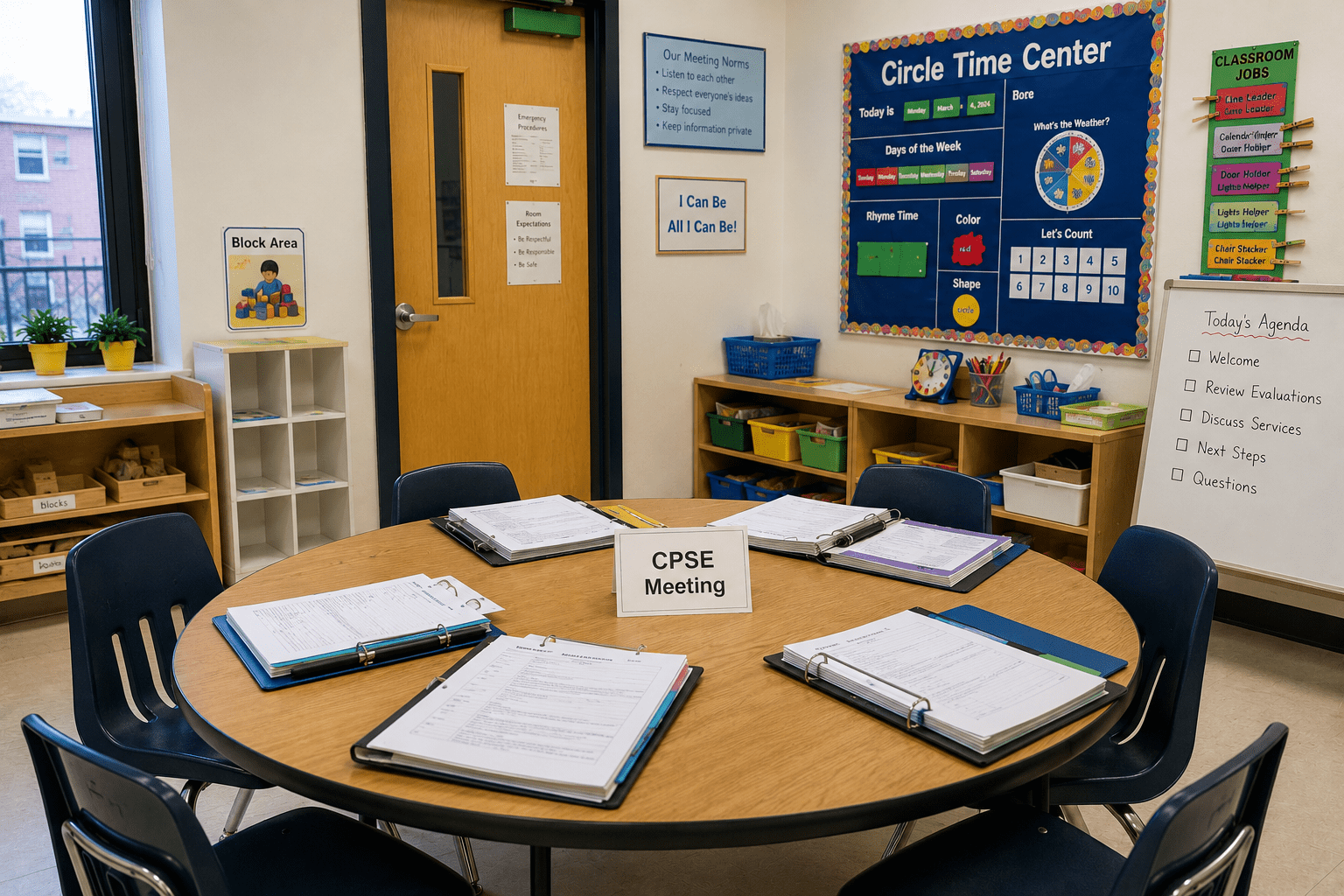
Step 4: The CSE or CPSE Meeting
After the evaluation is complete, the school will schedule a meeting of the Committee on Special Education (or CPSE for preschoolers). You will receive written notice of this meeting at least five days in advance.
At the meeting, the team will review the evaluation results and determine whether your child is eligible for special education services. If eligible, the committee will develop an Individualized Education Program (IEP) at that meeting or schedule a follow-up meeting to do so. You are an equal member of this committee and have the right to ask questions, share your perspective, and disagree with any part of the proposed plan.
Step 5: Review and Sign the IEP
After the meeting, you will receive a copy of the proposed IEP. Review it carefully. You have the right to agree, disagree with parts of it, or reject it entirely. If you disagree with a specific service or placement recommendation, do not feel pressured to sign the same day. You can request more time or ask for an amendment before signing.
Once you sign, services must begin within a specific timeframe — typically within 30 days for school-age children.
What If You Disagree With the Evaluation Results?
If you believe the school’s evaluation does not accurately reflect your child’s needs, you have the right to request an Independent Educational Evaluation (IEE) at public expense. This means the school district pays for a private evaluator of your choosing, subject to the district’s criteria for cost.
To request an IEE, send a written request to the school explaining that you disagree with the evaluation results and are requesting an independent evaluation at public expense. The school must either agree to fund the IEE or file for an impartial hearing to justify its own evaluation.
Free Help for NYC Families
Navigating the evaluation process alone can be difficult. NYC offers several free resources. Advocates for Children of New York provides free legal advocacy for families. The NYC DOE’s Special Education Office has a Parent Ombudsman you can contact. Additionally, ACCES-VR and other state agencies can assist with older students approaching transition age.
You do not have to know everything before you start. A simple written request is all it takes to begin — and once you make that request, the school is legally required to respond.
Frequently Asked Questions
My child’s teacher says they are fine. Can I still request an evaluation? Absolutely. Parent concern is a valid reason to request an evaluation regardless of what teachers observe in the classroom. Children often present differently at school than at home, and some disabilities are not obvious in a group setting.
Can I get a private evaluation before requesting one from the school? Yes. A private evaluation can be valuable and can be submitted to the CSE for consideration. However, the school is not required to accept its findings and may conduct their own evaluation regardless.
What happens if the school misses the 60-day deadline? The school is in violation of New York State regulations. Contact the NYC DOE’s Special Education Office immediately, and consider reaching out to Advocates for Children of New York if the delay is significant.